What the Mecca military pact means for China
When Saudi Crown Prince Mohammed bin Salman, Turkish President Recep Tayyip Erdogan, and Pakistani Prime Minister Shehbaz Sharif signed the Mecca defence agreement, they executed a structural overhaul of the Middle East’s security architecture. The pact codifies a defence commitment, where an armed attack on one is treated as an assault on all. Building upon September’s Saudi-Pakistan defence…
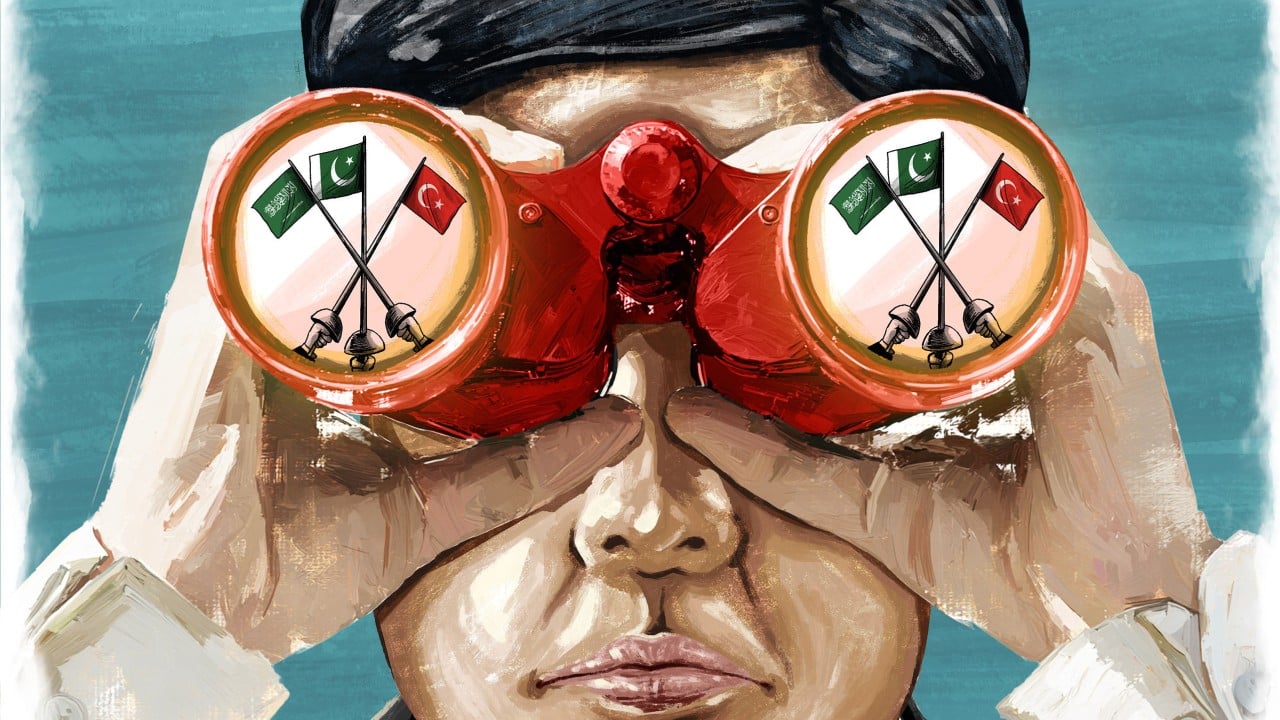
The Mecca military pact, signed by Saudi Crown Prince Mohammed bin Salman, Turkish President Recep Tayyip Erdogan, and Pakistani Prime Minister Shehbaz Sharif, fundamentally alters the Middle East's security architecture. This agreement establishes a defense commitment, wherein an armed attack on one member is considered an assault on all. The pact joins Saudi Arabia, Turkey, and Pakistan, representing the financial capital of the Gulf, a NATO member, and a South Asian nuclear-armed state, respectively.
This tripartite arrangement is a response to perceived vulnerabilities and a lack of confidence in Western security guarantees. For Riyadh, the pact serves as an insurance policy for Vision 2030, safeguarding giga-projects, energy corridors, and countering regional volatility stemming from Iran-backed Houthi maritime threats and unpredictable American foreign policy.
Ankara views the pact as a means to project power across the Islamic world, expanding its defence export footprint, specifically through Bayraktar drones and fifth-generation Kaan fighter jets. Islamabad gains Gulf financial support and energy supplies while positioning its military elite as vital regional power brokers.
Ideologically, the Mecca pact symbolizes a shift towards regional self-reliance. Unlike the rigid, institutionalized command structure of the transatlantic security alliance, the Mecca pact operates as a flexible, transactional strategic coalition, lacking a permanent bureaucratic headquarters. Instead, it relies on state-to-state defense integration, intelligence sharing, and defense-industrial co-development.
For China, the Mecca pact presents both opportunities and challenges. On one hand, it welcomes the erosion of America's security monopoly in the Persian Gulf, validating China's vision of a multipolar global order where regional actors manage security. A stable Red Sea and Persian Gulf would protect China's maritime trade routes and energy lifelines under the Belt and Road Initiative.
However, the pact poses significant liabilities. Firstly, it threatens China's delicate diplomatic equilibrium with Iran, a strategic partner that Beijing supports and mediates with. Secondly, the pact challenges China's defence-industrial ambitions, particularly by competing with Turkish and Pakistani defence exports in the Gulf market.
While maintaining a pragmatic stance, China will encourage non-interference and stability within the alliance, while privately working to prevent the Mecca pact from becoming an explicitly anti-Iran bloc. To secure its economic investments and energy security, China will strengthen its role as an indispensable economic partner to both sides of the Gulf divide.
Written by urgent.news from South China Morning Post's reporting — not their text. Machine-written — may contain errors; check the original before relying on it.
This story
This is one outlet's version. Read the fullest account.