What is NASA’s Moon Base programme, why it wants India to be part of it? | Explained
NASA is looking to establish an ambitious lunar outpost programme, a first of its kind in the world where humans (astronauts) will make the Moon’s south pole a home from where they will live, work and conduct scientific activities over the next decade and beyond
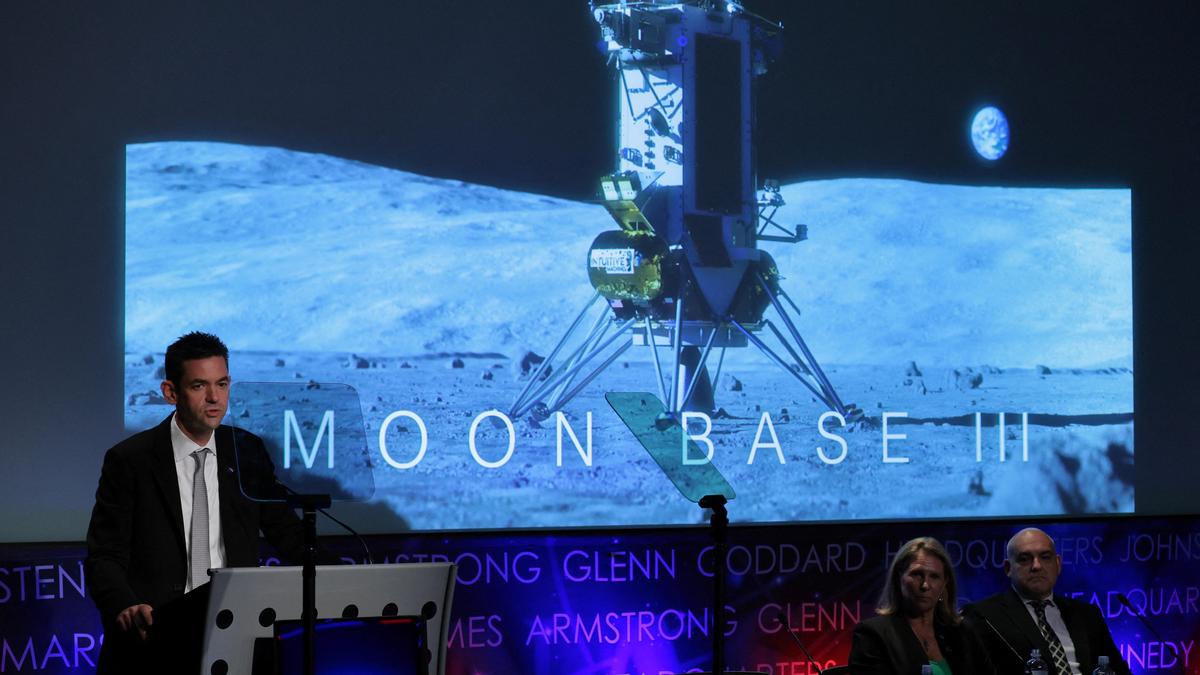
At the ninth meeting of the India-U.S. Civil Space Joint Working Group in Bengaluru, NASA formally invited the Indian Space Research Organisation (ISRO) to participate in its Moon Base programme under the Artemis Accords. This ambitious mission, announced in March 2026, aims to establish a lunar outpost on the Moon's south pole for extended human habitation and scientific research.
The programme is projected to cost over $20 billion and is divided into three phases. NASA plans to achieve this goal in collaboration with its partners, executing a series of crewed and uncrewed missions. The first phase, already underway until 2029, focuses on gaining reliable access to the lunar surface and understanding the environment.
The second phase, extending till 2032, involves deploying infrastructure for continued mission progress. The most ambitious phase, beginning in 2032, aims to populate the lunar south pole region for long-term human presence. The Moon's south pole, with its extreme temperatures, offers unique opportunities for scientific exploration and serves as a stepping stone for future missions to other planets like Mars and Venus.
Russia and China are also planning lunar base programs, with Russia's International Lunar Research Station (ILRS) expected to be operational by the next decade. India, which has signed the Artemis Accords and is planning its own lunar missions under Space Vision 2047, has been invited to join NASA's Moon Base programme. This invitation opens up opportunities for ISRO to gain international exposure in lunar studies, especially as India plans its upcoming Chandrayaan-4 mission to bring back lunar samples to Earth.
Written by urgent.news from The Hindu - Sci-Tech's reporting — not their text. Machine-written — may contain errors; check the original before relying on it.