The Hessians Were Supposed to Quickly End the American Revolution. Instead, They Endured Years of Battles and Suffered Thousands of Casualties
Some 30,000 German soldiers fought for the British during the war. Contrary to popular belief, they weren't mercenaries, and not all were actually Hessians
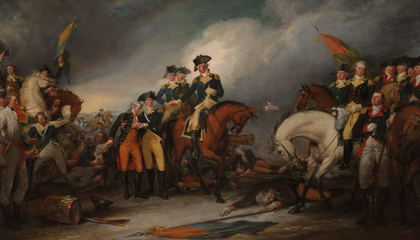
On August 15, 1776, a fleet of British ships docked on Staten Island, New York, marking the arrival of over 8,600 German soldiers, the first major contingent of Hessians to join the British forces in the American Colonies. Unlike their British counterparts, the Hessians typically wore blue or green uniforms and distinctive miter caps.
Over a year of conflict had been waged between British troops and American colonists seeking independence. In 1775, King George III expressed his desire to "put a speedy end to these disorders" by employing "the most decisive exertions," including foreign assistance. Though objections arose, Parliament supported the king's plan, believing the added manpower would swiftly bring an end to the rebellion.
The Germans, however, were mistaken in their belief that the war would conclude within a short period. In fact, the war would persist for another seven years before concluding with the Treaty of Paris in 1783, with around 30,000 Germans having served and thousands losing their lives to combat or disease. The German soldiers, often referred to as Hessian mercenaries, were not mercenaries but rather soldiers loaned by their respective German rulers in exchange for financial compensation from Britain.
Some were volunteers, others were drafted, and a few were conscripted. These soldiers were not exclusively from the German state of Hesse, but rather from several territories that constituted Germany at the time, including Hesse-Cassel and Hesse-Hanau, which were the primary contributors. The British were not their first choice, having previously sought assistance from Russia and the Dutch but receiving refusals.
Each German ruler agreed to provide a certain number of troops, with the cost funding their subsistence throughout the war, plus additional years. If the British experienced losses, it was the ruler's responsibility to replace the fallen. German soldiers were paid directly by the British, and they, in turn, retained their earnings.
Despite their initial optimism, the Hessians soon realized the war would last far longer than they had anticipated. Even upon their arrival in America, more than a month would elapse before they engaged in combat against the colonists. Nonetheless, the Hessians were included in the list of grievances against King George III in the Declaration of Independence, with the document accusing him of deploying a large number of foreign mercenaries in the Colonies.
Written by urgent.news from Smithsonian's reporting — not their text. Machine-written — may contain errors; check the original before relying on it.