Urgent.News

What's breaking now, across thousands of outlets.

World

The heartbeat of our nation — Zuraini Md Ali and Nurul Alia Ahamad

AUGUST 13 — Every year, as August arrives, Malaysians proudly fly the Jalur Gemilang. Patriotic songs fill th...
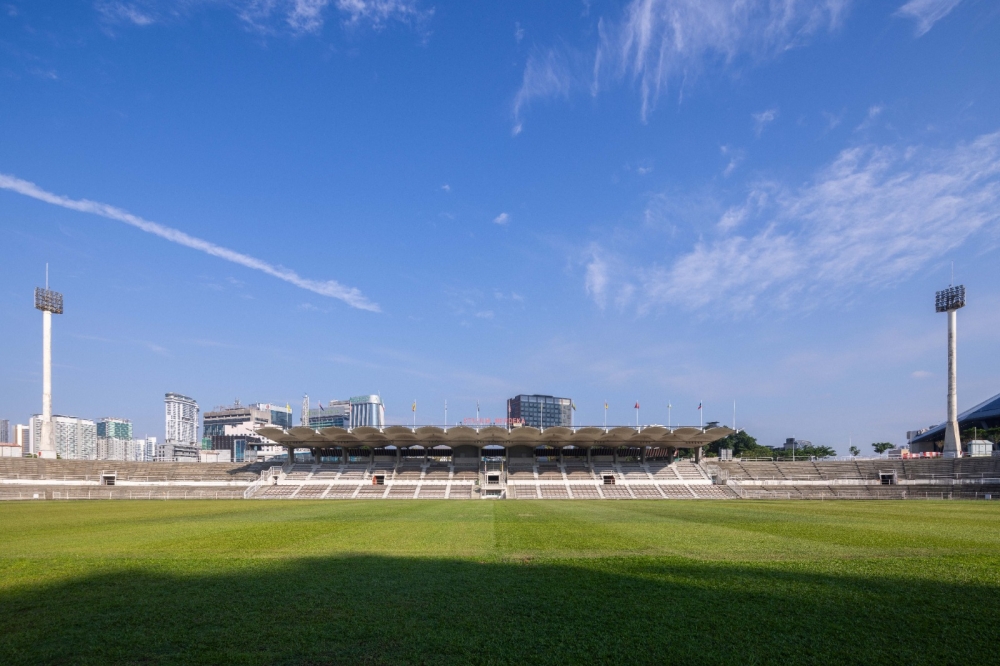
The heartbeat of our nation — Zuraini Md Ali and Nurul Alia Ahamad

August 13 brought Malaysia a reminder of its historical significance, as Stadium Merdeka once again played a pivotal role. This iconic stadium, located in the heart of Kuala Lumpur, was the site where Tunku Abdul Rahman proclaimed Malaysia's independence on August 31, 1957. Since then, Stadium Merdeka has become a symbol of unity, hope, and freedom, embodying the shared memory and identity of the nation.

Completed in 1956, the stadium's architectural brilliance was recognized at the time and continues to stand as a testament to South-East Asia's finest engineering achievements. Despite the rapid urban development surrounding it, Stadium Merdeka has managed to preserve its original design and architectural features. This restoration effort, which took place after years of uncertainty, ensures that the stadium remains an authentic representation of Malaysia's past.

Today, Stadium Merdeka stands as a living classroom, providing an invaluable educational experience for students who witness the echoes of history within its walls. Its significance goes beyond being a tourist attraction; it serves as a dynamic civic space where Malaysians gather for heritage walks, educational programs, cultural performances, and national celebrations.

As Malaysia continues to celebrate Merdeka Month, it is crucial to recognize that preserving Stadium Merdeka is not just about safeguarding a historic building, but about honoring the nation's shared memory and enduring spirit of unity.

Written by urgent.news from Malay Mail's reporting — not their text. Machine-written — may contain errors; check the original before relying on it.

Read the original at malaymail.com →

More in World

At 11:30 a.m. on the 30th, President Lee Myung-bak had a 20-minute conversation with four reporters at the Blue House. During the conversation, which was not pre-announced, President Lee burst out laughing at a certain question. The scene was as follows. A reporter asked, “So did ‘that person’ mention the quantum (computer)?” President Lee, who had been sipping coffee, suddenly burst out laughing at the reporter’s question. The reporter continued, “I heard that at the dinner meeting with the staff on the 28th, you mentioned that you had talked with ‘that person’ about quantum (computer).” President Lee, who had been holding back his laughter, could not help but show his burst of laughter. The reporter then asked, “Did you really have a conversation about quantum (computer)? And what did ‘that person’ say?” President Lee, still smiling, replied, “No, I was just making conversation. I was just saying that I had heard about it.” When asked, “Who is ‘that person’?” President Lee replied, “You know who I mean.” The reporter pressed, “Is it the person who was elected as the Nobel laureate in Physics?” President Lee just smiled and did not respond further. The reporters who witnessed the scene said, “President Lee seemed to enjoy the conversation a lot.” Another reporter said, “President Lee seemed to be in a very relaxed mood, which was a rare sight.” On the 28th, President Lee had dinner with his staff at a restaurant in Hongdae, Seoul. At the dinner, President Lee reportedly mentioned that he had talked with a renowned physicist about quantum computers. It is not confirmed who the person is, but it appears that the reporter was referring to the Nobel laureate in Physics, Dr. Gerard ‘t Hooft, who visited Korea on the 27th. Dr. ‘t Hooft, who was awarded the Nobel Prize in Physics in 1999, visited Korea to attend the 2011 Seoul Science Festival. On the 27th, Dr. ‘t Hooft had a short conversation with President Lee at the festival. At the meeting, President Lee reportedly mentioned that he had been paying attention to the development of quantum computers. Dr. ‘t Hooft is known to have expressed his interest in cooperating with Korea in the development of quantum computers.

More from Thursday 13 August →