The geopolitics behind Pakistan’s $10 billion US request
Pakistan has reportedly asked the United States for a $10 billion currency-swap facility from the US Treasury’s Exchange Stabilisation Fund. The request arrived at an extraordinary moment: the United States is at war with Iran, Pakistan has become an important channel for diplomacy between Washington and Tehran, and Islamabad is again trying to turn geopolitical relevance into economic relief .…
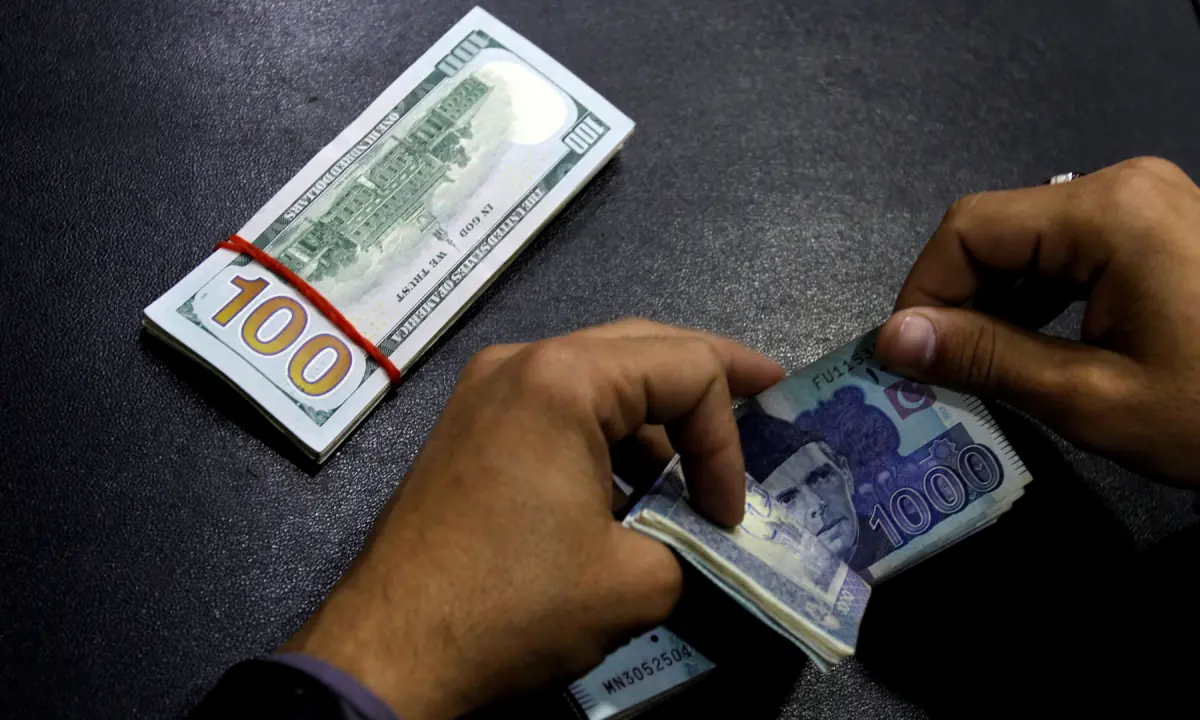
Pakistan has reportedly sought a $10 billion currency-swap facility from the U.S. Treasury's Exchange Stabilisation Fund. This request comes at a tense juncture, with the United States engaged in conflict with Iran. Pakistan has emerged as a crucial conduit for diplomatic dialogue between Washington and Tehran, and Islamabad aims to leverage its geopolitical influence to secure economic benefits.
However, the specifics of the proposal remain undisclosed, including its legal framework, interest rate, duration, conditions, and permissible uses. Approval is not guaranteed, and even if granted, the funds may never be utilized. Despite these uncertainties, the mere possibility of such a facility underscores the intricate relationship between money and power in contemporary geopolitics.
Pakistan already possesses bilateral financial support through its currency-swap agreement with China. Adding a U.S. facility would further entangle Pakistan in two competing monetary networks: one that facilitates trade in renminbi and strengthens China's global footprint, and another that sustains the dollar-dominated financial system by providing liquidity to countries of strategic importance to the United States.
While Pakistan should view the potential access to additional financial security favorably, it should refrain from conflating access to another country's currency with an independent development strategy. A bilateral swap agreement, often referred to as a currency-swap line, is a standing arrangement between two central banks, which are the governmental entities responsible for managing a nation's currency and foreign-exchange reserves.
Unlike a grant or free money, the recipient has the right to request funds under specified conditions. If the line is activated, the transaction occurs in two stages. Suppose the State Bank of Pakistan requires dollars; it would transfer an agreed amount of rupees to the lending institution and receive dollars in return at an exchange rate established under the agreement.
Those dollars could subsequently be utilized for domestic banking, essential imports, external obligations, or to stabilize a volatile foreign-exchange market. Upon maturity, the transaction is reversed, with Pakistan returning the dollars and receiving its rupees back, potentially incurring interest or fees. As such, a swap is not a loan but a mechanism to bridge a temporary shortage of usable foreign currency and avert broader financial instability.
The maturity, cost, permitted uses, and renewal terms differ among agreements. The proposed U.S. facility differs institutionally from a Federal Reserve swap line, as Pakistan is seeking support from the Treasury's Exchange Stabilisation Fund rather than joining the Fed's established network of central-bank liquidity arrangements.
Until the terms are publicly disclosed, the nature of the arrangement—whether as a short-term currency swap, a balance-of-payments backstop, or a loan-like stabilisation facility—remains uncertain. Nonetheless, the history of central-bank swaps provides insight into the political dynamics governing access to emergency liquidity.
During the 2008 global financial crisis, the Federal Reserve granted swaps to only four emerging markets—Brazil, Mexico, Singapore, and South Korea—while denying other requests. Political considerations, alongside financial need, influenced the selection process. Central bankers' trust and personal relationships also played a role in determining who received access, with those possessing strong relationships qualifying for larger or less restrictive facilities.
Consequently, the global financial safety net is not universally accessible nor devoid of political bias. This insight is pertinent to the current situation. The United States does not extend exceptional financial commitments solely upon request. If Pakistan were to receive a substantial stabilisation facility, it would signal that the United States values Pakistan's economic stability and continued cooperation.
Written by urgent.news from Dawn Business's reporting — not their text. Machine-written — may contain errors; check the original before relying on it.