See Magnificent Photos of the Total Solar Eclipse Over Europe That Showcase the Sun's Beauty and the Wonder of Skywatching
The moon’s shadow swept over Earth on Wednesday, captivating millions across the planet. It was the first total solar eclipse since the North American eclipse of April 2024
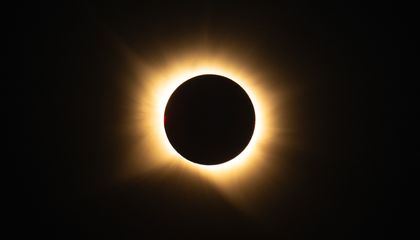
As darkness shrouds the earth, temperature plunges and fiery glows emerge on the horizon. When the moon obscures the sun during a total solar eclipse, the ground within its shadow metamorphoses into an eerie, daytime twilight for a brief, mesmerizing instant. On August 12, for the first time in over four years, totality shone over parts of northern Russia, Greenland, Iceland, Spain and a sliver of Portugal, while a broader swath of Europe, Africa, Asia and North America bore witness to a partial eclipse.
Over 15 million individuals resided within the path of totality, and nearly one billion people resided in a region where any part of the event could be seen. Many more set out to marvel at the spectacle. As totality neared, birds in Iceland "screamed like they would at dusk," reported The New York Times’ Amelia Nierenberg. In Greenland's fjords, the audience fell into a stunned silence, and in Mallorca, onlookers broke into applause as boats honked their horns from offshore.
We experience total solar eclipses due to a "cosmic coincidence" according to NASA. The sun is roughly 400 times farther from our planet than the moon, and the moon is about 400 times smaller than the sun. Consequently, both celestial bodies appear of similar size in our sky, allowing the moon to perfectly cover the star from our perspective.
This alignment reveals the sun's corona, or delicate outer atmosphere that is typically overwhelmed by the rest of the star. This provides a crucial opportunity for scientific study and a breathtaking sight. Just before totality, the last vestiges of sunlight filter through lunar valleys, forming bright spots known as Baily's beads or the diamond ring effect.
A solar eclipse is a breathtaking celestial phenomenon, but it also taps into our human fascination, even for those who have witnessed totality multiple times. This compilation of images showcases the astronomical beauty alongside the wonder of those fortunate enough to experience it.
Written by urgent.news from Smithsonian's reporting — not their text. Machine-written — may contain errors; check the original before relying on it.
This story
This is one outlet's version. Read the fullest account.
- Once-in-a-generation solar eclipse wows millions in UK and Europe adomonline.com
- Solar eclipse 2026 across Europe: in pictures theguardian.com
- Solar eclipse 2026 in pictures: The best shots from around Europe euronews.com
- Total solar eclipse dipped parts of Europe into complete darkness. Here's what they saw. cbsnews.com
- Once-in-a-generation solar eclipse wows millions in UK and Europe myjoyonline.com
- Photos: Total solar eclipse darkens skies across Europe timesofindia.indiatimes.com
- Totality! See incredible photos of the Aug. 12 total solar eclipse from across Europe r.smartbrief.com
- Europe’s 1st total solar eclipse in 27 years: Olympian Danny Leon times stunning skate moment indianexpress.com