Can a 'black hole star' solve the mystery of 'little red dots' spotted in the early Universe?
The black hole star, which dates from 660 million years after the Big Bang, was spotted by a US-led team of astronomers using the James Webb Space Telescope.
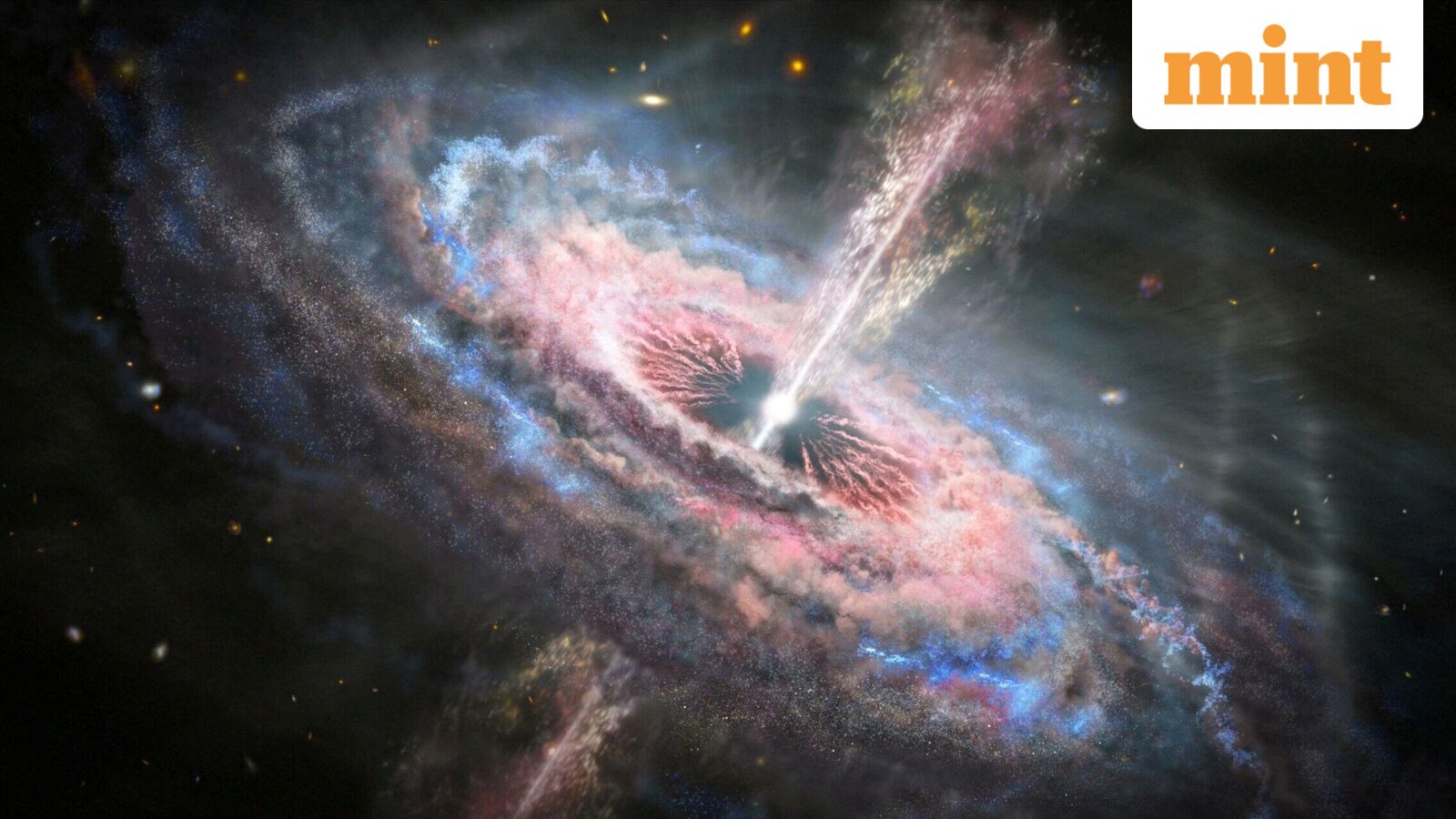
Astronomers have announced the discovery of a new object called a "black hole star," which may help solve the mystery of the "little red dots" spotted early in the universe. The object, named MoM-BH-1, appears to be a star similar in size to our solar system but emits around 100 billion times more energy than the Sun, akin to a black hole.
Using the James Webb Space Telescope, a US-led team of astronomers discovered the object about 660 million years after the Big Bang. The study, published in the journal Nature, states that the object's red appearance is not due to dust, as previously assumed, but is instead caused by hydrogen gas. Computer simulations suggest that MoM-BH-1 is most likely powered by a black hole at its center, surrounded by a thick gas layer.
This combination of elements gives the object a star-like appearance, despite its energy being generated by a black hole.
Written by urgent.news from Live Mint's reporting — not their text. Machine-written — may contain errors; check the original before relying on it.