Schifffahrt: Hapag-Lloyd spürt hohe Kosten für Krisenmanagement in Nahost
Der Krieg im Iran beeinträchtigt die Weltwirtschaft stark. Vor allem die Frachtschifffahrt spürt die Folgen. Hapag-Lloyd konnte die Folgen im zweiten Quartal jetzt zumindest etwas abfedern.
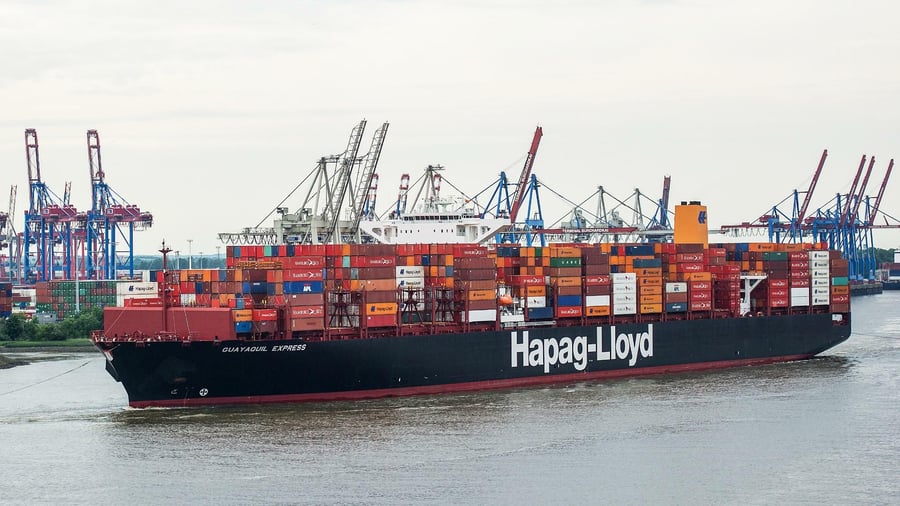
Hapag-Lloyd, Germany's leading container shipping company, is facing significant financial repercussions due to the crisis in maritime transport in the Middle East. In the second quarter, the company reported costs of approximately $600 million as a result of the challenging security situation surrounding the Persian Gulf and the Red Sea.
However, these expenses were mitigated by a substantial increase in transportation volumes and spot rates. According to the Hamburg-based company, strong exports from Asia and improved demand in the United States were the main drivers behind this.
The company's earnings before interest, taxes, depreciation, and amortization (EBIT) dropped by €6 million compared to the previous year, amounting to €150 million. Hapag-Lloyd's CEO, Rolf Habben Jansen, stated that the second quarter had performed better than the first, driven by higher spot rates and robust demand. Looking ahead to the second half of 2026, the company plans to focus on growth in liner shipping and terminal operations, while maintaining strict cost discipline to further enhance its financial performance.
Revenue increased by 8.4 percent in the second quarter to slightly over €5 billion, with an average freight rate of $1,475 per Standard Container (TEU), compared to €1,354 per TEU in the previous year. Transportation volume rose by 3.5 percent to nearly 3.5 million TEU.
Written by urgent.news from Handelsblatt's reporting — not their text. Machine-written — may contain errors; check the original before relying on it.