Quantum entanglement is key to solving 250-year-old maths problem
Analysis of a mathematical puzzle that Leonhard Euler deemed unsolvable in the 1700s reveals that the crucial ingredient for cracking it after all is quantum entanglement
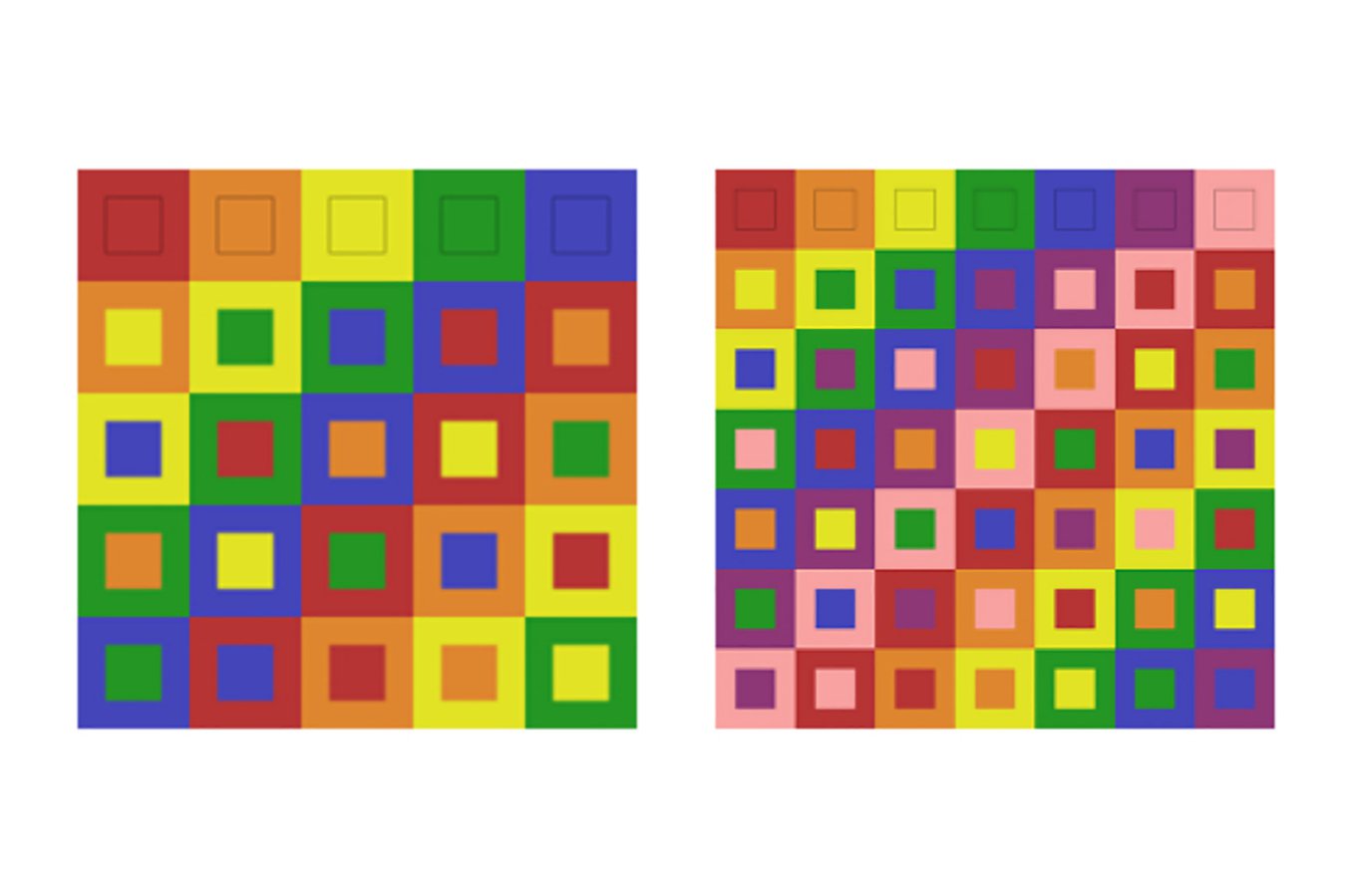
A 250-year-old mathematical puzzle known as the 36 officers problem has been solved with the help of quantum entanglement, which could potentially aid in the development of more resilient quantum computers. The puzzle, which originated in the 1700s, asked whether it was possible to arrange 36 military officers from six different regiments in a 6-by-6 grid so that each row and column contained officers from different ranks and regiments.
Leonhard Euler initially concluded that no such arrangement was possible, and it remained an unsolved mystery until 2022 when researchers Karol Życzkowski and others discovered that the problem could be solved using quantum entanglement.
Quantum entanglement, a phenomenon where particles become interconnected and instantaneously affect each other's state, was found to be essential for solving the problem in a quantum context. The researchers created a quantum Latin square, a type of Latin square that allows for quantum superposition, where an officer can simultaneously belong to multiple ranks and regiments. However, it was also discovered that this solution required the officers to be connected through the inextricable link of quantum entanglement.
In an effort to simplify the solution, researchers Robin Simoens and Simeon Ball translated the problem into a specific type of mathematical graph and used a computer algorithm to search for a more efficient solution. They found that no such solution exists without the quantum entanglement aspect, indicating that quantum entanglement is indispensable for solving the problem.
The discovery may have practical applications for quantum computing, as the error-correcting codes generated by quantum Latin squares could help protect qubits from errors during computation, which is crucial for the practical use of quantum computers.
Written by urgent.news from New Scientist's reporting — not their text. Machine-written — may contain errors; check the original before relying on it.