James Webb telescope just spotted the oldest, closest pair of black holes in the early universe
The dual black hole system, dubbed LID-1166, is the first close-separation pair of its kind confirmed this early in the universe. The discovery could help to explain how the earliest black holes grew so large, so fast.
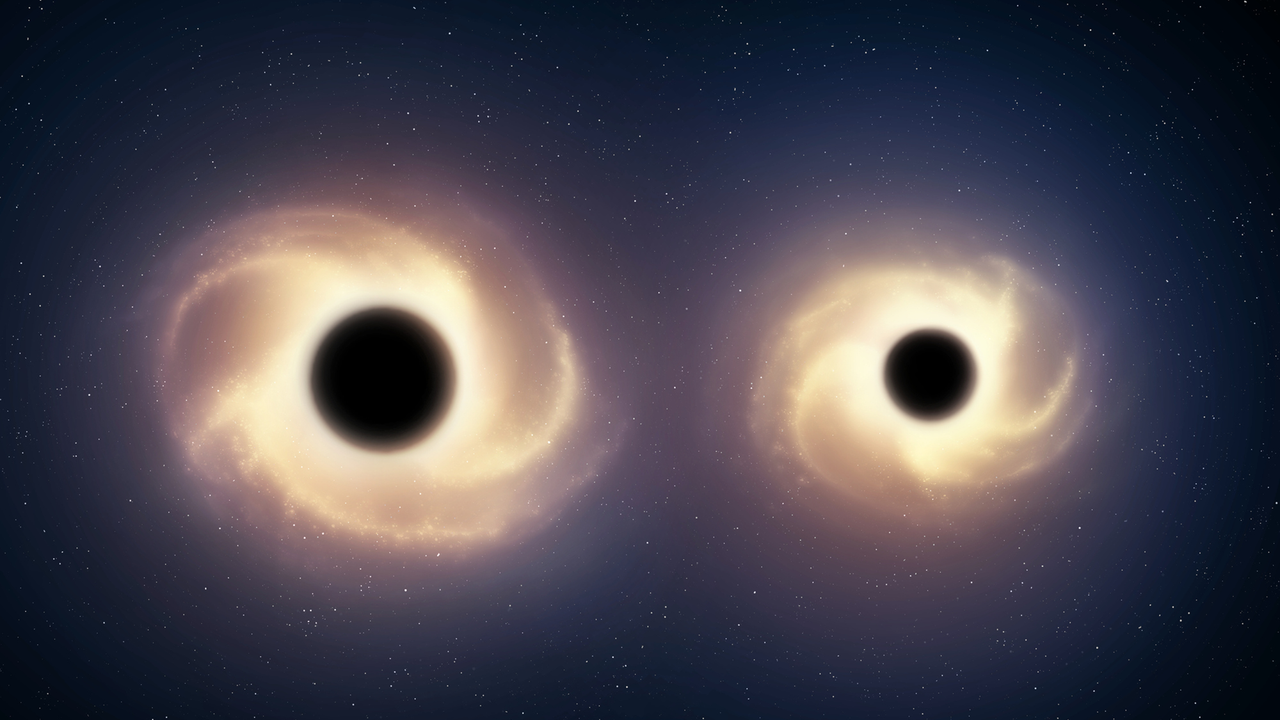
Scientists have discovered the closest pair of black holes ever observed, formed just 1.3 billion years after the Big Bang. Known as LID-1166, these two monstrous black holes are separated by only about 4,900 light-years inside a merging galaxy. Using the James Webb Space Telescope and the Atacama Large Millimeter/submillimeter Array, researchers detected the pair's unique X-ray and infrared signatures, revealing the feeding activity of the black holes.
This close proximity provides the first clear view of a critical phase in the growth of supermassive black holes, offering crucial insights into the formation and evolution of large galaxies. The discovery highlights the powerful capabilities of the JWST, particularly its Near-Infrared Spectograph instrument, which allowed astronomers to confirm the existence of these two separate black holes within the merging system.
Written by urgent.news from Live Science's reporting — not their text. Machine-written — may contain errors; check the original before relying on it.
This story
This is one outlet's version. Read the fullest account.