Producing Recombinant Antibodies for In Vivo Research
Antibody reagent variability is a leading but frequently underappreciated source of irreproducible preclinical data. For in vivo studies, the problem is multidimensional: supply must simultaneously meet specifications for yield, purity, endotoxin control, […] The post Producing Recombinant Antibodies for In Vivo Research appeared first on GEN - Genetic Engineering and Biotechnology News .
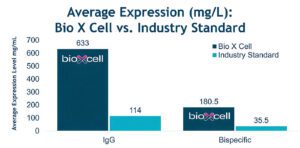
Producing recombinant antibodies for in vivo research requires meeting specifications for yield, purity, endotoxin control, and lot-to-lot consistency. These attributes are often treated as flexible trade-offs in standard production approaches. However, specifying all four attributes as non-negotiable engineering targets leads to more reliable study designs and trustworthy data.
This article examines these production attributes using recombinant antibody production data from multiple formats. Bispecific antibodies are more technically demanding than conventional IgG formats due to the need to pair two distinct heavy chains, light chains, or both simultaneously. This complexity increases production challenges across every stage, from expression to purification.
Achieving strong yield, high purity, low endotoxin, and lot-to-lot consistency simultaneously is more difficult for bispecific formats than for conventional monoclonal antibodies. The ability to consistently produce bispecific antibodies with high yield and quality demonstrates a platform's capability to maintain production performance across various antibody formats.
Transient mammalian expression systems, such as HEK293 and CHO cells, are commonly used for research-grade recombinant antibody production. These systems enable rapid material generation within weeks, compared to the months required for stable cell line development. Optimized expression workflows can achieve yields above historical benchmarks across formats.
For example, conventional murine IgG production averaged 633 mg/L, while bispecific formats averaged 180.5 mg/L. Maintaining endotoxin levels within defined release specifications is crucial for in vivo study interpretability. Across 300 released custom service lots, endotoxin levels were consistently below 0.5 EU/mg, meeting the threshold for study readiness.
Lot-to-lot consistency is essential for multi-cohort in vivo research, ensuring that subsequent lots are analytically interchangeable with previous lots.
Written by urgent.news from GEN Biotechnology's reporting — not their text. Machine-written — may contain errors; check the original before relying on it.