Over 2,950 dogs sterilised to save Black-necked Cranes and wildlife in Ladakh
BNC, globally listed as “vulnerable”, is a cultural symbol and state Bird of Ladakh, but fewer than 100 survive in India, while the estimated world population is roughly 11,000–12,000 individuals, most of which occur on the Tibetan Plateau.
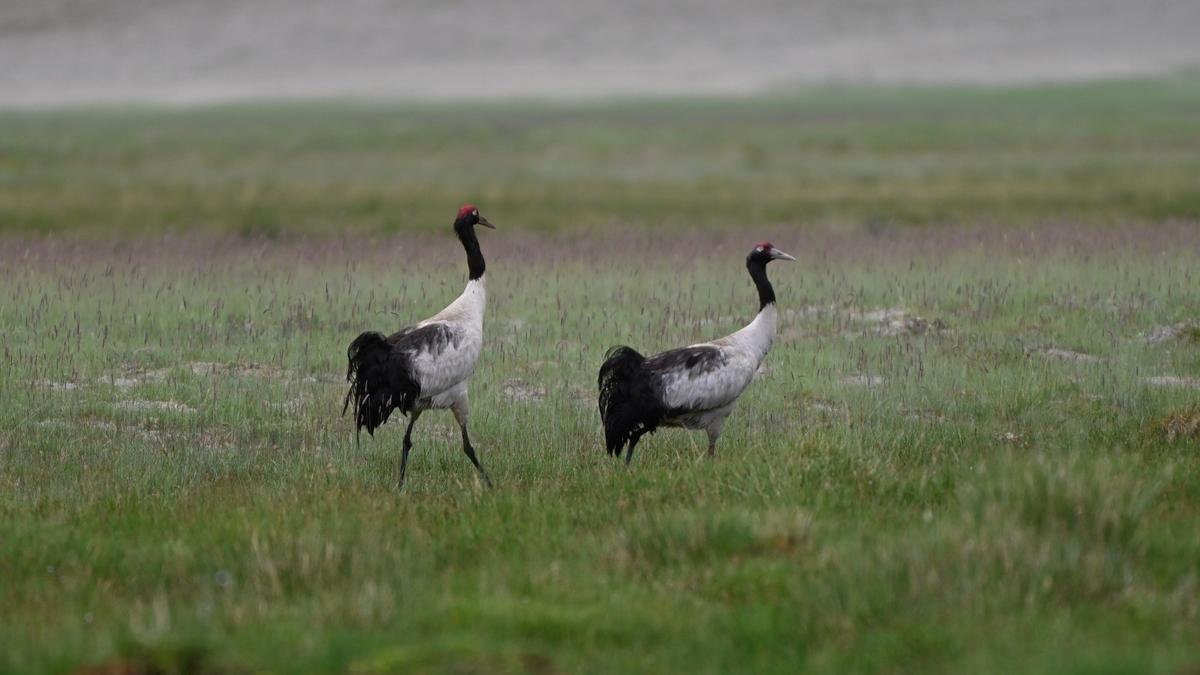
In a concerted effort to safeguard the endangered Black-necked Crane (BNC) and enhance wildlife tourism in Ladakh, over 2,950 free-ranging dogs (FRDs) were sterilized through a joint initiative by the Bombay Natural History Society (BNHS), the Indian Army, the Animal Husbandry Department, and the Department of Forest, Ecology and Environment. This endeavor commenced in 2022, following concerns from wildlife experts who observed FRDs preying on BNC chicks and hindering the cranes' ability to establish nesting grounds.
The BNC, classified as "vulnerable" globally, holds cultural significance as the state bird of Ladakh and is estimated to have a population of 11,000-12,000 individuals worldwide, with a mere 110-130 individuals recorded annually in India. The primary breeding sites for these cranes include the Changthang Cold Desert Wildlife Sanctuary and various wetlands such as Hanle, Tso Kar, Nyoma, and surrounding marshes, with a supplementary population in the Suru Valley.
BNHS Director Kishor Rithe reported that the 2026 population monitoring yielded a total of 19 BNC pairs across the region's wetlands. However, BNHS scientist Dr. Muhammad Raza, who conducted the field surveys, anticipates the actual number of breeding pairs to be slightly higher due to the challenging terrain and limited accessibility. The primary threats to BNC survival include increased human activity near wetlands, infrastructure development, habitat degradation, FRD predation, and climate change impacts.
To mitigate the disturbance caused by FRDs to BNC nesting birds, BNHS spearheaded the sterilization program, complemented by waste management initiatives at Indian Army outposts to curb anthropogenic food subsidies. These efforts aim at reducing dog-related threats in sensitive wetland ecosystems. Additionally, the initiative has included capacity-building and awareness campaigns, where 1,000 armed forces personnel have been trained in biodiversity conservation and wildlife management.
Written by urgent.news from The Hindu - Sci-Tech's reporting — not their text. Machine-written — may contain errors; check the original before relying on it.