Operations Evolve, Security Follows: Why Agentic AI Is Forcing The Next Evolution of Cybersecurity
Agentic AI is changing cybersecurity as attackers deploy autonomous systems and enterprises deploy AI agents that can act independently.
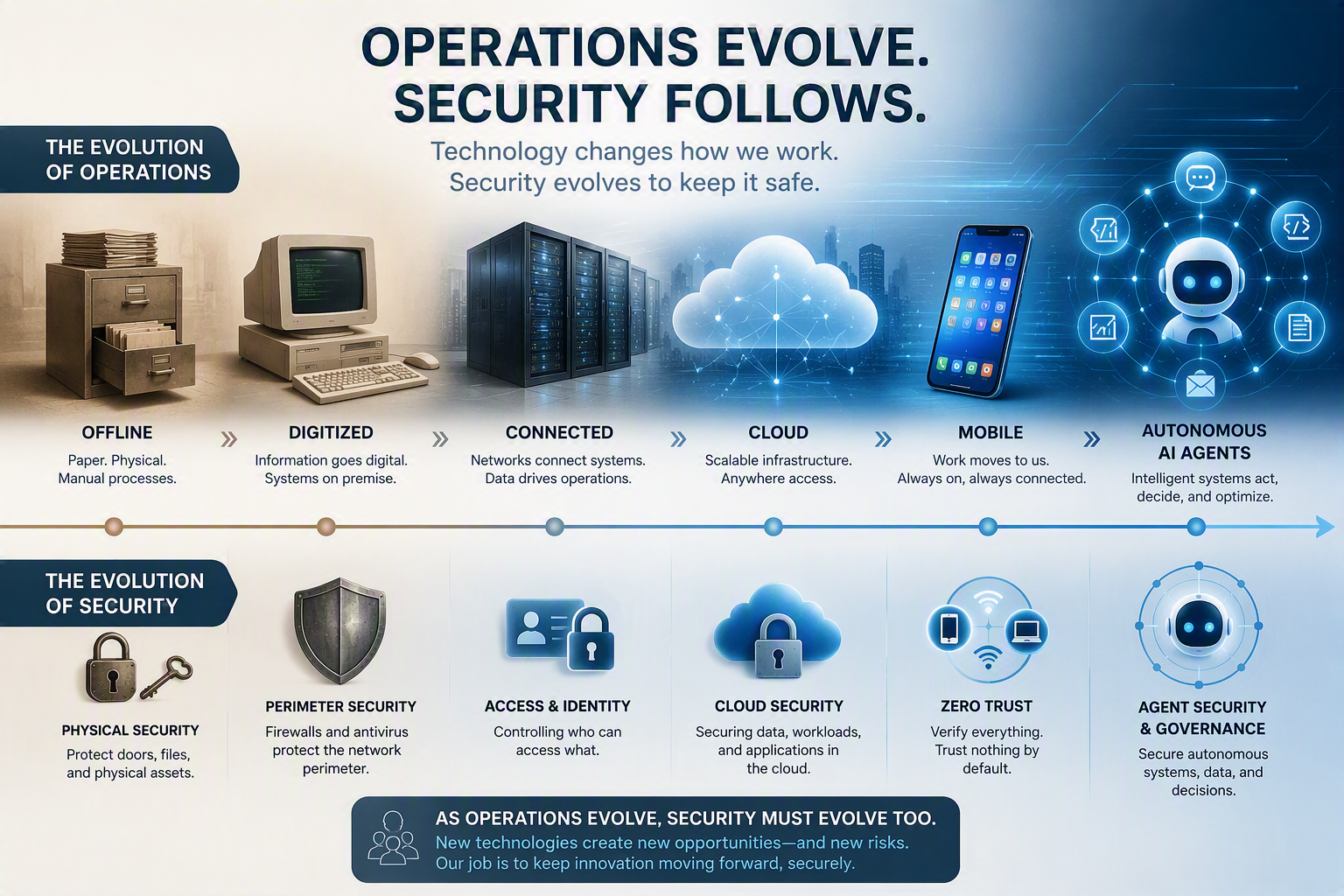
Agentic AI is reshaping the cybersecurity landscape, forcing organizations to adapt their defense strategies. As AI enables new capabilities for both attackers and defenders, security teams must now confront two distinct challenges: securing autonomous systems used by external adversaries and controlling autonomous systems within their own organization.
Traditional cybersecurity measures, built on a pattern of identifying vulnerabilities, remediating them, blocking access, monitoring known attack patterns, and responding to incidents, are no longer sufficient in the face of adaptive AI-enabled threats. These attacks can evolve dynamically, exploiting vulnerabilities in ways that traditional defenses cannot anticipate.
To address this new reality, organizations must extend their security controls to encompass AI agents, establishing visibility, governance, and accountability for these autonomous systems. By adapting to the evolving threat landscape, security can maintain its foundational role in protecting organizational operations while effectively managing the risks posed by internal and external agents.
Written by urgent.news from HackerNoon's reporting — not their text. Machine-written — may contain errors; check the original before relying on it.