'Noo-noo' the cicada cousin in amber had a bizarrely long mouth
A particle accelerator probed the proboscis of an extinct planthopper that lived 99 million years ago and may have drunk straight from trees
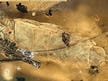
Around 99 million years ago, a planthopper belonging to the now-extinct Neazoniidae suborder met its demise on a tree in present-day Myanmar. Preserved by resin that eventually fossilized into amber, this insect belonging to an ancient lineage possessed an unusual feeding mechanism. The findings of this bizarrely long-mouthed cicada cousin are published in the journal MDPI (Insects) by researchers including Dolev Fabrikant, Leonidas-Romanos Davranoglou, and Yanzhe Fu.
This ancient Noo-noo, named after the Teletubbies vacuum cleaner, had an elongated, flexible proboscis that was double its body length in comparison to living and extinct relatives. Utilizing advanced X-ray techniques at a particle accelerator in Hamburg, Germany, researchers obtained a 3D model of the Noo-noo's internal structure, revealing a rigid outer sheath covering a hollow needle.
This unique structure allowed the neazoniid to pierce tree bark and access sap, an adaptation that provided the Noo-noo with a niche feeding advantage.
Noo-noo's feeding apparatus differed significantly from that of modern cicadas, butterflies, moths, bees, and mosquitoes, which use rigid proboscises to access sap from plants. Unlike the rigid proboscis of modern cicadas, the Noo-noo's proboscis could extend double its body length, enabling it to penetrate deep within the tree tissue.
This specialized feeding mechanism suggests that Neazoniidae had adapted to a unique niche in the Cretaceous period. The researchers also note that Neazoniidae in amber fossils do not possess pollen, unlike butterflies, which feed on flowers. The Noo-noo's beautiful wings further support the theory that the insect had a tree-based diet.
Written by urgent.news from Haaretz's reporting — not their text. Machine-written — may contain errors; check the original before relying on it.