Mammal ancestors may have given live birth 90 million years earlier than we thought, rewriting evolutionary timelines
A distinctive growth ring in fossilized bones is revealing how an ancestral species in the mammalian family reproduced.
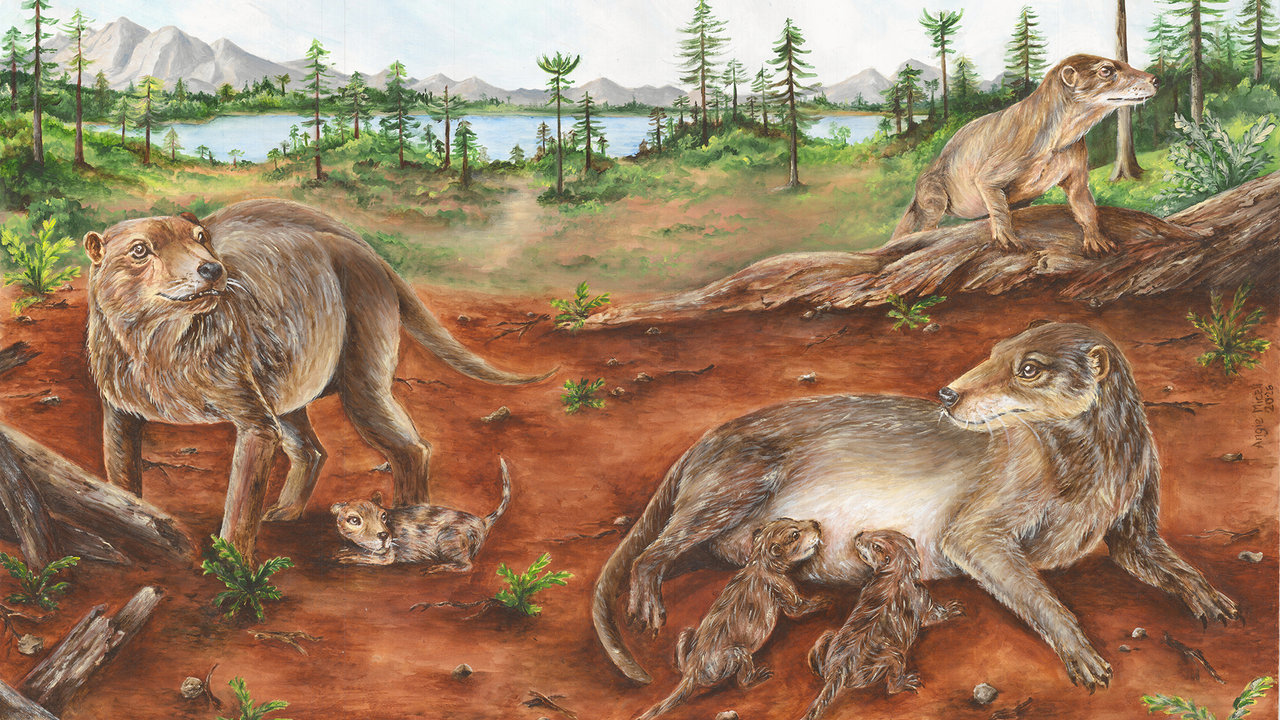
A new study suggests that a dog-sized carnivore and mammal ancestor that lived around 236 million years ago may have given birth to live young. This discovery implies that the practice of viviparity, where young develop inside the mother, may have emerged in the mammalian lineage 90 million to 95 million years earlier than previously thought.
The research, conducted by paleontologist Leandro Gaetano at Argentina's National Scientific and Technical Research Council, was published in the journal Frontiers in Mammal Science on August 13. Gaetano and his team found evidence of a growth mark in a fossilized bone of Chiniquodon theotonicus, a carnivorous cynodont that lived in what is now northwestern Argentina.
Comparing the growth patterns of C. theotonicus to those of modern mammals, reptiles, and birds, the team concluded that the individual likely weighed about 26 pounds (12 kg) at the time of death and around 3.7 pounds (1.7 kg) at birth - roughly 14% of its adult mass. This similarity in newborn to adult mass ratios suggests that C. theotonicus gave birth to live young, similar to modern mammals.
Written by urgent.news from Live Science's reporting — not their text. Machine-written — may contain errors; check the original before relying on it.