Landwirtschaft: „Getreide verbrennt“: Dürre schmälert Ernte 2026
Mähdrescher sind noch auf einigen Feldern unterwegs. Doch nach viel Hitze und wenig Wasser sind die Ertragsaussichten der Bauern in manchen Regionen gedrückt. Kommt das bei den Supermarktpreisen an?
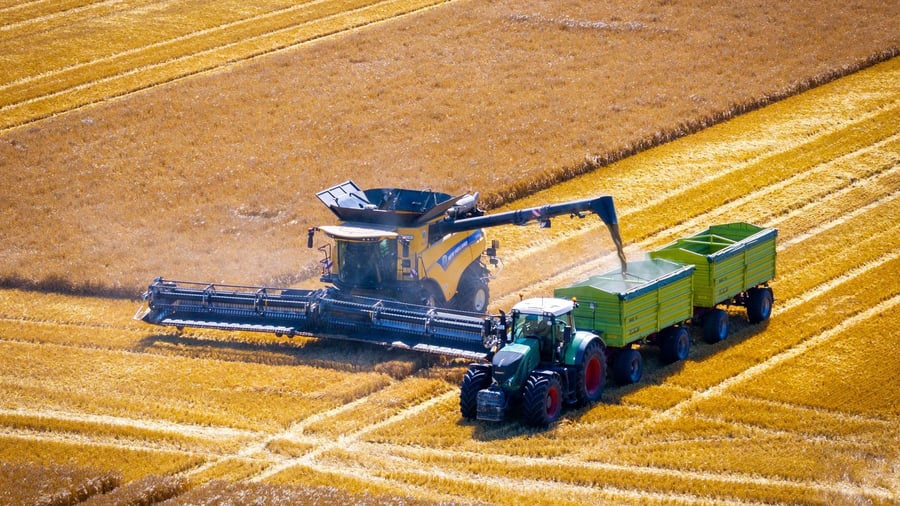
An extended drought this summer has severely impacted the harvest in parts of Germany, with losses amounting to around three million tonnes of grain and rapeseed since mid-June, according to the Deutsche Raiffeisenverband representing 1,600 agrarian cooperatives. The greatest declines are observed in the south, where low water levels in several rivers have also complicated grain transport via barge.
The Raiffeisenverband forecasts a significantly smaller harvest of 40.6 million tonnes of grain, compared to 45 million tonnes in 2025. Market expert Guido Seedler attributes the damage to a hot spell with temperatures surpassing 40 degrees, which "really sets the grain on fire." The loss in volume and quality caused overall earnings to drop by approximately 600 million euros.
Regional disparities exist in the harvest outlook, with yields near last year's levels expected in Schleswig-Holstein, while other regions in the north and east remain close to average. The situation worsens southward, particularly in Baden-Württemberg and Bavaria, where losses of up to 20 percent of grain, especially winter wheat, are anticipated.
Rapeseed also suffers from losses, not due to lack of rain but due to uncontrolled pests. The estimates for the harvest are based on the yield forecasts of the cooperative companies. The impact on bread and roll prices is minimal, as the grain's share in the final price is "in the low cent range" and driven primarily by energy, wage, and bureaucracy costs.
The industry is concerned about low water levels in several rivers, as barges transport grain and fertilizers. The central lifeline for transporting agricultural goods are waterways, stated Philipp Spinne, member of the Raiffeisenverbund executive board. Ensuring the ongoing transport to export ports in the North and Baltic Sea and for processing is a crucial factor.
The current harvest's storage capacities of the cooperatives are sufficient for the current delivery, but further transportation to mills must be secured.
Written by urgent.news from Handelsblatt's reporting — not their text. Machine-written — may contain errors; check the original before relying on it.