Commentary: The price of the AI boom: Why the Dax is doubly vulnerable
"Old Economy" with few promising business models still exists. However, more and more companies embody the "New Economy".
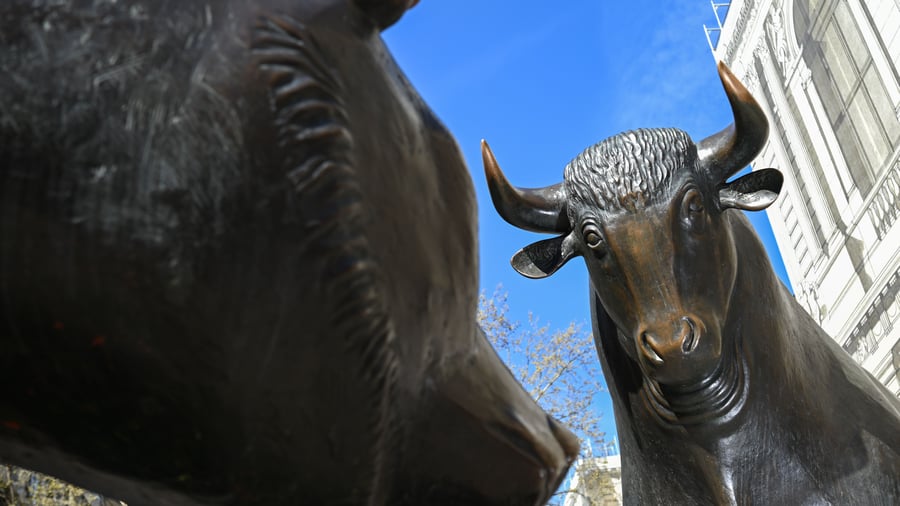
The boom in artificial intelligence has a price, and it has been revealed that the DAX index is doubly vulnerable. Wall Street's success with its growth companies represents the future, while the DAX's reliance on traditional industry firms represents the past. This is a common justification observed in financial markets when the DAX lags behind other stock market indices.
While there is some truth to this, there is also an essential flaw. The largest DAX winners, with a year-over-year price increase of more than 25 percent, are the stocks of Merck and DHL, formerly known as Deutsche Post. RWE, Infineon, and Bayer have also seen increases of over 50 percent in the same period. Even Hochtief achieved a gain of just over 100 percent over the past twelve months.
The DAX rose by ten percent. Previously struggling Bayer shares have risen, primarily due to justified hopes for an end to the lawsuit wave in the United States concerning alleged cancer risks from glyphosate-based weed killers. All other DAX winners, however, are benefiting from their daily business operations in artificial intelligence, which is far from being a past era.
Hochtief is actively involved in the construction of data centers in the United States through its subsidiary Turner Construction, thus participating in the infrastructure for AI application operation. Infineon manufactures essential semiconductors, RWE provides urgently needed electricity, Merck is a crucial supplier for microchip production, and DHL gains significantly from the increased freight volume for cooling equipment, servers, and computers.
Written by urgent.news from Handelsblatt's reporting — not their text. Machine-written — may contain errors; check the original before relying on it.