Jochen Flasbarth: "The Union's arch-nemesis": How a seasoned official drives the CDU to despair
Hardly any official is as powerful as State Secretary for the Environment Jochen Flasbarth. How the controversial climate protection fighter pulls the strings behind the scenes.
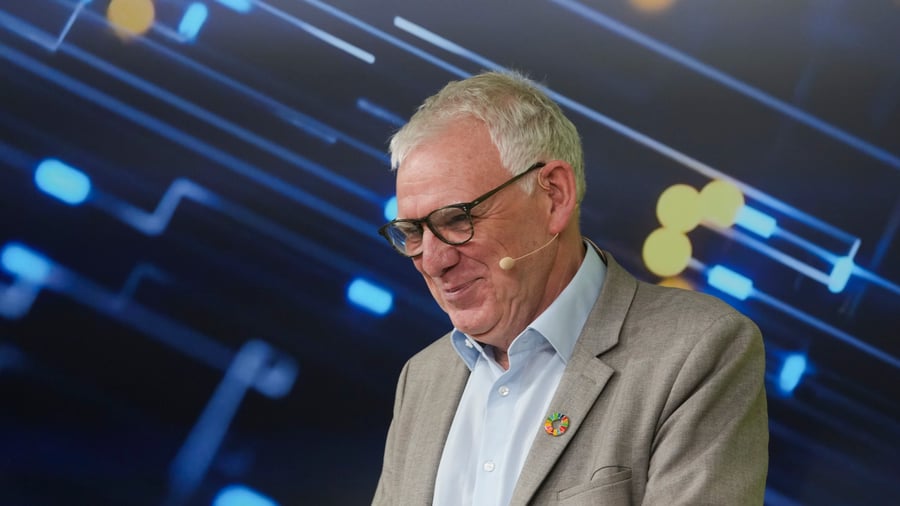
Jochen Flasbarth, a seasoned civil servant and a central figure in the CDU, has been driving the CDU to desperation. On June 17, 2026, he did not have to attend the meeting himself; several industry associations had written a dire letter to the top leaders of the federal government. Their concern was that a European regulation on methane emissions could overwhelm businesses.
The CDU-led Ministry of Economics pressured for a crisis meeting, which was attended by Economic State Secretary Frank Wetzel. However, Environmental State Secretary Flasbarth remained absent. The Ministry sent a deputy undersecretary, clearly indicating that the requested concessions for affected businesses would not be granted.
A deputy undersecretary has little to say in such rounds. This kind of maneuvering is what Union representatives have been continually despairing about Flasbarth. They see him as a central figure in the Ministry of the Environment and sometimes try to curb his influence. Flasbarth, the experienced state secretary, instead of Federal Environment Minister Carsten Schneider (SPD), who only took office in May 2025 without environmental expertise.
"Flasbarth, who was always there," they say. Flasbarth, with over nine years of experience in the role, has a rich background in environmental issues. He is often referred to as a "climate veteran" by "taz." As a youth, he joined the former German Bird Protection Society (DBV), from which the Nature Conservation Union (Nabu) emerged.
He became its president in 1994. Flasbarth joined the Ministry of the Environment in 2003 as a department head. In 2009, he became president of the Federal Environment Agency. In 2013, Environment Minister Barbara Hendricks (SPD) brought him back and made him her main negotiator during the Paris Climate Agreement negotiations in 2015.
Flasbarth's nomination for the UN Environment Program's top post in 2016 was unsuccessful. He remained a state secretary, including after Svenja Schulze (SPD) succeeded Hendricks in 2018. Respect for Flasbarth exists, but helplessness does as well. The Handelsblatt spoke with more than a dozen representatives from companies and associations who have interaction with the Ministry of the Environment and Flasbarth.
Often, the discussion revolves around very specific regulatory details: implementing the EU Industrial Emissions Directive, the law on the development of the greenhouse gas emissions reduction target, details of the emissions trading, the use of industrial waste heat, or the extension of the "Regulation on measures to prevent carbon leakage through the national fuel emissions trading scheme" – yes, such regulation exists.
In other words, it concerns things that only a few in companies and associations understand, and of course Flasbarth. Flasbarth, as a state secretary, is one of the highest-ranking officials in the Ministry of the Environment. He operates the Ministry, knows the files, structures, and networks. Over nearly nine years in this position, Flasbarth has looked back, interrupted only by four years as a state secretary in the Federal Ministry for Economic Cooperation and Development. "Flasbarth, who has always been there," is often said.
Written by urgent.news from Handelsblatt's reporting — not their text. Machine-written — may contain errors; check the original before relying on it.
This story
This is one outlet's version. Read the fullest account.