How Trump's construction projects are changing Washington and costing taxpayers
President Trump is pressing ahead with an ambitious effort to reshape Washington with new construction and renovations. The White House projects alone are now estimated to cost at least $900 million, with taxpayers funding a significant portion, despite earlier promises that private donors would cover most of the bill. White House correspondent Liz Landers takes a closer look.
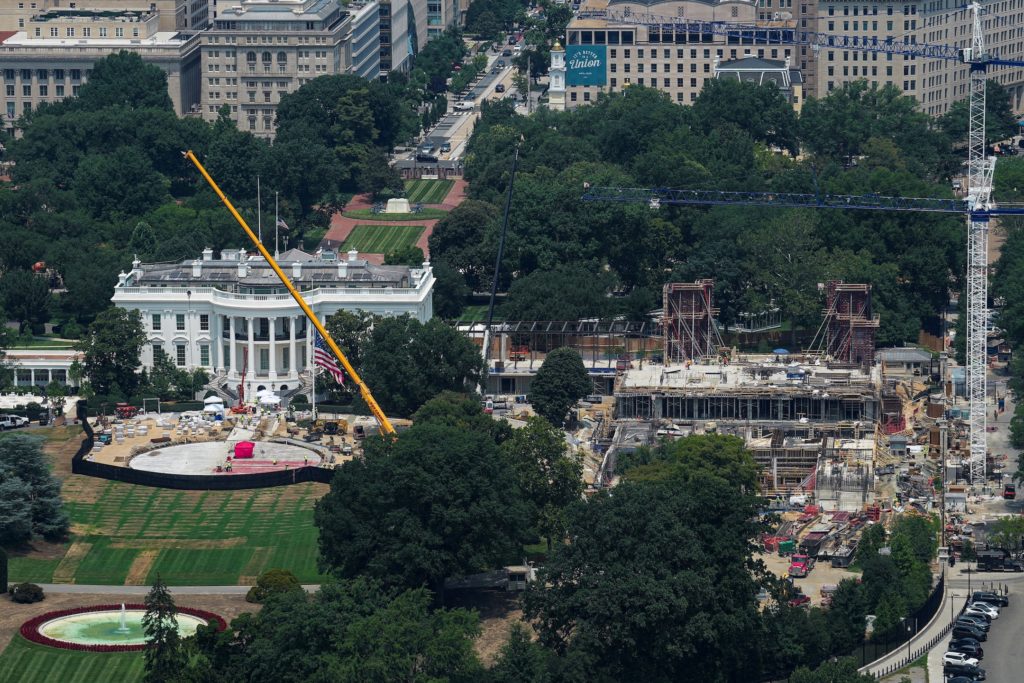
President Trump is actively working to transform Washington, D.C., through a series of new construction projects and renovations, with an estimated cost of at least $900 million. Despite previous claims that private donors would cover most of the expenses, the majority of the funding is being provided by taxpayers. White House correspondent Liz Landers reports on this ongoing effort to modernize the nation's capital.
The projects encompass a wide range of renovations, including paving the White House Rose Garden, renovating the Colonnade, building a new helipad for Marine One on the South Lawn, restoring the Lincoln Memorial Reflecting Pool, and gilding large statues near the Lincoln Memorial. However, the most significant project is the demolition of the East Wing to make way for a 90,000-square-foot White House ballroom, along with a new security facility.
This ambitious plan has faced various challenges, but if completed, it would provide a permanent space for future presidential inaugurations and events, as well as a secure underground bunker for national emergencies.
The total cost for these projects is at least $600 million and continues to rise. The White House claims that private donations will cover the ballroom's expenses, but taxpayers will be responsible for the substantial security enhancements. In June, the Secret Service allocated $352 million in taxpayer funds toward the ballroom project, drawn from the president's "One Big Beautiful Bill Act" passed last year.
The fundraising for the ballroom project is being managed by the Trust for the National Mall, a small nonprofit that previously focused on minor projects around the District of Columbia. However, the arrangement has raised concerns about transparency and accountability. Donors to the ballroom project have included major corporations such as Lockheed Martin, Microsoft, Amazon, Caterpillar, and Google.
Some of these companies have subsequently received new or increased government contracts worth over $50 billion since the donation campaign began. Furthermore, 16 corporate donors are currently facing federal enforcement actions or had their actions suspended by the Trump administration.
Critics argue that the arrangement is problematic, with the Trust for the National Mall requiring donors to preserve their anonymity. This lack of transparency and potential influence peddling have drawn criticism from watchdog groups like Public Citizen. The White House maintains that no donors are receiving preferential treatment and that the president is generously donating his time and resources to build a beautiful ballroom. However, many question whether this is a genuine gift or a form of political "grifting."
Written by urgent.news from PBS NewsHour's reporting — not their text. Machine-written — may contain errors; check the original before relying on it.