Eclipse warning: The key signs you may have damaged your eyes
Symptoms after looking at the sun without eclipse glasses can include blurred vision
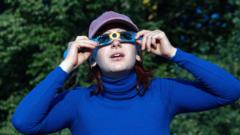
Ophthalmologists are cautioning individuals to watch for any indications that their eyesight might have been harmed while viewing the solar eclipse that occurred on Wednesday. Symptoms may encompass blurred vision, a central blind or dark area, and heightened light sensitivity. Following the last total solar eclipse in the United Kingdom in 1999, approximately 70 individuals suffered from impaired vision.
Many had only looked at the event for less than a minute, unaware they were endangering their eyesight. The risk arises because gazing at an eclipse without protective eyewear can harm the retina, located at the back of the eye, specifically the cells responsible for sharp central vision. The sun's intensity, even when partially blocked by the moon, is dauntingly bright.
Typically, we squint and quickly avert our gaze upon such exposure, yet during an eclipse, this reflex may not function, even though our eyes are being harmed. This intense light and ultraviolet radiation can result in a condition called solar retinopathy. Given the retina's lack of pain receptors, individuals often fail to detect the damage until it manifests several hours later.
Prior to the eclipse, specialists had advised using only certified solar eclipse glasses, asserting that regular sunglasses or comparable devices were insufficient to avert potential harm. Alexander Ionides, a consultant eye surgeon at Moorfields Eye Hospital in London, notes that if eyes have been damaged, symptoms typically manifest within a few hours.
"The issue presents itself as a central spot in the visual field, regardless of what you're focusing on—be it someone's face, text on a page, or a clock," Ionides explains. "It won't hurt, there's no sharp pain akin to a burn, and it can develop gradually." Ionides advises seeking immediate medical assistance if one suspects eye damage.
"In the UK, there are several avenues for checking eye health, including visits to local opticians who are well-equipped, who can perform retinal scans to identify any solar retinopathy, the retina damage caused by viewing the eclipse. They can also refer patients to local eye units. Additionally, most hospitals have an eye doctor on call."
Due to the delay in symptom appearance, it's currently impossible to determine if any eclipse-related eye damage has occurred. As the UK experienced a partial eclipse on Wednesday, the sun remained relatively bright, potentially dissuading many from directly staring at it. Ionides adds that compared to the 1999 total eclipse, fewer people have contacted his hospital so far, suggesting that the warning about the dangers of direct viewing may be reaching more people.
Written by urgent.news from BBC Health's reporting — not their text. Machine-written — may contain errors; check the original before relying on it.
This story
This is one outlet's version. Read the fullest account.
- Eyes on the Sky for the Solar Eclipse in the Balkans balkaninsight.com
- Eclipse warning: The key signs you may have damaged your eyes bbc.co.uk