Could buffalo leeches help inspire future blood-thinning drugs?
UMK researchers are studying anticoagulant proteins in the saliva of a local species for potential medical applications.
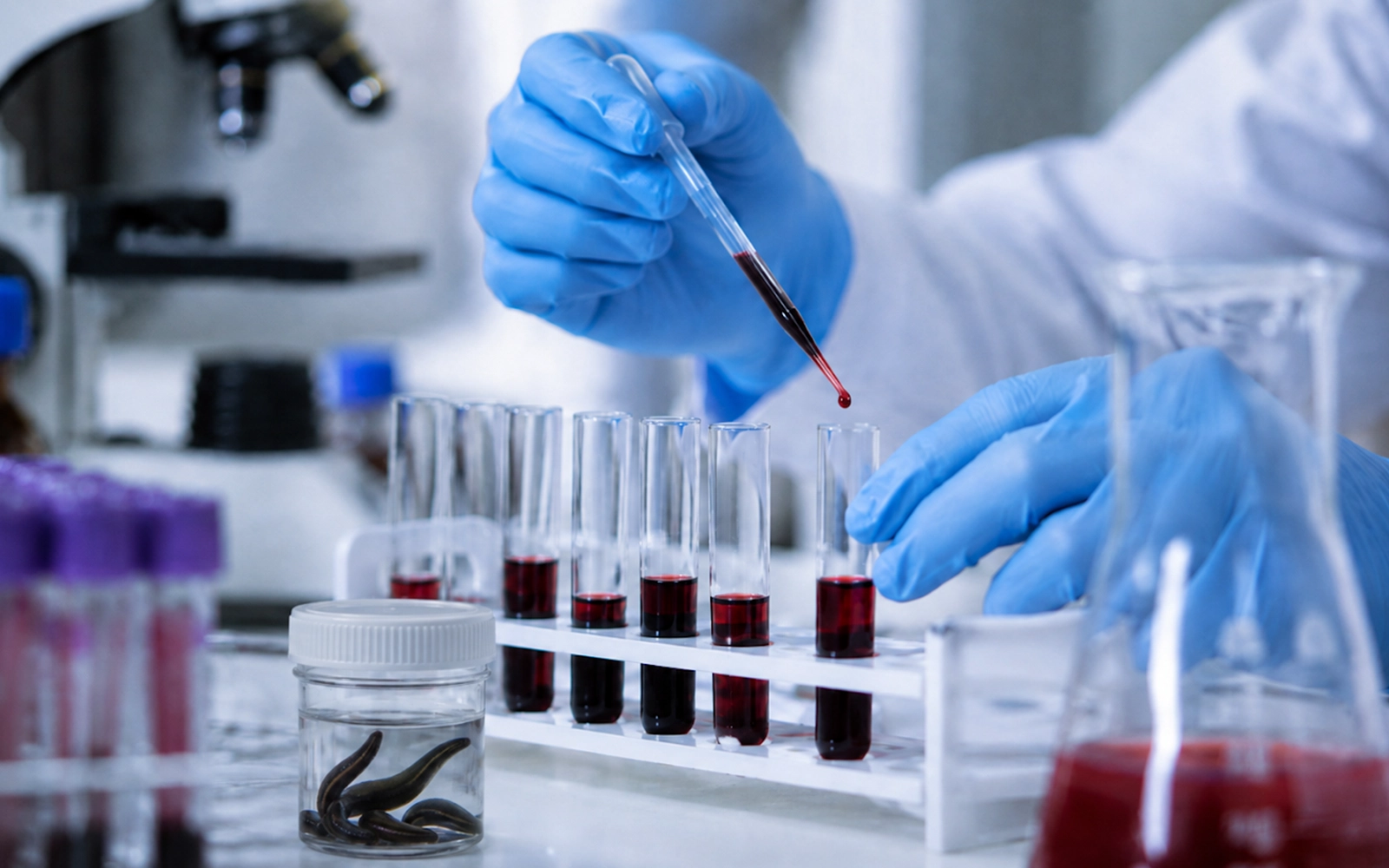
Researchers in Kelantan are investigating proteins found in the saliva of buffalo leeches, Hirudinaria manillensis, which may have potential as anti-clotting agents. A three-year study conducted by Universiti Malaysia Kelantan has been examining the proteins for their anticoagulant properties. According to Dr Zulhisyam Abdul Kari, a senior lecturer at UMK's Faculty of Agro-Based Industry, laboratory tests have demonstrated that leech protein extract can delay blood clotting, similar to other anticoagulants.
Hirudin, a naturally occurring anticoagulant found in leech saliva, specifically targets thrombin, an enzyme involved in the blood-clotting process, which has drawn attention from medical and pharmaceutical experts. Buffalo leeches were chosen for the study as they produce a higher volume of saliva and useful proteins compared to terrestrial leeches commonly found in Malaysia.
The researchers believe these leeches hold significant potential for biotechnology applications. Although medicinal leech therapy is still employed in select medical procedures, the primary focus lies in the biologically active compounds contained in the leeches' saliva and their potential isolation and development. Dr Zulhisyam hopes the research will prompt Malaysians to reconsider the often-misunderstood creature's value.
Buffalo leeches were previously more common in Malaysian paddy fields, but their numbers have declined due to agricultural practices, such as the excessive use of pesticides and chemical fertilizers, which impact the freshwater ecosystems they inhabit. Furthermore, the leech-farming industry in Malaysia has diminished due to issues related to fraudulent contract-farming schemes.
Management of leeches in Malaysia is now overseen by the fisheries department since 2011, following a transfer from the wildlife and national parks department. The research is currently at the stage where further funding would enable the team to conduct more detailed studies, including molecular biology research to fully understand the proteins involved.
Only then could an extract or compound derived from these leeches be considered for broader medical or commercial use. While buffalo leeches may not evoke affection when encountered in the wild, they present researchers with an unexpectedly valuable area of investigation under a microscope.
Written by urgent.news from Free Malaysia Today's reporting — not their text. Machine-written — may contain errors; check the original before relying on it.
This story
This is one outlet's version. Read the fullest account.
- Could buffalo leeches help inspire future blood-thinning drugs? freemalaysiatoday.com