Competing Interests, Common Narrative: How Industry Shapes the AI Race
Different firms in the AI value chain invoke the AI race narrative, but with different policy preferences in mind.
A recent Wall Street Journal article pointed out that the "clampdown on top U.S. artificial intelligence is fueling concern that Washington is handing Beijing a cyberwarfare advantage." China's release of Z.ai by Zhipu AI is comparable to Anthropic's Mythos model in identifying software vulnerabilities. This taps into the prevailing China-U.S.
AI race narrative at a time when the United States is contemplating a unified AI policy and considering a ban on Chinese open weight models. Yi-Ling Liu, in a May 2026 article for the Transformer newsletter, argued that major Silicon Valley companies have fueled this AI race narrative, potentially exaggerating the scale of competition.
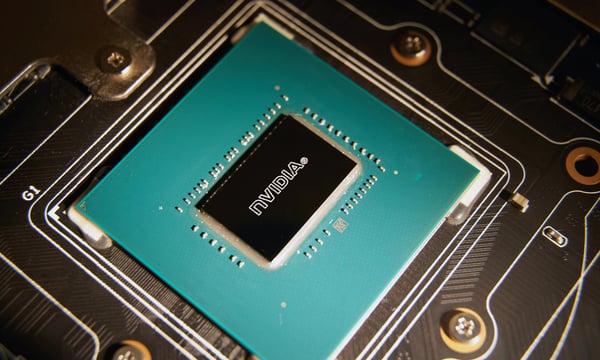
However, the interests of these companies are not homogeneous, nor are the policies they advocate. Different firms along the AI value chain have continued to use the AI race narrative to support policies that align with their commercial interests. Nvidia, which controls over 80 percent of global AI chip sales, has substantial stakes in shaping policies and regulations for AI.
In April 2025, the Trump administration introduced measures requiring Nvidia to secure additional export licenses for selling H20 chips to China, resulting in a $5.5 billion accounting charge. Nvidia CEO Jensen Huang lobbied the administration to reverse this policy, successfully invoking the AI race narrative to argue that existing chip restrictions would only accelerate Huawei's production of indigenous alternatives, potentially eroding U.S. technological leadership in AI.
Despite the claims being disputed, Nvidia's lobbying was effective, leading to a relaxation of export control policies. This shift was reportedly part of Nvidia's broader lobbying strategy. While American companies dominate the development and deployment of closed-source proprietary AI models, Chinese companies have deployed open-weight models that rapidly bridge the performance gap and offer more affordable alternatives.
Chinese companies have accused major U.S. AI developers of using model distillation, a process that involves transferring knowledge from larger AI models to smaller, faster, and cheaper models. Anthropic, for instance, accused three Chinese AI labs of engaging in an industrial-scale campaign to extract capabilities from Claude, leading to a coordinated response.
By framing distillation attempts by Chinese AI labs as industrial intellectual property theft, Anthropic positions its AI models as strategic assets in the AI race, demanding regulatory protection and potential punitive enforcement by the U.S. government. U.S. officials' recent statements echo Anthropic's concerns and emphasize the importance of maintaining American technological leadership in AI.
Written by urgent.news from The Diplomat's reporting — not their text. Machine-written — may contain errors; check the original before relying on it.