Chinese custom sees women throw embroidered balls from balconies to choose husbands
In some classic Chinese novels and period dramas, women of ancient times would throw an embroidered ball from a balcony to the street to randomly choose whoever caught it as their husband. In the classic novel Journey to the West, published in the 16th century, the father of the main character, Buddhist monk Xuanzang, was chosen by his mother by throwing an embroidered ball. In the 1998 Chinese…
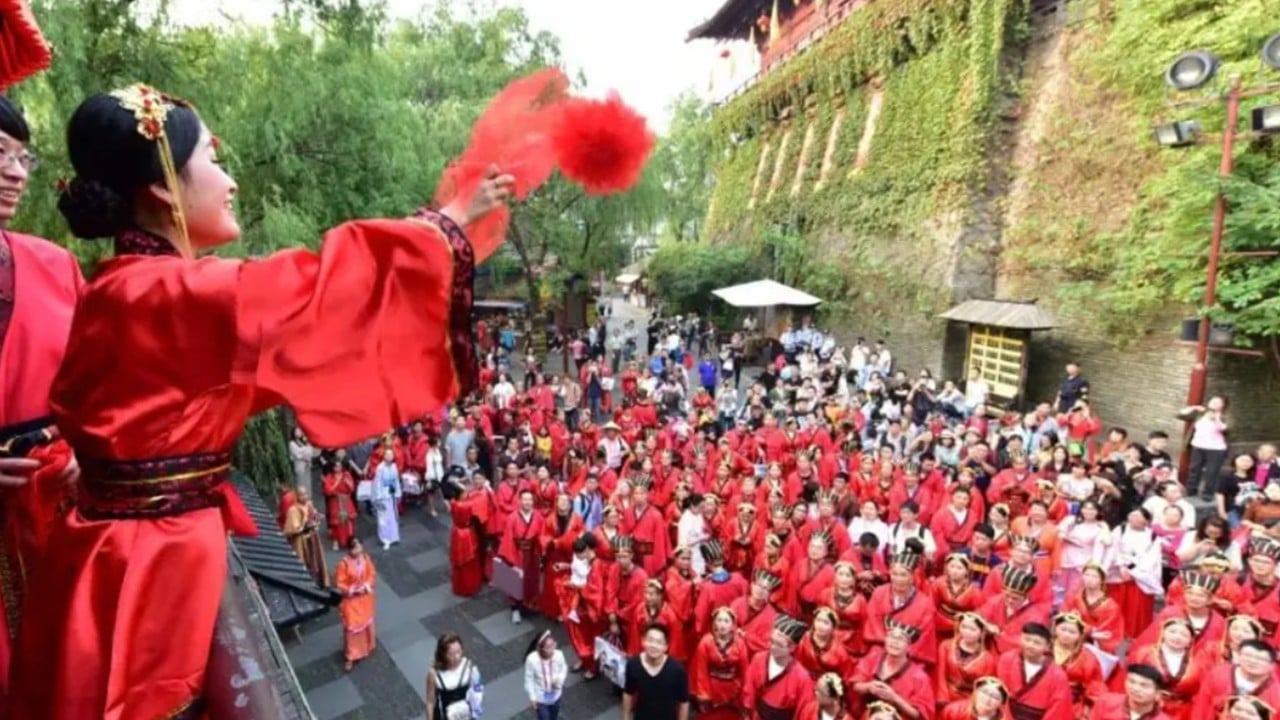
In certain classic Chinese narratives and television dramas, women from past centuries would toss an embroidered ball from their balconies, allowing it to fall onto the street where any passerby who caught it would become their spouse. The 16th-century novel Journey to the West recounts how the father of the protagonist, Buddhist monk Xuanzang, was selected by his mother through this method.
A similar scenario unfolds in the 1998 Chinese drama My Fair Princess, which draws inspiration from Taiwanese writer Chiung Yao’s Qing dynasty-set novel. Despite the prevalence of this plot device across numerous classic works, many now consider it merely a literary embellishment of a practice that is, in reality, rooted in a distinct cultural tradition.
The custom of exchanging embroidered balls to propose marriage is a prevalent pastime among young Zhuang individuals residing in southern China's Guangxi Zhuang autonomous region. Making up over 30% of Guangxi's population, the Zhuang ethnic group engages in this practice as a means of expressing romantic interest. On the third day of the third lunar month, young people congregate for a singing fair; however, it is only when two individuals harbor mutual affection that they exchange embroidered balls to declare their love.
Occasionally, these balls are adorned with tokens of affection. Each fist-sized embroidered ball is meticulously crafted by intertwining twelve stuffed petal units, adorned with auspicious hues, colorful ribbons, and red pendants. The artisans, typically women, infuse their own artistic flair into the embroidery, as intricately designed balls tend to garner more admiration from potential suitors.
The custom traces its origins back 2,000 years to Guangxi, where it is believed to have originated from an ancient hunting tool known as fei tuo, or flying weight. Initially a bronze weight fastened to a lengthy rope, fei tuo evolved into embroidered balls as a form of entertainment. This toy eventually found its way to China's central plains and was even documented in ancient Chinese literature, such as Tang poet Liu Yuxi’s The Joy of Playing the Embroidered Ball.
Liu wrote, "The five-coloured embroidered ball rolls in reunion, attending your sumptuous banquet... Thankfully we have this ball-tossing game of joy; please do not refuse this cup of wine." Although no longer a definitive indicator of marital partnership, engaging in the exchange of embroidered balls remains a cherished tradition.
Some attribute the modern association of this custom with opposition to feudal marriage norms to its portrayal in contemporary costume dramas. In feudal China, marriages were typically arranged alliances between families, leaving women with little agency in choosing their partners. By entrusting the selection of a spouse to the whims of fate through the act of tossing an embroidered ball, individuals subvert traditional expectations, emphasizing that love is ultimately determined by the universe, irrespective of social standing or wealth.
Written by urgent.news from South China Morning Post's reporting — not their text. Machine-written — may contain errors; check the original before relying on it.