Chinese carmakers could capture 15% to 30% of European market by 2035: Citi analysts
Chinese carmakers could capture between 15 and 30 per cent of the European automotive market by 2035, up from roughly 10 per cent this year, analysts at Citi said, with the outcome resting on how far Brussels goes in tightening tariffs and made-in-EU rules. Current European Union rules would allow Chinese carmakers to reach 30 per cent by 2035 – Citi’s base scenario – while extending existing…
Chinese automakers could potentially capture between 15 and 30 percent of the European automotive market by 2035, up from around 10 percent currently, according to analysts at Citi. The extent of this growth hinges on how far Brussels goes in tightening tariffs and implementing made-in-EU rules. Under current EU regulations, Chinese automakers could achieve a 30 percent market share by 2035, while keeping tariffs on Chinese electric vehicles and plug-in hybrids would limit the market share to 25 percent.
The most severe impact would come from the "made in Europe" requirement in the proposed Industrial Accelerator Act, which could reduce Chinese carmakers' market share to 5 percent within two years and hold it at 15 percent by 2035. Implementing a comprehensive "made in EU" framework would compel Chinese automakers to assemble locally and utilize local supply chains, significantly diminishing "future market share gains as EU local manufacturing offsets China's cost advantages," the analysts stated.
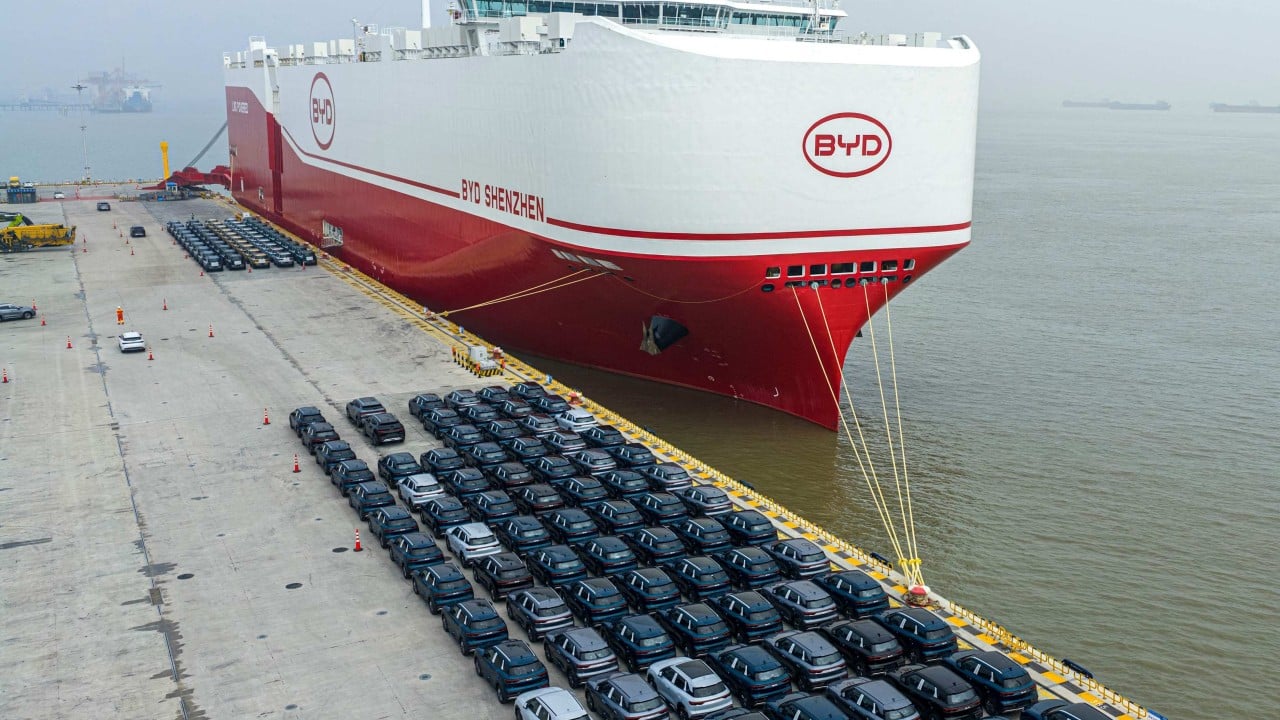
European carmakers may face a decade of volume losses and restructuring, with other Asian automakers, primarily from Japan and South Korea, also experiencing a decline in market share, falling from 20 percent in 2023 to below 16 percent by 2035. Currently, Chinese automakers have rapidly expanded their market share in Europe, led by brands like BYD and MG, causing alarm among European politicians and manufacturers.
In April, Chinese carmakers' market share in 18 western European countries hit 10 percent, up from 4.9 percent a year earlier. China's global passenger vehicle exports surged by 73 percent year-on-year to 800,000 in the first five months of the year, according to HSBC's June report.
The Citi analysts anticipate the European market – encompassing the EU, the United Kingdom, and the four members of the European Free Trade Association: Iceland, Norway, Switzerland, and Liechtenstein – to barely grow over the next decade, increasing from 13.3 million cars in 2023 to 13.8 million in 2035. Consequently, every sale gained by Chinese brands would come at the expense of incumbents.
Volkswagen Group brands, excluding Porsche, are expected to witness a volume decrease of over 500,000 by 2035 compared to last year, while Stellantis would lose more than 300,000 cars and Renault more than 200,000. Premium marques such as BMW and Mercedes-Benz would shed roughly 100,000 and 50,000 cars, respectively, with Porsche being the sole exception, gaining about 3,000.
The premium and luxury segment, with an average price above €60,000 (US$69,134), remains relatively protected from Chinese competition, as buyers in this segment are more influenced by residual value, service, and brand loyalty. The analysts noted that Chinese automakers' gains have primarily been concentrated in mid-size electric and plug-in hybrid SUVs, rather than petrol models, hatchbacks, or luxury sedans.
Written by urgent.news from SCMP Business's reporting — not their text. Machine-written — may contain errors; check the original before relying on it.
This story
This is one outlet's version. Read the fullest account.