China’s STEM students turn to Singapore as Western study options shrink
For generations, China’s brightest science and technology minds followed a well-worn path: board a Westbound flight and claim a seat at a globally renowned university. That once-reliable trajectory has fractured. Escalating US-China tech competition and tightening immigration policies across the “big four” study destinations – Australia, Canada, the United Kingdom and the United States – have…
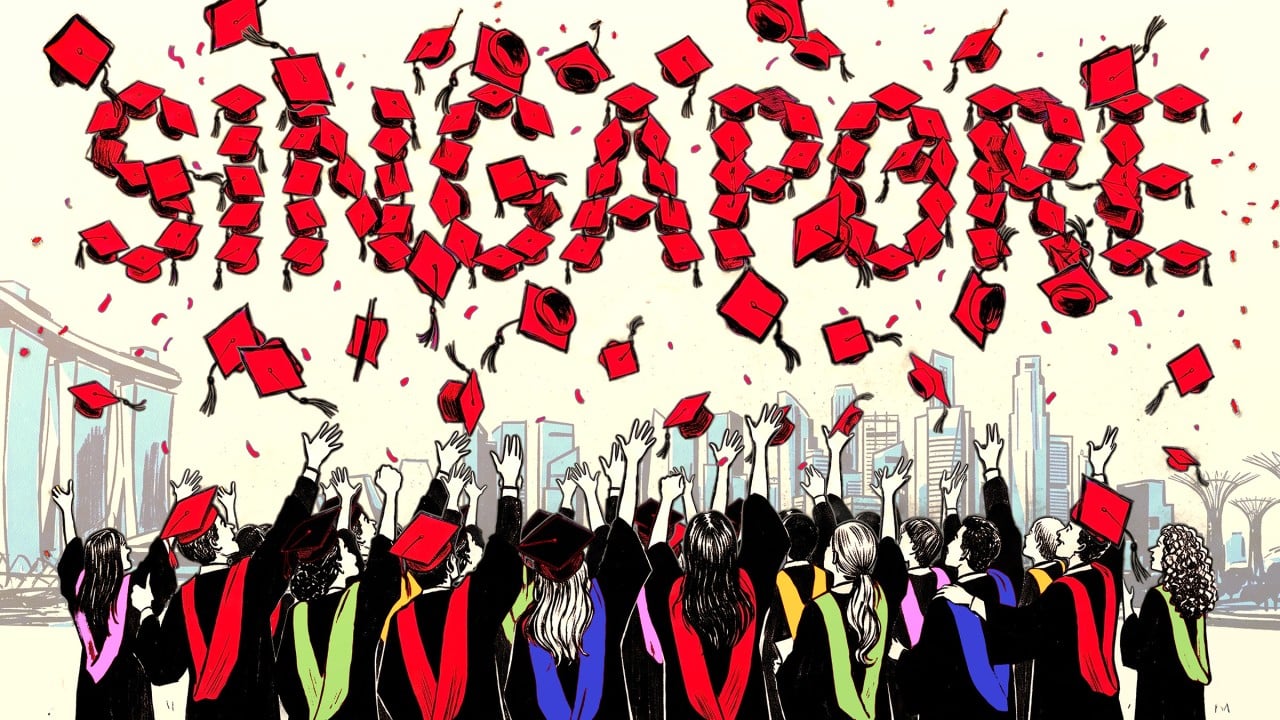
For generations, China's top science and technology students have traditionally sought to study at globally renowned universities in Western countries. However, rising US-China technological rivalry and immigration policy restrictions in the "big four" study destinations – Australia, Canada, the United Kingdom and the United States – have caused a transformation in the global educational mobility landscape.
As Western universities tighten security protocols and access controls for their laboratories, a growing number of China's brightest talents in the fields of science, technology, engineering and mathematics are quietly shifting their focus towards Singapore.
The country's decades-long scholarship programme, the Senior Middle 2 (SM2) programme, has been instrumental in luring Chinese students to the island state. This initiative, established in 1997 through a joint effort between Singapore's and China's ministries of education, offers fully funded undergraduate education in science and engineering at prestigious institutions like the National University of Singapore and Nanyang Technological University (NTU).
In exchange for their scholarships, students are required to work in Singapore for six years post-graduation.
The SM2 programme's successor, managed by Business China, a non-profit organization launched by Singapore's founding prime minister Lee Kuan Yew, continues to gain popularity as Chinese families seek safer and more politically stable educational opportunities. Education experts attribute this shift to the attractiveness of Singapore's scholarship schemes, which draw academically gifted Chinese students during their formative years and integrate them into both the local university system and the highly skilled workforce.
The American education dream for Chinese families has faced increased political headwinds, with the U.S.-signed Proclamation 10043, established in 2020, restricting Chinese graduate students and scholars in STEM fields deemed a national security risk. This policy, maintained across administrations, has contributed to the growing appeal of Singapore for Chinese students.
Similarly, Canada's limited international study permit allocation and Australia's prolonged visa background checks for Chinese postgraduate STEM students have further dissuaded students from pursuing higher education in these countries.
At the same time, the UK has implemented restrictive policies targeting international students, including a 2024 restriction on family members accompanying students and a shortened post-study work visa from two years to 18 months. In response to these challenges, Singapore offers a viable alternative for Chinese students, providing a middle ground between China and Western nations, while not being perceived as hostile towards China.
This shift in educational preferences highlights the growing importance of risk management considerations for Chinese students and their families seeking an overseas education that provides academic prestige, employability, and long-term security without the political uncertainty now associated with certain Western destinations.
Written by urgent.news from Reuters Business via SCMP's reporting — not their text. Machine-written — may contain errors; check the original before relying on it.
This story
This is one outlet's version. Read the fullest account.