China’s STEM students turn to Singapore as Western study options shrink
For generations, China’s brightest science and technology minds followed a well-worn path: board a Westbound flight and claim a seat at a globally renowned university. That once-reliable trajectory has fractured. Escalating US-China tech competition and tightening immigration policies across the “big four” study destinations – Australia, Canada, the United Kingdom and the United States – have…
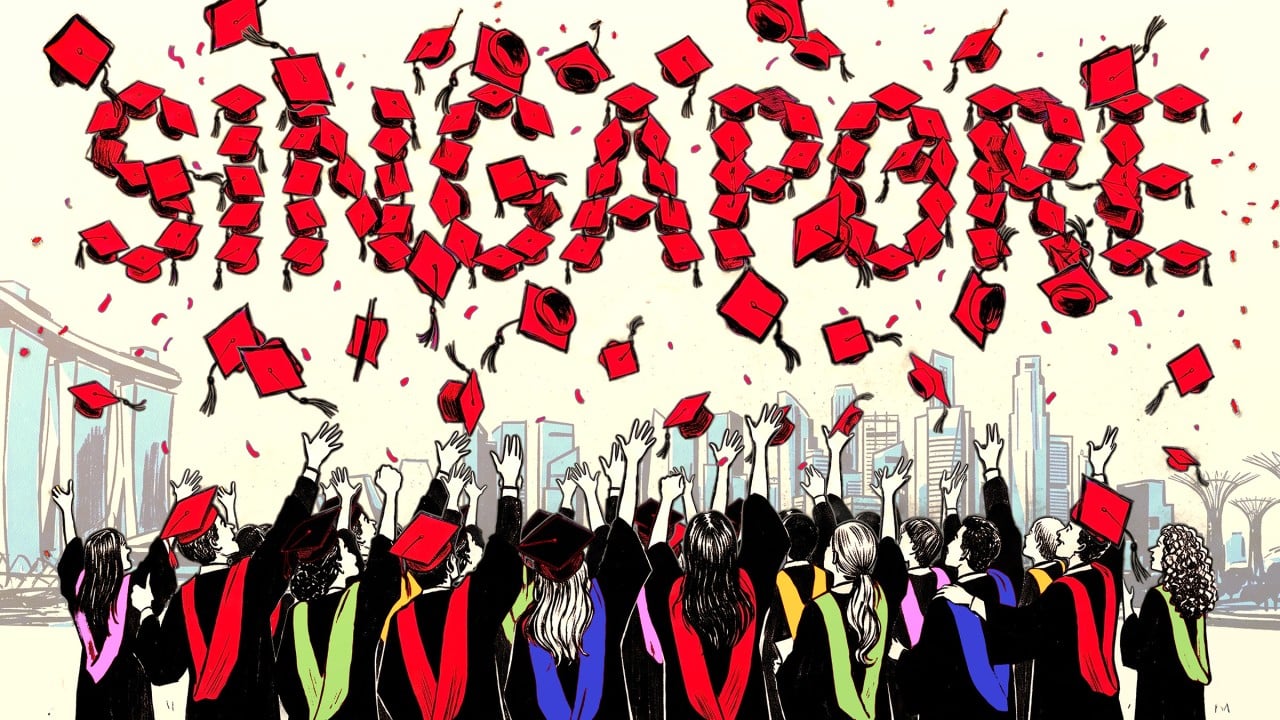
For decades, Chinese students aspiring to pursue science and technology education had relied on a well-established pathway: leaving for Western universities. However, recent geopolitical tensions and tightening immigration policies across key study destinations – including the United States, Australia, Canada, the United Kingdom and Singapore – have disrupted this traditional route.
As Western nations impose stricter access controls and security protocols, a significant number of China's brightest STEM talent are now turning their attention to Singapore as a potential alternative.
A major draw for Chinese students is the Singapore government's long-standing scholarship program, the Senior Middle 2 (SM2) scholarship. Launched in 1997, this initiative recruits high-performing secondary school students from China to study at prestigious Singaporean institutions like the National University of Singapore and Nanyang Technological University (NTU).
Recipients receive fully funded undergraduate education in science and engineering, along with living allowances, in exchange for a six-year commitment to work in Singapore after graduation.
The SM2 scholarship has gained renewed significance as Chinese families seek safer and more politically stable study destinations amid visa restrictions, anti-China sentiment, and uncertain immigration policies in Western countries. Education experts attribute the growing appeal of Singapore to its scholarship schemes, which attract academically gifted Chinese students during their formative years and integrate them into the country's universities and skilled workforce.
The decline in Chinese students pursuing higher education in the United States can be attributed to the US government's Proclamation 10043, which restricts Chinese graduate students and scholars in STEM fields based on national security concerns. This policy, maintained across administrations, has deterred many Chinese students from considering the US as a study destination.
Similar challenges have arisen in Canada, Australia, and the United Kingdom, with each country implementing restrictive immigration measures that have impacted Chinese students' plans to study abroad.
Despite these challenges, Singapore remains an attractive option for Chinese STEM students, offering a middle ground between China and Western countries. Its scholarship programs, coupled with its reputation for academic prestige, employability, and long-term security, make it a compelling alternative for Chinese students seeking an overseas education.
Written by urgent.news from South China Morning Post's reporting — not their text. Machine-written — may contain errors; check the original before relying on it.