Can Japan’s Defense Industry Meet its Ambitious Goals?
Japan increasingly recognizes the importance of the defense industrial base as a source of strategic capability. But can the industry actually deliver?
On August 4, the Japanese Ministry of Defense released its annual 2026 Defense White Paper, detailing Japan's defense policies and activities. One of the report's key focuses was on Japan's "new ways of defense" and its defense production capacity. Japanese Defense Minister Koizumi Shinjiro remarked at the Farnborough International Airshow, stating, "Defense production is deterrence itself.
No matter how advanced a defense system may be, it means little if it cannot be produced." Koizumi's statement highlights a shift in Japan's perspective on deterrence, emphasizing the importance of a robust defense industrial base as a strategic capability.
The White Paper draws lessons from recent conflicts, such as Russia's invasion of Ukraine and the ongoing Middle East crisis. These events underscore the significance of unmanned assets, air defense, and maintaining a defense industrial base capable of supporting prolonged wars. Furthermore, recent concerns over diminishing U.S. munitions supplies have heightened worries among U.S. allies about the reliability of American military support.
Japan's Prime Minister Takaichi Sanae's administration aims to finalize revisions to Japan's three primary security documents by the end of 2026. These revisions are expected to adapt Japan's national security strategy to the evolving regional security landscape, incorporate new capabilities through strengthened alliances, and boost self-reliance.
Takaichi's administration has already advanced Japan's security position by relaxing guidelines for transferring defense equipment and technology, and lifting a ban on lethal weapons exports. This move enables Japan to export lethal weapons to 17 countries that have agreed to the Equipment and Technology Transfer Agreements (ETTAs), promoting both improved relations with allies and economic growth through a stronger defense industry.
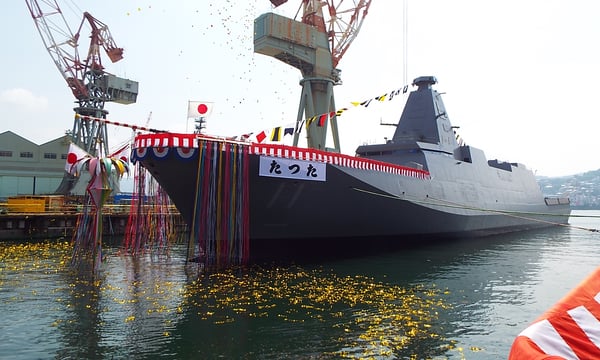
Recent examples include Japan's $7 billion contract with Australia to supply Mogami-class frigates starting in 2029 and talks with the Philippines regarding the export of Type 88 surface-to-ship missiles. At the Shangri-La Dialogue in May, Koizumi discussed possible sales of Mogami-class frigates with New Zealand. With the new export guidelines, Japan can now sell weapons developed through joint production, including those from the Global Combat Air Program (GCAP) involving Japan, Italy, and the United Kingdom. Canada has joined GCAP as an observer.
However, Japan faces several challenges in building a robust indigenous defense industrial base. These include enhancing supply chain resilience, improving manufacturing efficiency, bolstering cybersecurity, and retaining skilled personnel in the defense sector. Japan's aging population and labor shortages present significant obstacles.
Additionally, companies may reduce or exit the defense market, further complicating Japan's efforts to bolster its defense production. The Ministry of Defense and the government must make defense production more attractive to companies to strengthen production capacity and enhance alliances with the United States and key partners.
While increased defense spending is necessary, it is not sufficient for Japan to achieve its ambitious goals. The government and the Ministry of Defense must realistically evaluate their industrial capabilities and maintain a long-term commitment to strengthening and sustaining their defense industrial base.
Written by urgent.news from The Diplomat's reporting — not their text. Machine-written — may contain errors; check the original before relying on it.