'You all know we’re not actually going to lose gravity for 7 seconds today right?': why the Weather Channel is reminding us that the eclipse doesn't zap gravity and the study that asked if it has any effect
Wait. There might be some effect?
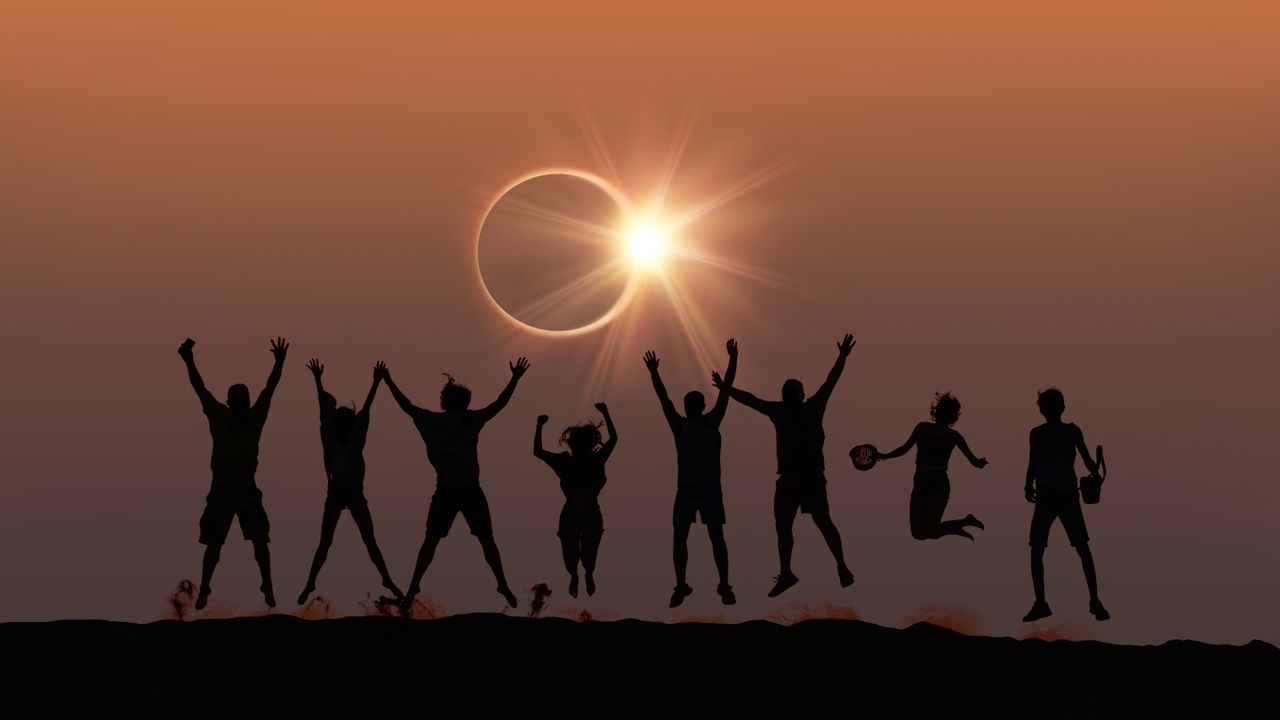
On August 12, 2026, a full solar eclipse will be visible across parts of the Earth, including Spain. During the eclipse, the moon will pass between the Earth and the sun, briefly casting a shadow that will result in near-total darkness. However, contrary to a popular conspiracy theory, this celestial event will not cause a disruption to gravity, nor will it cause objects to float away.
A recent Weather Channel post on Threads warned its followers not to believe the myth that the eclipse would zap gravity for 7 seconds. The rumor began when a TikTok claimed that NASA had a project named "Project Anchor" to address the issue. NASA quickly put out a statement to Snopes, refuting the claim, stating, "The Earth will not lose gravity on Aug. 12, 2026."
The gravitational force of the Earth is determined by its mass, which includes its core, mantle, crust, ocean, terrestrial water, and atmosphere. A total solar eclipse does not have any unusual impact on Earth's gravity; however, it does influence tidal forces. The gravitational pull of the Sun and Moon on the Earth is well understood and can be accurately predicted for decades in advance.
While it is true that some studies have shown peculiar effects on pendulums during solar eclipses, the anomalies can be attributed to mundane causes like temperature changes. In 1999, Chris P. Duif, a physicist at Delft University of Technology, conducted a study to investigate the reported changes in pendulum swing during solar eclipses.
Duif concluded that there were weak conventional explanations for the anomalies, but he could not rule them out entirely. He stated that if any anomalous effect were to exist, further study and collaboration between experiments and theoretical models would be required to confirm its existence.
Written by urgent.news from TechRadar's reporting — not their text. Machine-written — may contain errors; check the original before relying on it.