Why space is actually a terrible place to cool a data center
AI data centers in space sound great, but practically speaking, they may be next to impossible. For tech bros, it The post Why space is actually a terrible place to cool a data center appeared first on The New Stack .
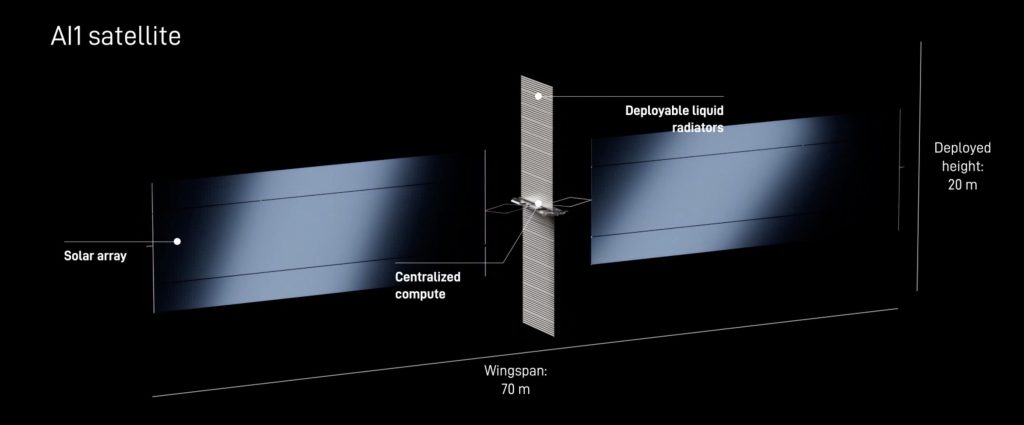
Space, often touted as the ideal location for spacious AI data centers, may not be the most practical option. Tech giants SpaceX and NVIDIA have teamed up to build AI data centers in space using the Starmind AI satellite. These massive satellites, standing 30 meters tall with a 75-meter solar-array wingspan, will be equipped with NVIDIA Vera CPUs and Rubin GPUs and orbit at an altitude of approximately 600 kilometers. They will communicate using Starlink's laser links.
The satellites will generate up to 250 kW of power during peak operation, cooling down to about 175 kW on average. Solar power will be their primary source, eliminating the need for constructing new power plants, unlike Earth-bound competitors. The satellites will employ a deployable liquid radiator system, measuring 160 square meters, to dissipate heat.
However, the cooling process is a significant challenge due to the extreme temperature variations in space, ranging from 393 Kelvin (248 degrees Fahrenheit) in full sunlight to the frigid -454 degrees Fahrenheit at 3 Kelvin. The cooling system must radiate heat away as infrared radiation, a slow process.
Networking in space presents another set of complications. Starlink's optical inter-satellite links will facilitate communication among Starmind satellites and relay AI results back to Earth. However, the network's capabilities may not match those of a terrestrial AI supercomputer, with concerns over bandwidth, latency, and resilience against space debris, potential warfare, and solar storms.
Written by urgent.news from The New Stack's reporting — not their text. Machine-written — may contain errors; check the original before relying on it.