Total solar eclipse: Where it will be visible and how long it lasts
What to know about the total solar eclipse
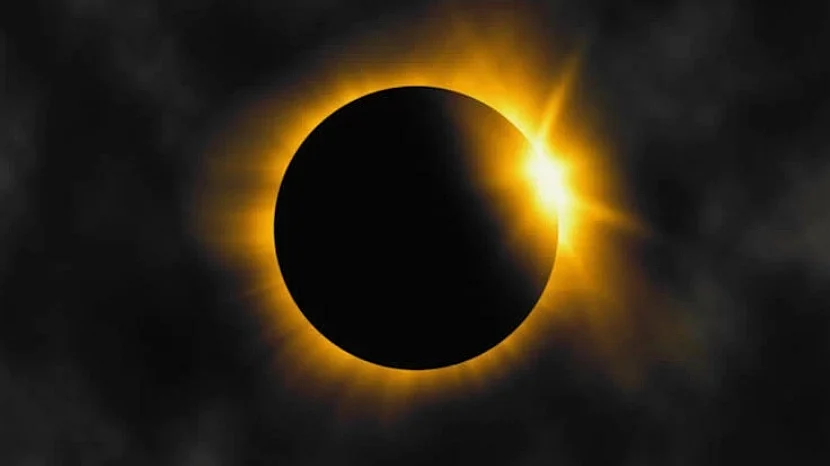
A rare total solar eclipse will sweep across northern Spain on August 12, transforming a sliver of the sky into an eerie twilight. The Moon will completely block the Sun's light, revealing the corona, the Sun's outer atmosphere. This celestial event, which last occurred in mainland Europe in 2006, will be visible from northern Russia, Greenland, Iceland, Spain, and the northeastern tip of Portugal.
In Spain, the total eclipse will last approximately two minutes near sunset, with the northern city of Burgos experiencing a brief darkness of one minute and 48 seconds. The phenomenon will be visible for longer in regions like Russia and Greenland, though still under two-and-a-half minutes. However, those witnessing the partial stages can still experience the Sun's brightness dim by one percent and feel a temperature drop, though not to the extent of a total eclipse.
Total solar eclipses occur roughly once or twice a year, but the path of totality is a narrow band, meaning the same location may not see another for up to 400 years. The next total solar eclipse to cross southern Spain, northern Africa, and the Arabian Peninsula will last six minutes and 23 seconds on August 2, 2027. Following this, Spain will witness an annular eclipse on January 26, 2028, known as the "ring of fire."
Regardless of the type of eclipse, it is crucial to protect one's eyesight by using eclipse glasses that comply with the ISO 12312-2:2015 standard to avoid serious eye damage.
Written by urgent.news from Gulf News's reporting — not their text. Machine-written — may contain errors; check the original before relying on it.