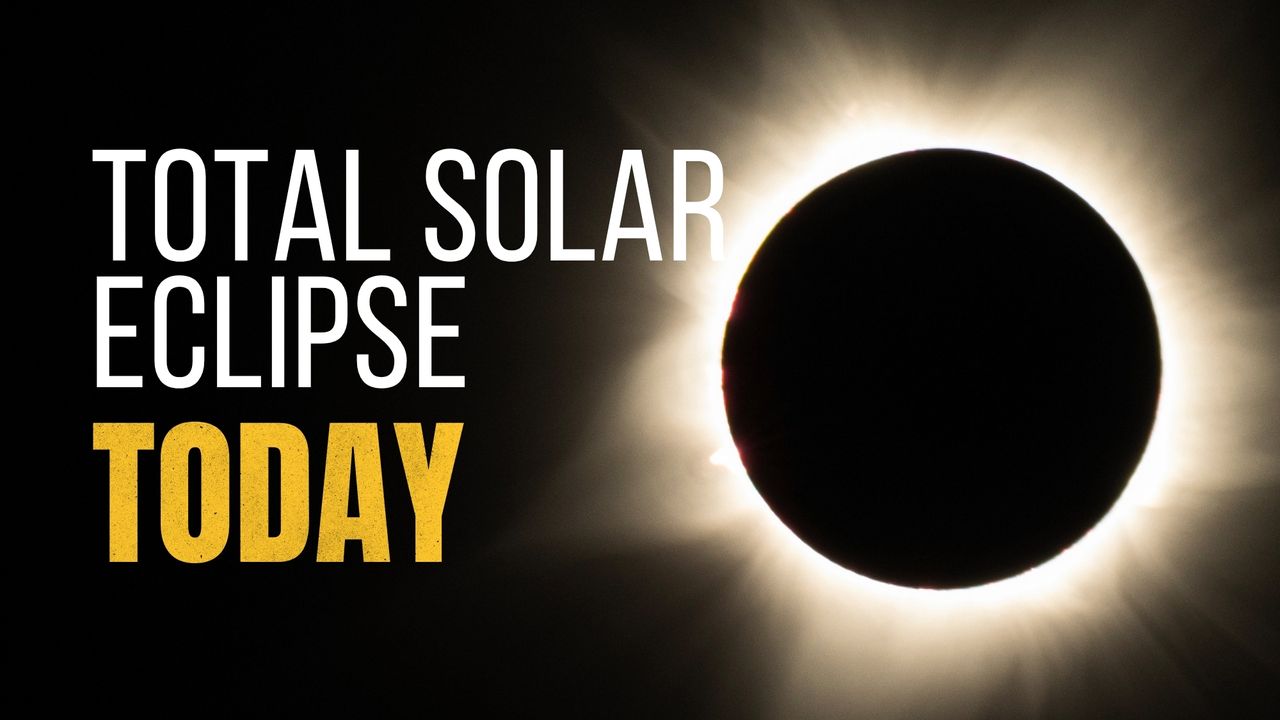
Total solar eclipse over Spain to draw millions of viewers across Europe
Large parts of north and central Spain, plus smaller parts of Portugal, Greenland and Iceland, will see a total solar eclipse on Wednesday – with the phenomenon also visible in the south of France. Starting near the North Pole before tracking south, the total eclipse will last up to two minutes and 18 seconds, with the partial eclipse visible across much of Western Europe, including the United…
A total solar eclipse is set to occur on Wednesday, visible in large parts of north and central Spain, as well as smaller parts of Portugal, Greenland, and Iceland. The phenomenon will also be partially visible across much of Western Europe, including the south of France. According to the Guardian Science, officials estimate that as many as 6 million people could flock to the eclipse path in Spain, which stretches about 200km from A Coruña in Spain's northwest to the Mediterranean island of Mallorca.
The total eclipse will last up to two minutes and 18 seconds, with the shadow cast by the Moon crossing Spain diagonally from the northern Atlantic coast to the Mediterranean Sea, where it will vanish at around 1830 GMT, as reported by The Jakarta Post. The eclipse will be mainland Europe's first total eclipse since 2006.
The event has generated significant excitement, with eclipse chasers, tourists, and astronomers searching for the clearest skies to watch the two minutes of totality, as noted by Guardian Science. César González, an astronomer and science communicator at the Madrid Planetarium, described the event as "one of the best spectacles in nature".
Brief written by urgent.news from RFI English, The Jakarta Post, Ajel English, Guardian Science, Live Mint — 5 reports on this story. Machine-written — may contain errors; check the original before relying on it.
This story
This is one outlet's version. Read the fullest account.
- Eclipse craze grips Spain, Iceland as millions get set for 'event of the century' brecorder.com
- August’s total solar eclipse will sweep over Spain, Iceland and Greenland apnews.com
- ‘It’s going to be spectacular’: Millions flock to Spain seeking best view of total solar eclipse theguardian.com
- How to check if your eclipse glasses in Spain are safe and certified thelocal.es
- Spain urges wildfire caution as millions prepare to travel to see the total solar eclipse on Wednesday theolivepress.es
- A Total Solar Eclipse Is Coming to Spain. This Madrid Museum Is Celebrating With a Digital Artwork Illuminating Its Paintings ‘In the Light of the Eclipse’ smithsonianmag.com
- A unique ninety seconds in the 21st century: Spain prepares for historic eclipse trio euronews.com
- Hotel Prices Soar as Spain Readies for Total Solar Eclipse en.tempo.co