Three black holes discovered in a young galaxy for the first time
Three massive black holes have been found in a galaxy that existed during the earliest times of the universe
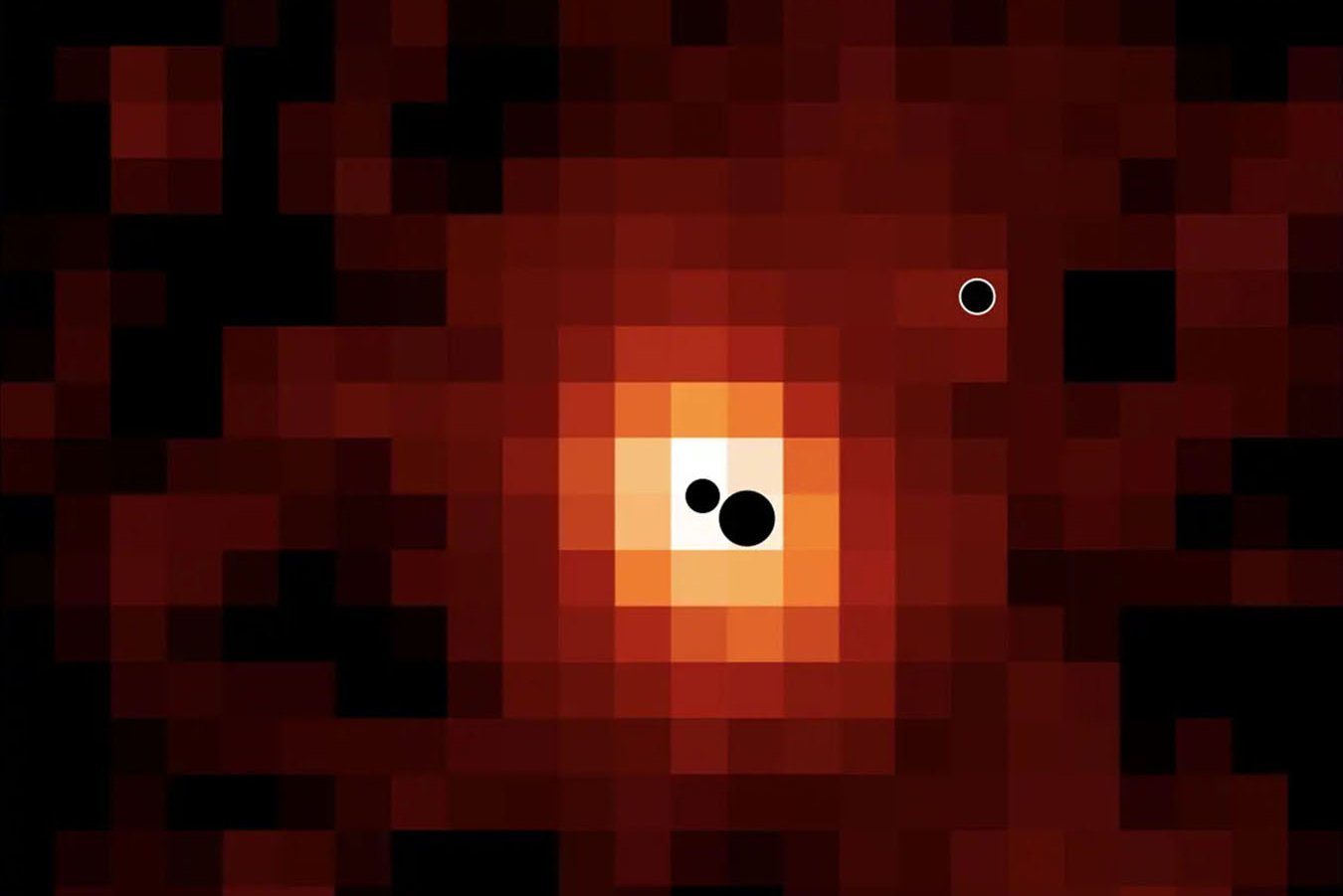
Three massive black holes have been discovered in a galaxy located 12.5 billion light years away, in the early universe, according to a recent discovery by researchers at the Max-Planck Institute for Extraterrestrial Physics in Germany. Astronomers were observing the galaxy, known as J0148-4214, through the James Webb Space Telescope when they noticed something unusual.
The galaxy's central emission profile had a peculiar shape, indicating the presence of two accreting black holes separated by approximately 620 light years. An accreting black hole is a super dense region of space that continuously pulls in surrounding gas, dust, and stars. The team also identified a third, more distant black hole located more than 5500 light years away from the other two.
This unexpected discovery has left astronomers surprised, as such a complex system containing multiple massive black holes has never been observed so early in the history of the universe, just 1.2 billion years after the Big Bang. The discovery suggests that processes in the early universe were efficient at bringing massive black holes together and indicates that black hole mergers may have been a rapid growth route for black holes in the early universe.
Written by urgent.news from New Scientist's reporting — not their text. Machine-written — may contain errors; check the original before relying on it.