The long wait for a woman Minister in Karnataka
Inducting a woman into Cabinet has not been a priority of the government
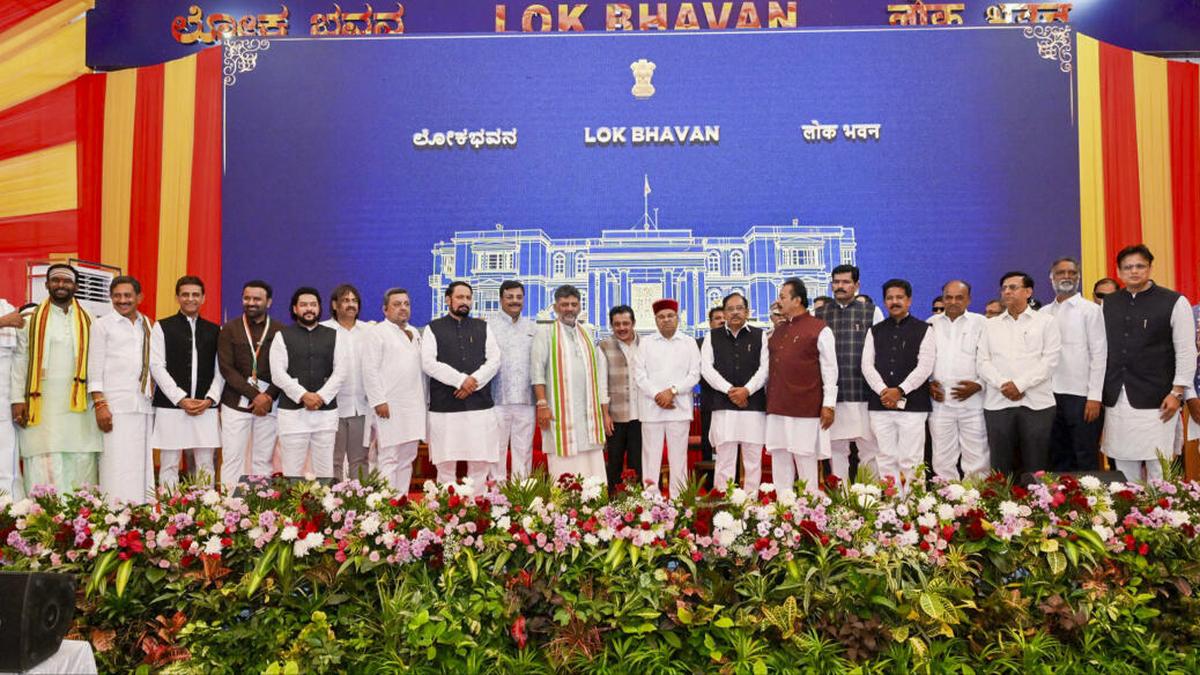
The Karnataka monsoon session of the state legislature will commence on August 13 with a Cabinet that lacks even a symbolic representation of women. The last two weeks have witnessed intense debates and disagreements over the expansion of the Cabinet and the allocation of portfolios, with arguments centered around ensuring representation across castes and regions.
Chief Minister D.K. Shivakumar and his party officials have journeyed to New Delhi multiple times to discuss matters with the central leadership, spending considerable effort in appeasing "powerful" leaders who were displeased with being excluded from Cabinet positions or not receiving coveted portfolios. However, the issue of women's representation appears to be a low priority.
When questioned by the media about the absence of women in his 33-member Cabinet, Mr. Shivakumar admitted that there was "no urgency" in the matter, adding that the remaining spot would be filled by a woman. The lone woman in the Congress high command’s approved list of Ministers, Gayathri Shanthegowda, mysteriously vanished before the swearing-in ceremony, as the demands of other influential groups took precedence.
This situation is particularly ironic given that the Congress has been vociferously advocating for 33% women's reservation nationally, yet failed to translate this commitment into State-level action. The Congress government's power base is built on five guarantees, two of which specifically focus on women's empowerment. Despite these promises, the final electoral rolls from the 2023 elections revealed that women voters outnumbered men in 17 out of the 34 electoral divisions in Karnataka.
The Chief Minister's network of feminists and women's rights groups have criticized the all-male Cabinet as a political choice, signaling that women and women's leadership are dispensable when it comes to exercising state power. While there have been street protests by supporters of leaders demanding their inclusion, there have been few protests against the exclusion of women.
The issue of Brahmins not being represented in the Cabinet has garnered more attention than the lack of women. Historical data shows that women's share in political representation in Karnataka has always been low, similar to the rest of the country. During the 2023 Assembly elections, out of 2,613 candidates, only 185 were women, with 10 being elected, accounting for approximately 4.5% of the total Assembly strength.
In the first two elections in Karnataka in 1957 and 1962, women's representation stood at 6.25% and 8.65%, respectively, the latter being the highest ever. Since then, the percentage has fluctuated, with women being entirely absent from the Assembly in the 1972 election. This situation is all the more striking considering that Karnataka was a pioneer in providing 50% reservation to women in local bodies.
The representation of women in the Cabinet remains symbolic across parties, with the highest number being four when the late S.M. Krishna was the Chief Minister. Women are often assigned "lightweight" portfolios such as Women and Child Development or Kannada and Culture. While Mr. Shivakumar is committed to filling the remaining berth with a woman, it remains a symbolic gesture in the absence of a system that ensures genuine representation.
Written by urgent.news from The Hindu's reporting — not their text. Machine-written — may contain errors; check the original before relying on it.