Skies darken as solar eclipse heads south from Arctic to Spain

A rare total solar eclipse crossed the skies from the Arctic to Spain on Wednesday, briefly turning day into night. The Moon first blocked out the Sun at the northernmost tip of mainland Russia, leaving only the shimmering glow of its outer corona. Within hours, the shadow raced south through Greenland and over Iceland, where it fell over Keflavik, 50 kilometers southwest of Reykjavik, the capital. Reykjavik had not seen a total solar eclipse since 1433, and mainland Europe had not experienced one in 20 years.
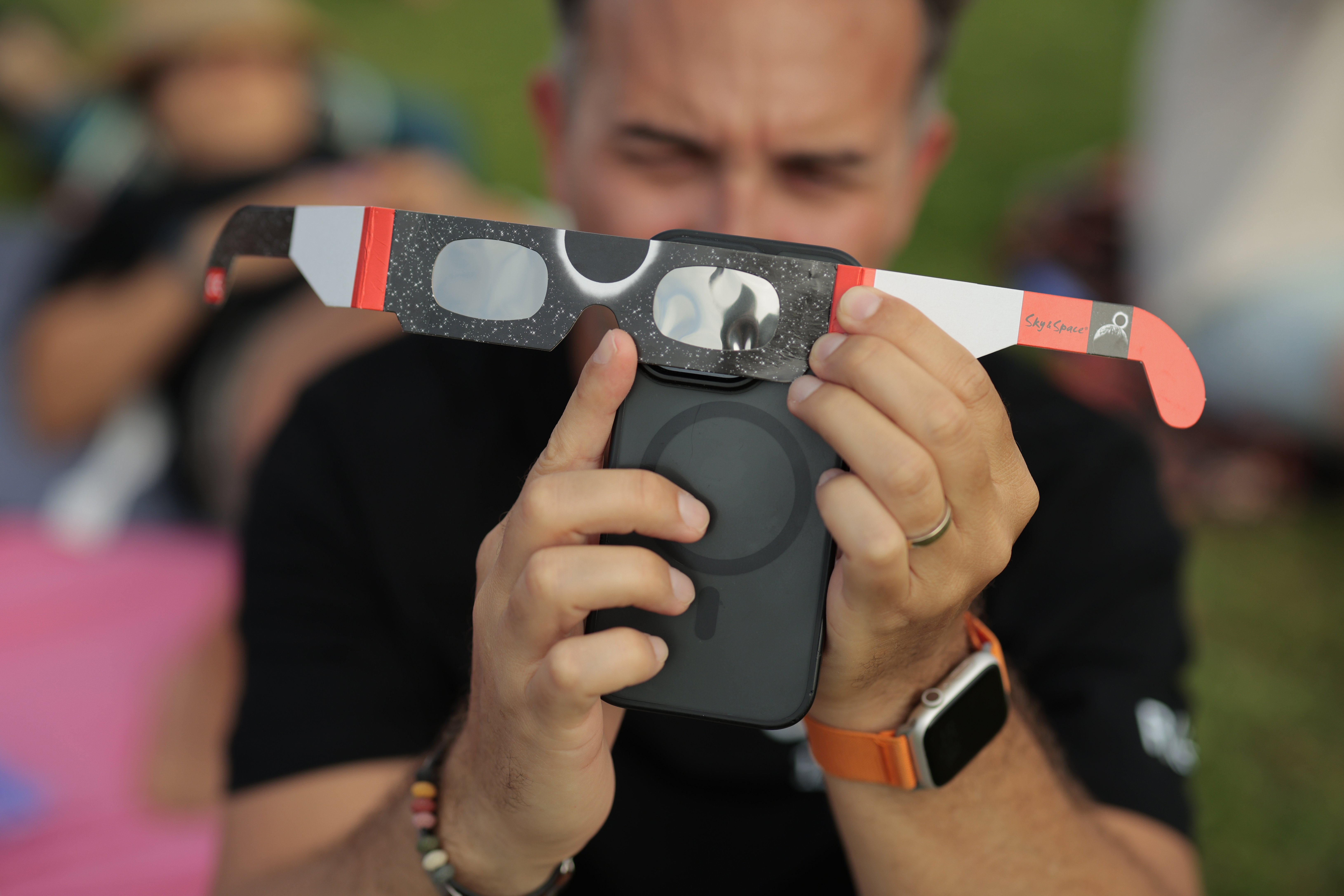
In Spain, the eclipse was expected to fade at around 1830 GMT, marking a rare event as Spain had not witnessed a total solar eclipse in over a century. The event was particularly significant in Burgos, northwest Spain, where Yenny Guevera and Mercedes Bua expressed excitement about the phenomenon. Supplies of special viewing glasses were in high demand, and crowds gathered across Europe to witness the event, which was also visible in Canada, the northern United States, and northwest Africa.
During a total solar eclipse, the Moon completely blocks the Sun's light, creating a dark shadow or umbra. This creates a brief period of darkness and odd atmospheric effects, such as temperatures dropping and shadows appearing at unusual angles. Astronomers and solar physicists view these events as rare opportunities to study the Sun's atmosphere and magnetic field. However, the eclipse lasted only a few minutes.
In Spain, clear skies were forecast, and scientists hoped the weather would not hinder the viewing experience. Nevertheless, the narrow path of totality, only a few hundred kilometers wide, made the event particularly special. British astrophysicist Graham Jones highlighted the unique opportunity for Spanish residents to witness the eclipse across the Iberian Peninsula.
Written by urgent.news from Hindustan Times - World News's reporting — not their text. Machine-written — may contain errors; check the original before relying on it.
This story
This is one outlet's version. Read the fullest account.
- Spain’s eclipse traffic nightmare begins as kilometre-long queues hit Madrid and Barcelona euroweeklynews.com
- The total eclipse in Spain, in pictures english.elpais.com