Urgent.News

What's breaking now, across thousands of outlets.

World

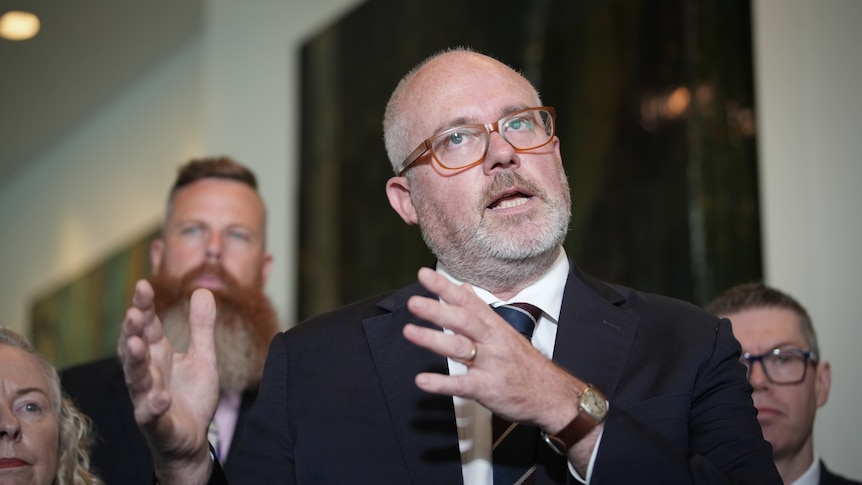
Live: $2.5b Tomago aluminium smelter bailout 'vital', minister says

The federal and NSW governments are set to unveil a $2.5 billion bailout of the Tomago aluminium smelter in the state's Hunter region. Follow live.
Live: $2.5b Tomago aluminium smelter bailout 'vital', minister says

Liberal senator Dave Sharma criticized a staffer for his inappropriate behavior during a press conference. The staffer, Kane Silom, was caught on camera berating a journalist over questions related to Liberal leader Angus Taylor's relationship with a man named in a NSW corruption probe.

Sharma also addressed the challenges faced by heavy industries like the Tomago Aluminium smelter due to high electricity prices and grid reliability issues. He believes that while it is essential to secure the future of such industries and their workers, it should not have come to this point. The smelter's bailout is primarily due to the extremely high energy costs caused by the government's pursuit of renewables.

Opposition leader and Greens MP Larissa Waters dismissed the melon gaffe by Prime Minister Scott Morrison as not being a top issue for Australians, who are currently dealing with a housing crisis, cost-of-living crisis, and climate crisis. She criticized the opposition for focusing on trivial issues instead of addressing these pressing matters.

Defence Industry Minister Pat Conroy touted the Tomago Aluminium bailout as "one of the best days since the 97 Rugby League grand final." The $2.5 billion bailout, split equally between New South Wales and federal governments, is crucial for Australia's sovereignty and the transition to a net-zero economy. Conroy is confident in the smelter's future, stating that the world is moving towards a transition, and they are addressing the issues with the energy grid created by the previous government.

Written by urgent.news from ABC News AU's reporting — not their text. Machine-written — may contain errors; check the original before relying on it.


Read the original at abc.net.au →

More in World

U.S. President Donald Trump on Wednesday said he was considering declaring a national emergency to fund his long-promised border wall with Mexico, a move that would allow him to bypass Congress to get the funding but could also spark a constitutional crisis. Speaking to reporters at the White House, Trump said he was looking at a range of options to get the wall built, including declaring a national emergency, which would give him access to billions of dollars in federal funds. “There are a lot of ways to do it,” Trump said. “You know, people are saying, ‘Is it going to be a national emergency?’ And I say, ‘Maybe, maybe not.’ But there are many ways to do it.” Trump said he had spoken to Republican senators about the possibility of including border wall funding in a spending bill to avoid a government shutdown. The U.S. Congress has refused to approve $5 billion in funding for the wall, which was a key campaign promise for Trump. The president has said previously that he would “be very proud” to shut down the government over the wall, and many lawmakers fear a shutdown could happen as early as this weekend. Trump’s comments came as U.S. lawmakers were racing to pass a spending bill to fund the government before a midnight Friday deadline. The White House has said that if a deal is not reached, Trump would sign a short-term spending bill to keep the government open. But Trump has repeatedly said that he will not sign any spending bill that does not include funding for his border wall. Earlier on Wednesday, a group of Republican senators, led by Senator Lindsey Graham, unveiled a plan to compromise on border security. The plan calls for $15 billion in border security funding over 10 years, including $5 billion for the wall, $3 billion for technology and $7 billion for personnel and infrastructure. Democrats have rejected the plan, saying it does not go far enough to address the humanitarian crisis at the border. The partial government shutdown that occurred in December and January lasted for 35 days and cost the U.S. economy an estimated $11 billion. Trump’s comments on Wednesday seemed to suggest that he was willing to take a hard line on the border wall, even if it meant going around Congress. “There are a lot of strange things that can happen in this country,” Trump said. “Believe me, a lot of strange things can happen.”

More from Wednesday 12 August →