LFM2.5-VL-3B for Better and Faster Vision Capabilities for the Edge
LFM2.5-VL-3B is a powerful vision-language model that can run on personal hardware, offering improved capabilities for real-time and on-device applications. This model extends the vision-language features of previous releases with four key enhancements:
1. It combines the SigLIP2 400M NaFlex vision encoder with the same pre-trained backbone as the LFM2.5-2.6B text model.
2. LFM2.5-VL-3B is pre-trained on approximately 34 trillion tokens, including four times more vision data than previous versions. This data comes from various sources, including curated and synthetic image-caption pairs, OCR, grounding, and instruction-following sets.
3. To accommodate non-Latin scripts, the vocabulary has been doubled to 128K by extending the tokenizer without the need for retraining.
4. The model undergoes two stages of post-training: supervised fine-tuning (SFT) with knowledge distillation from a larger teacher and Antidoom training, followed by multi-reward reinforcement learning (RL).
Evaluation of LFM2.5-VL-3B shows its superiority in both vision and text benchmarks. In terms of vision tasks, it excels in real-world image understanding, document comprehension, object detection, multi-image understanding, and screen interpretation. Additionally, it performs well on text-only benchmarks for instruction following and tool usage, matching models like Gemma-4-E2B and Qwen3.5-2B in this regard. The model also supports function-calling, outperforming InternVL 3.5 models that lack this capability.
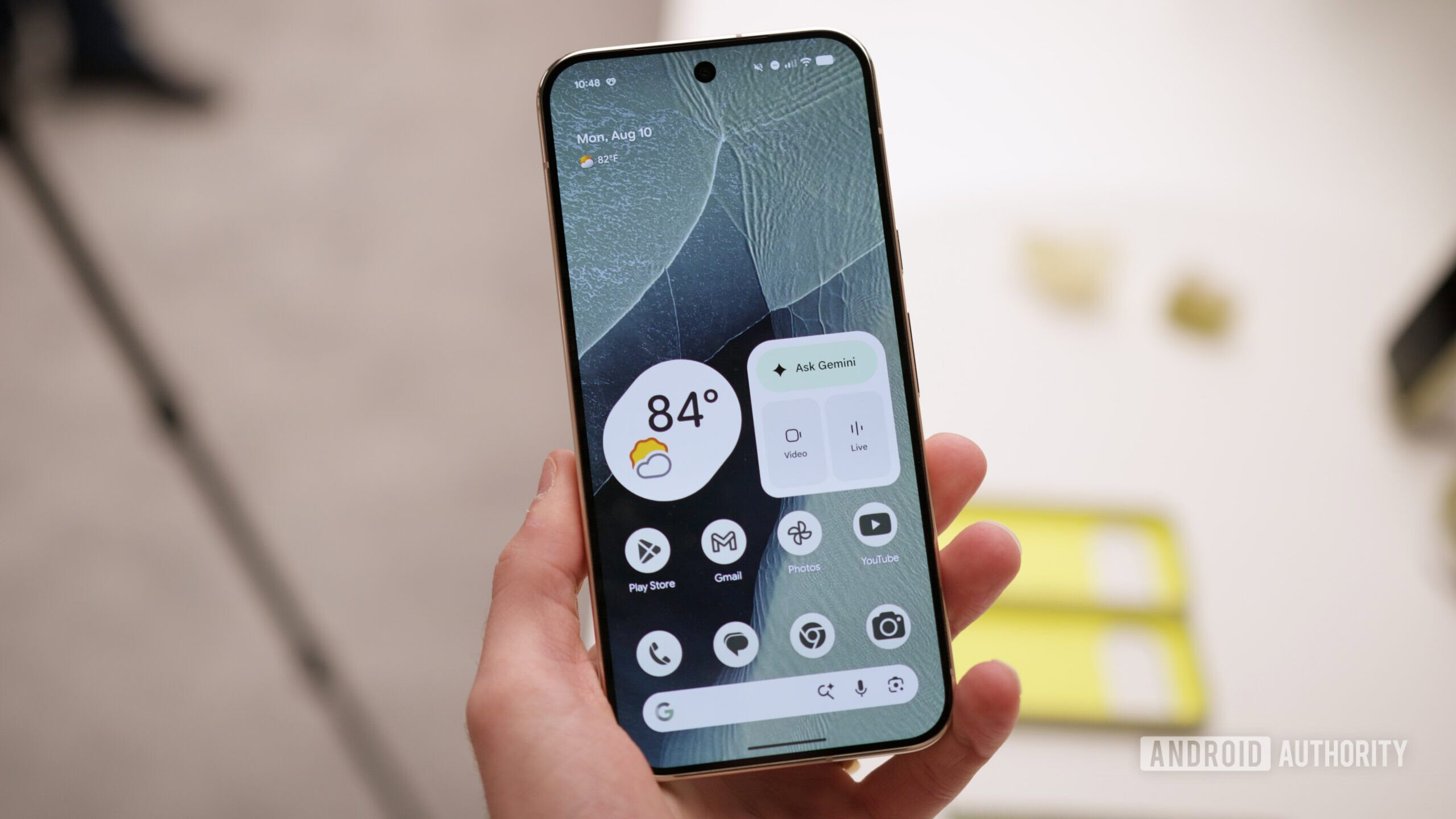
LFM2.5-VL-3B comes with day-one support across various inference ecosystems, including llama.cpp, MLX, vLLM, SGLang, and ONNX. It can decode 228 tokens per second on an M5 Max and 116 tokens per second on a Ryzen AI Max+ 395, fitting comfortably within 3 GB of memory. Remarkably, it can even process up to 20 tokens per second on a Galaxy S26 Ultra, allowing for on-device inference.
The model runs consistently fast on GPU inference, maintaining low latency and delivering the fastest output throughput among all models tested. It can generate approximately 11,000 tokens per second at high concurrency, roughly twice as fast as larger 4B-class models and outpacing even smaller 2B-class models. This translates to nearly 1 billion output tokens per day on a single H100.
For developers looking to leverage on-device intelligence for high-volume workloads, LFM2.5-VL-3B is the ideal choice. To install it, update your transformers library to the latest version compatible with transformers =5.0.0. Detailed examples of using LFM2.5-VL-3B for multi-image inputs, grounding, OCR, tool calling, and other functionalities are available in the documentation.
Further video demonstrations and a browser demo showcasing LFM2.5-VL-3B's vision-capable chat interface are also provided. The model is currently available on Hugging Face for immediate access.
Written by urgent.news from Hugging Face's reporting — not their text. Machine-written — may contain errors; check the original before relying on it.