Kabinett: Bundesregierung gibt Nachrichtendiensten Lizenz zum Stören
Im Vergleich zu Geheimdiensten etwa in Großbritannien und Frankreich sind die Befugnisse der deutschen Nachrichtendienste sehr begrenzt. Das soll sich bald ändern.
The German Federal Government has granted enhanced intelligence agencies, the Federal Office for the Protection of the Constitution (BfV) and the Federal Intelligence Service (BND), significantly more authority in response to the growing hybrid threats faced by Germany. This comprehensive reform also provides these agencies with the ability to act operationally in limited circumstances for the first time.
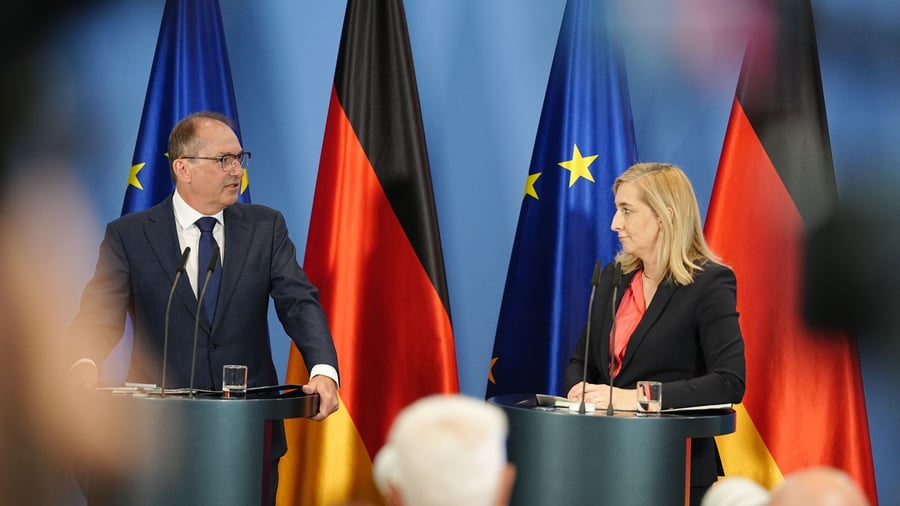
According to Federal Interior Minister Alexander Dobrindt, this involves "being able to take active measures against our adversaries." The BND could manipulate a foreign power's IT infrastructure during a cyber or disinformation attack on Germany. BfV employees might enter a home to replace harmless explosive components with sand.
The chancellor's chief Nina Warken of the CDU emphasized that Germany cannot rely on the support of allied foreign services indefinitely. The German agencies must no longer lag behind other European partners in sharing information. The draft law also includes provisions for longer data storage and expanded access to critical data and communication.
However, the emphasis is on the additional digital space powers that the BND and BfV will have starting next year if the Bundestag approves this part of the bill. These include online investigations and the enhanced sources-TCU, which allows reading of encrypted communications, including older content. The German Automobile Club (VDA) wishes for more concrete definitions of the branch's new involvement responsibilities in the parliamentary procedure.
The draft includes a graduated rulebook for device data extraction and secret interventions in private computer systems, with stricter prerequisites and stronger oversight for broader access. Independent oversight will be reorganized and consolidated under the Independent Supervisory Council, which will regularly inform Bundestag parliamentary control members.
The expanded powers are accompanied by an intensification of the oversight of agencies' work, with more threads coming together in the Independent Supervisory Council. The agencies emphasize that the new powers represent a significant change, but also note that the BND and BfV will only reach the level of other European agencies in certain legal aspects.
Dobrindt stated that they are developing their intelligence services into genuine intelligence agencies, which is urgently necessary due to the increasing cases of espionage, sabotage, and attack risks, especially from Russian agents. The BND and BfV point out that the reform merely raises their legal level in certain areas. Critics fear that the reform undermines the principle that intelligence services and police must maintain strict separation in their tasks.
The Interior Minister Dobrindt referred to cases where the Verfassungsschutz must currently do nothing when a friendly foreign service provides a hint of a threat, with the condition that this is not shared with any other authority, not even the police. The Left party does not find this acceptable. Their deputy chairperson Janis Ehling argues that in case of acute danger, everyone must act, and therefore there is no need for a special regulation for intelligence agency employees. His conclusion is that the expansion of intelligence agency powers misses any reasonable balance.
Written by urgent.news from Handelsblatt's reporting — not their text. Machine-written — may contain errors; check the original before relying on it.
This story
This is one outlet's version. Read the fullest account.