How optical interconnects and silicon photonics emerged as AI's next hot commodity — looming US-China summit puts photonics into the crosshairs
The U.S. wants Chinese optical transceivers out of future AI data centers, but China’s current dominance of the rapidly evolving photonics supply chain could make a ban complicated
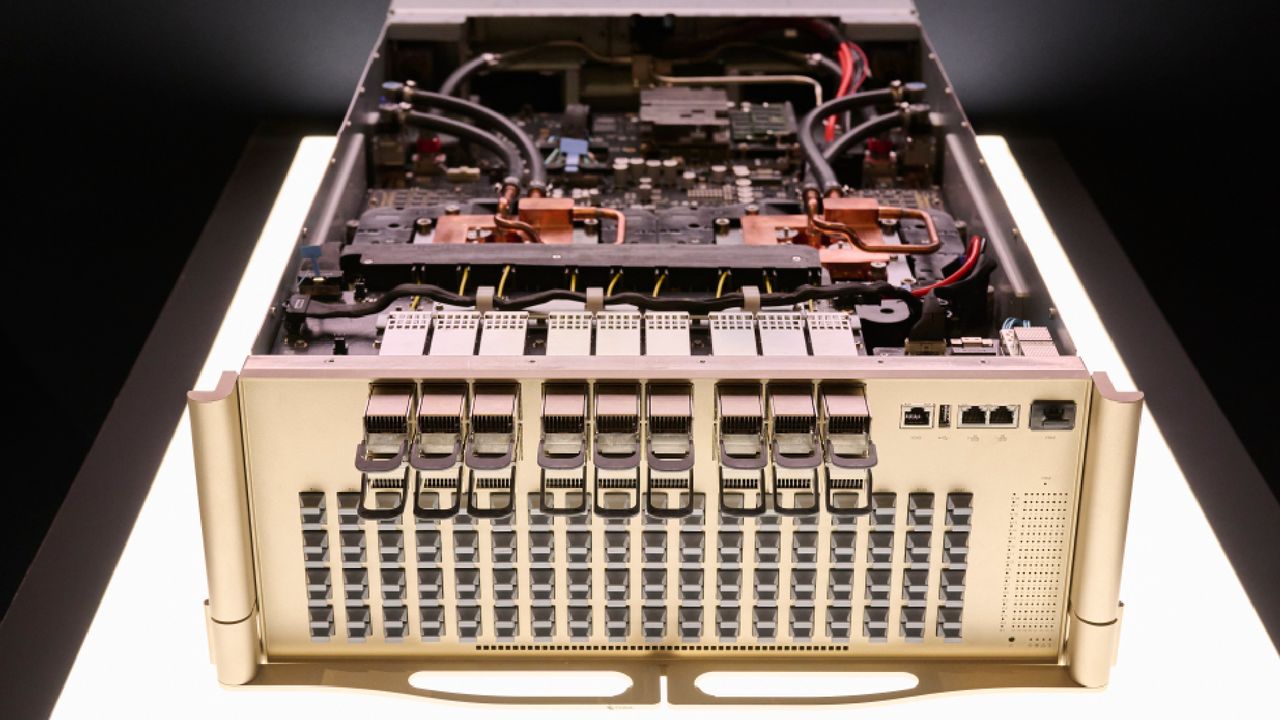
The Federal Communications Commission (FCC) is drafting a measure to block imports of new Chinese transceiver models, with officials hoping to publish the rule before the end of 2026. This move aims to tackle the copper bottleneck faced by AI, a growing concern due to the increasing scale of AI clusters that require massive data exchange between processors. Optical transceivers have emerged as a solution, offering faster and more efficient data transfer over longer distances.
The proposal has caused market reactions, with shares of China's Zhongji Innolight, Eoptolink, and TFC Optical tumbling in early trading. Meanwhile, U.S. rivals Coherent and Lumentum saw their stock prices rise by 12.4% and 8.9%, respectively. However, Chinese companies quickly rebounded, with Innolight falling only 7.3% and TFC closing 2.3% higher.
The FCC's proposal overlooks the fact that China's biggest customer for photonics hardware is the United States. At a crucial U.S.-China summit scheduled for September, the AI supply chain is being weaponized, turning Silicon Photonics into a bargaining chip in global trade and supply negotiations.
As AI clusters scale to hundreds of thousands of processors, the main challenge lies in moving data between them. Copper interconnects are still dominant, but optical transceivers are becoming more popular due to their ability to convert electrical signals into photons for transmission over fiber and back, carrying more data over longer distances at lower power.
Major players like Nvidia, Marvell, and Broadcom have committed significant funds to secure supply, while co-packaged optics are being used to shorten electrical paths and move optical engines closer to switch ASICs and accelerators. China has been building its own AI infrastructure, with the country's first dedicated photonic chip fab, CHIPX, beginning mass production of six-inch photonic wafers in 2025.
The FCC's ban on Chinese hardware has created a complex web of interdependencies between the two countries, making it difficult to impose restrictions without unintended consequences.
Written by urgent.news from Tom's Hardware's reporting — not their text. Machine-written — may contain errors; check the original before relying on it.