Haze hits Malaysia as 12 air monitoring stations record unhealthy API readings
KUALA LUMPUR, Aug 12 — Malaysia has been experiencing haze since Aug 8, with 11 air monitoring stations reco...
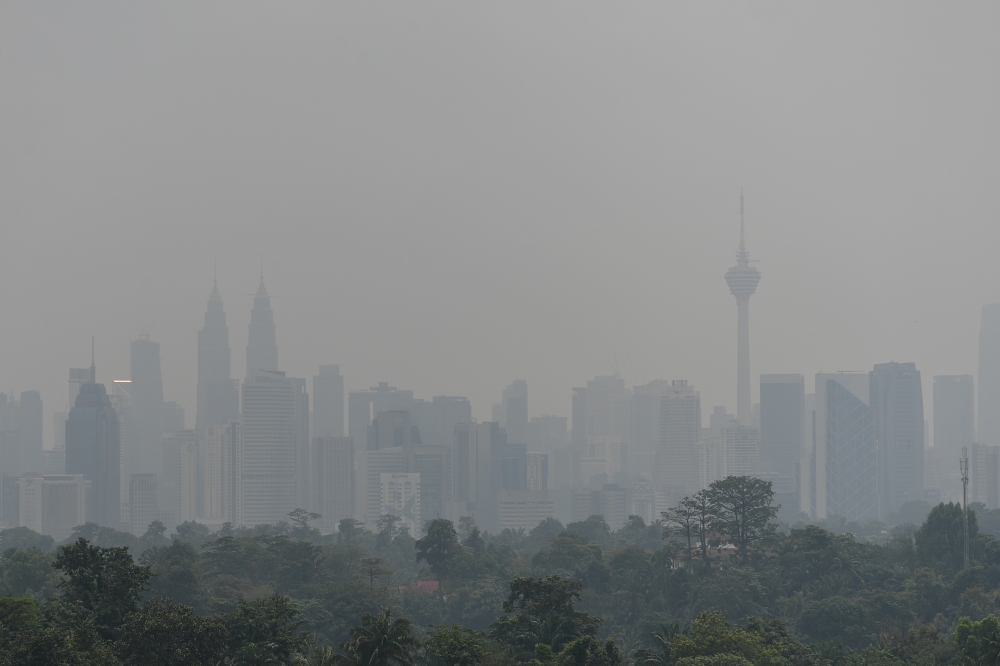
On August 12, Malaysia has been grappling with a haze situation since August 8, as reported by the Ministry of Natural Resources and Environmental Sustainability (NRES). As of 3pm on this day, 11 out of the 68 air monitoring stations across the country had recorded unhealthy Air Pollutant Index (API) readings, with one station in Sarawak reporting a very unhealthy reading.
The primary causes are attributed to the El Niño phenomenon coupled with the Southwest Monsoon, which led to below-average rainfall in various areas of Peninsular Malaysia and western and southern Sarawak. This combination of low rainfall and elevated temperatures exacerbates the risk of water scarcity, forest and peat fires, and the aforementioned haze, particularly in regions experiencing prolonged dry spells.
At present, 11 air quality monitoring stations across Malaysia, including locations in Kuala Lumpur (122), Putrajaya (121), Shah Alam (112), and in Sarawak (Mirri, Samalaju, Bintulu, Sibu, Sarikei, Sri Aman, Samarahan, and Kuching), have reported unhealthy API readings. The Sarawak station at Serian even recorded a very unhealthy API reading of 204.
The deterioration in air quality in Sarawak is attributed to both transboundary haze and local fires at a waste disposal site in Sibu, covering approximately 1.5 hectares, and forest and bush fires in Sri Aman, covering around 100 hectares. Ongoing firefighting operations are taking place at these locations.
According to the Regional Haze Map and information issued by the Asean Specialised Meteorological Centre (ASMC), dry conditions are prevalent across southern ASEAN, aside from certain parts of northern Sumatra where rain has been recorded. Isolated hotspots were noticed in central and southern Sumatra and southern and eastern Kalimantan, along with several hotspots in Peninsular Malaysia, Sarawak, Java, and Sulawesi.
Moderate smoke plumes have been spotted in West Kalimantan and Central Kalimantan, while lighter ones can be observed in southern Sumatra. As of August 11, 12 hotspots were identified in Malaysia, with one in Pahang and 11 in Sarawak. In total, 60 hotspots were detected in Sumatra and 354 in Kalimantan.
NASA-20 satellite monitoring on August 11 detected 12 hotspots in Malaysia, comprising one in Pahang and 11 in Sarawak. The ASEAN region has activated Alert Level 2 since August 3, mandating southern ASEAN countries (Brunei, Indonesia, Malaysia, Singapore, Thailand, and Timor-Leste) to submit daily reports and emergency responses regarding fires, haze, and the measures they are implementing.
The NRES, alongside the Department of Environment and Malaysian Meteorological Department, will persist in monitoring and reporting the evolving weather, air quality, and haze scenarios. Relevant ministries, departments, and agencies will execute measures outlined in the National Haze Action Plan and National Open Burning Action Plan, contingent on the alert level.
The public in affected areas is cautioned to minimize outdoor activities, wear face masks, and drink ample water to stay hydrated. Open burning is also strictly prohibited to avert the situation from deteriorating further.
Written by urgent.news from Malay Mail's reporting — not their text. Machine-written — may contain errors; check the original before relying on it.
This story
This is one outlet's version. Read the fullest account.