Investment: Rolex's market share declines - which luxury watches are now in demand
An evaluation shows differences between the sexes when buying a wristwatch. What the current trends mean for collectors and investors.
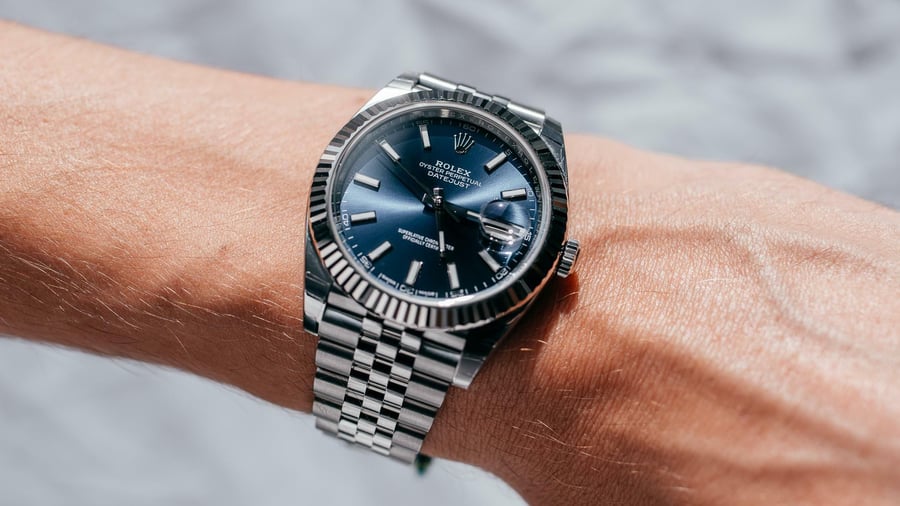
The luxury watch market is changing and becoming broader. This is the result of a study by Chrono24, which was made available to the Handelsblatt in advance. Currently, in addition to the classics, more filigree models are also coming into the focus of collectors. The trend reversal is being felt primarily by the Rolex brand. Four years ago, almost every second watch sold on the online platform was from the Swiss luxury brand, but today it is not even every third.
The current figures from the world's largest digital marketplace for luxury watches from second-hand sources also make it clear that female customers are more loyal to the brand than male customers. 37 percent of all female customers prefer a Rolex, while among male buyers it is only just under 30 percent.
What is currently in demand on the luxury watch market? The brands Cartier and Omega are becoming increasingly popular. The French-Swiss brand Cartier, in particular, has three well-known models in its program - the Tank, the Panthère, and the Santos - which are currently in high demand, according to various dealers. In contrast, Rolex's sales figures are moving downwards.
However, expert Balazs Ferenczi, who analyzes watch brands at Chrono24, knows the reasons for this. During the pandemic, a hype arose around the Swiss watch brand, which subsequently subsided. This development is also confirmed by Joram Scher: "At that time, many newcomers were active in the market and bought the brand." The co-owner of the Munich watch trading house Bachmann Scher lists what else was highly sought after: "In addition to Rolex, perhaps Patek Philippe and Audemars Piguet." The market share of these brands increased, as did the prices.
However, with the end of the pandemic, the market normalized, and the prices for individual Rolex models and many other luxury watches fell again. It was only two years ago that a counter-trend emerged, with the price increase no longer being as sudden as during the pandemic. In the market, enthusiasts and collectors are once again determining the events.
Chrono24 expert Ferenczi describes the changed buying behavior: "Today's buyers are distributing their money more consciously, and this also benefits brands like Cartier, Patek Philippe, or Vacheron Constantin," he says. Younger buyers, in particular, are more interested in so-called dress watches, i.e., slim models made of gold or other precious metals with a leather strap.
However, Rolex can also meet this demand. "One should never underestimate the strength of Rolex," Ferenczi says. "If someone wants to buy a single, really good watch, Rolex is the obvious choice, equally for men and women." According to Chrono24, the Datejust and Oyster Perpetual models, which are also available in smaller case sizes, account for 28.3 percent of all Rolex purchases among men. Among female customers, more than every second traded Rolex belongs to one of these two model groups.
The highest price increase, however, was recorded for a watch that does not fit the trend towards more delicate watches made of precious metal. The average price for a GMT-Master II, which is called Pepsi due to its red-blue bezel, has increased by 24 percent within a year to just over 23,000 euros. This steel watch leaves all other watch models on the platform behind.
The reason: According to Ferenczi, the model is being discontinued and is now particularly sought after by collectors.
Translated by urgent.news. Machine-written — may contain errors; check the original before relying on it.
This story
This is one outlet's version. Read the fullest account.