Factions in Iran openly fight over war’s direction amid Khamenei’s absence
When Iran’s President Masoud Pezeshkian told state television last week that he found it “very difficult” to reach the country’s supreme leader, it sparked fresh speculation about the whereabouts of Mojtaba Khamenei who has not been seen in public since taking over as the country’s ultimate authority in March. By Monday, Pezeshkian told the official broadcaster that the two had in fact recently…
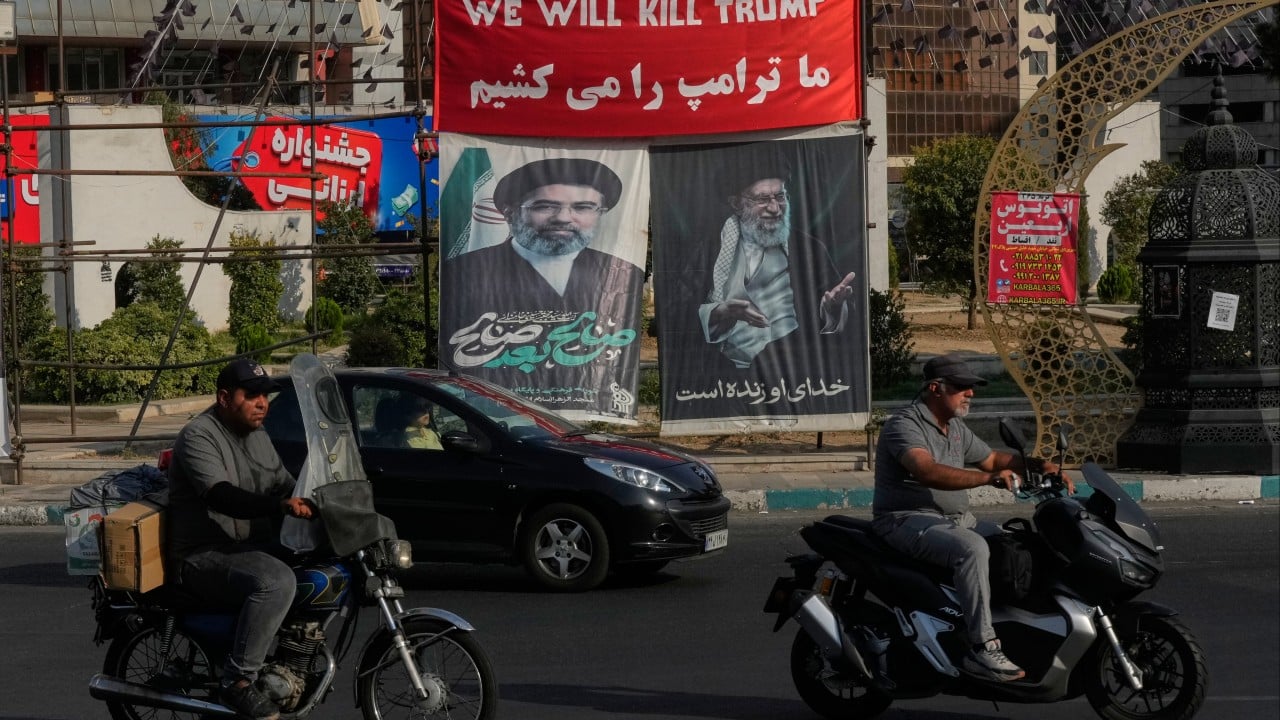
In Iran, factions are openly clashing over the direction of the war as President Masoud Pezeshkian struggles to connect with the supreme leader, Mojtaba Khamenei, who has been largely absent from public view since assuming authority in March. On Monday, Pezeshkian announced that he and Khamenei had recently held a seven or eight-hour meeting, describing it as "very good." Khamenei's primary concern is said to be "unity and cohesion" within the country.
Public infighting over the war has been escalating in Tehran, with hardliners demanding Pezeshkian's resignation over his support for the Iran-US peace deal. Even after criticism, Khamenei claimed on Monday that he was in "perfect health," despite his involvement in the Israeli air strike on February 28 that killed his father and predecessor, Ayatollah Ali Khamenei.
The absence of Khamenei from public life has led to increased disputes between political factions, which are usually commonplace in Iran. Research fellow Arman Mahmoudian from the University of South Florida explained that Khamenei's lack of public appearances and limited accessibility has made it more challenging for him to provide clear leadership and resolve disagreements within the political establishment.
The factionalism is considered a regular aspect of Iranian politics, but the war has brought these tensions to the forefront with more brazen displays of public feuds over the conflict's direction. Some factions advocate for a strategic agreement with the US, while others desire an ongoing war against the US. The leadership's shift has allowed some individuals to emerge and voice their opinions through social media and state television, where an information battle is taking place between pragmatists like Pezeshkian and hardline foreign minister Abbas Araghchi, as well as ultra-conservative clerics and politicians opposing engagement with the US.
Pezeshkian, responsible for Iran's economic decisions, and other moderate moderates seek to end the war and negotiate broad sanctions relief. Hardliners, both from within politics and the senior clergy, fuel much of the infighting, opposing diplomatic engagement with the US administration and questioning the necessity of US sanctions relief for Iran's economy – which has already suffered due to years of international isolation.
Some prominent hardliners, such as the ultra-conservative cleric Mohammad Bagher Kharazi, have publicly criticized Pezeshkian, calling him "trash" and questioning the legitimacy of his presidency. Kharazi, who claims to have been friends with Mojtaba Khamenei for 40 years, recently attacked Iran's diplomats and the president in a video posted on social media.
Additionally, former nuclear negotiator and leading member of the ultra-conservative faction Paydari, Saeed Jalili, has harshly criticized Iran's diplomats and the president.
The division within Iran's theocracy has been a defining feature of its foreign policymaking since the 1979 Revolution, but this time, the disagreements appear more pronounced and intense. On the day prior to Pezeshkian announcing his lengthy meeting with Khamenei, a statement purportedly from Khamenei was read on state television, appointing Mohsen Rezaee, a Revolutionary Guard Corps veteran and conservative hardliner, as the leader of the Supreme National Security Council, a crucial position within Iranian security affairs.
Furthermore, Khamenei announced a series of top military appointments, most of which are within the Revolutionary Guard Corps, which praised Rezaee's appointment and highlighted his role in coordinating Iran's security, diplomatic, and economic policies. This reshuffle demonstrates a reinforcement of the hardline elements in shaping the strategy on the battlefield since the war began, consolidating a stronger coalescence around the IRGC and its response to US President Donald Trump's war.
Written by urgent.news from South China Morning Post's reporting — not their text. Machine-written — may contain errors; check the original before relying on it.