Ex-Ministerpräsident gestorben: Zhu Rongji trieb Chinas Umbau zur Marktwirtschaft voran
Der frühere Regierungschef, Zentralbanker und KP-Kader stellte die entscheidenden Weichen für Chinas wirtschaftlichen Aufstieg. Seine ehrgeizigen Reformen wirken bis heute fort.
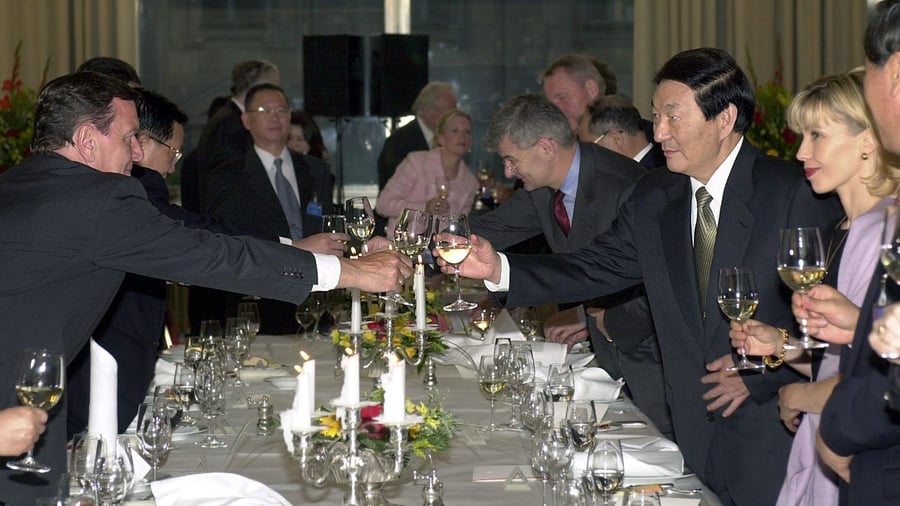
Zhu Rongji, a former Chinese Premier, died at the age of 97 in Beijing. His influence on China's economic transformation is still evident decades after his political career. As Vice-Premier and Central Banker in the 1990s, Zhu fought against rampant inflation, earning a reputation for his problem-solving approach. In 1998, he became Premier, overseeing privatization of the state-owned housing sector and ambitious reforms in government, finance, and state-owned enterprises.
A pragmatic reformer, Zhu was also notorious for his impatience, showing little tolerance for niceties and moving swiftly to action. His economic reforms led to job losses for millions of workers, but also paved the way for China's rise as a global economic powerhouse. Zhu's entry into the World Trade Organization in 2001 attracted massive foreign investments and triggered a rapid growth in trade and commerce, marking the beginning of China's economic ascent.
Born in Changsha, Hunan Province in 1928, Zhu was orphaned at a young age and joined the Communist Party upon the establishment of the People's Republic of China in 1949. After studying Electrical Engineering at Tsinghua University, he began his career in the state planning commission. In the late 1950s, Zhu faced criticism from Mao's economic policies and was branded as a right deviationist, expelled from the Party, and sent to the countryside.
During Mao's Cultural Revolution, he faced similar setbacks. Zhu's career experienced a resurgence in the 1980s when he approved overseas investments and played a role in shaping China's industrial strategy. In 1988, Deng Xiaoping assigned him to be the Mayor of Shanghai, where he managed to de-escalate the Tiananmen Square crackdown that year.
Zhu's appointment as Vice-Premier in April 1991 propelled his career, and he later became a central decision-maker in the Communist Party's powerful Standing Committee. After retiring from active politics, Zhu occasionally made public appearances, such as visits to Tsinghua University, where he offered advice to students on navigating difficulties with determination.
Written by urgent.news from Handelsblatt's reporting — not their text. Machine-written — may contain errors; check the original before relying on it.
Also reported by 1 other outlet
- Banken: Pfandbriefbank kommt bei Umbau voran – Ziele bestätigt handelsblatt.com