Could a Shirt Fool Facial Recognition? The Answer Is Complicated
At Defcon, a strange-looking print pushed a researcher below an AI camera’s detection threshold. Now its creator is putting patterns like it on shirts and hoodies, even though worn clothing remains the big unproven test.
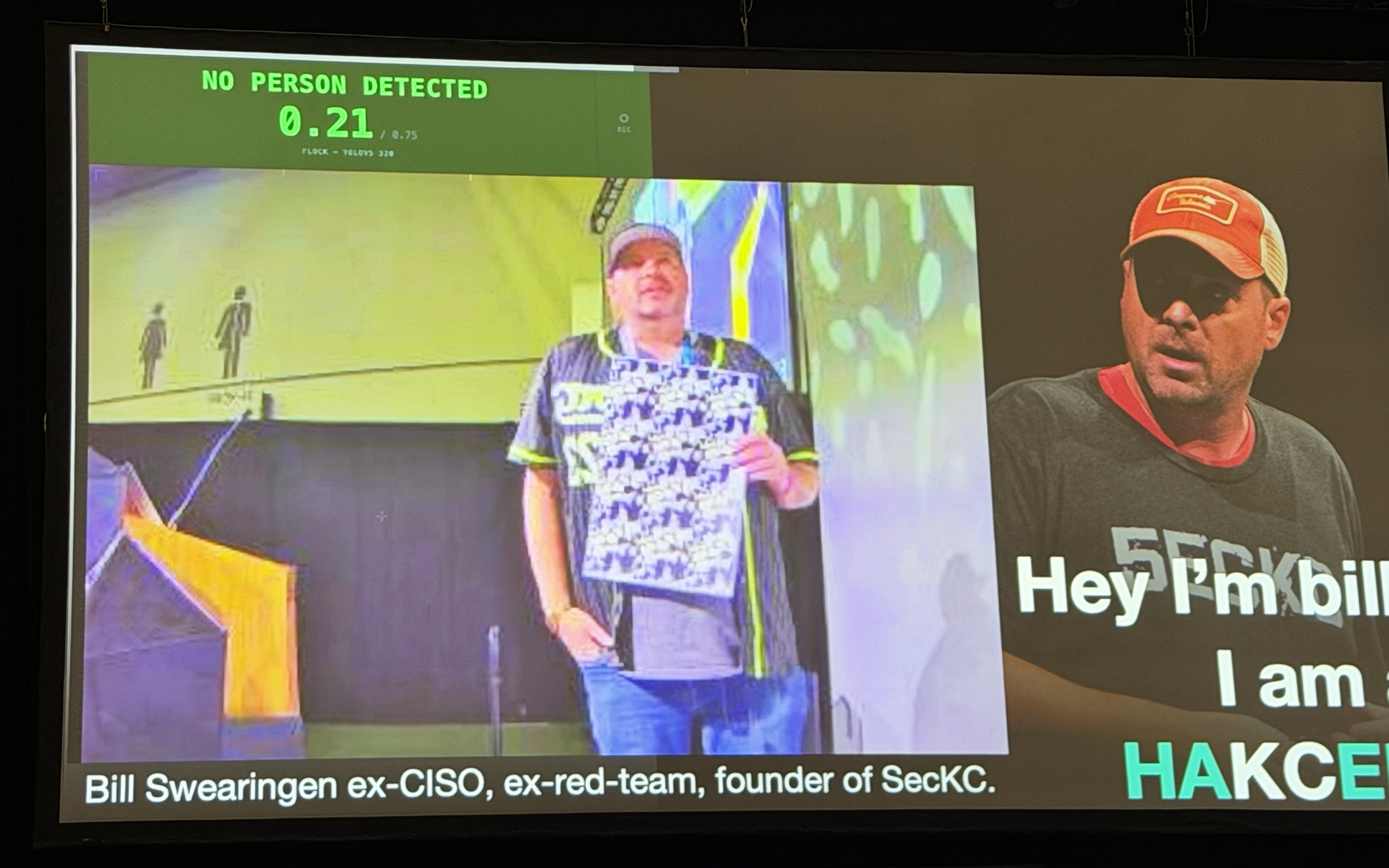
Facial recognition technology may be fooled by a cleverly designed shirt, according to a cybersecurity expert. During a presentation at the annual hacker convention Defcon, Bill Swearingen, a security professional and founder of the Kansas City security community SecKC, stood in front of a camera feed. The camera's person-detection system initially identified him with a confidence score above 0.75.
However, when Swearingen raised a flat panel covered in an intricate black-and-white pattern, the system's confidence score dropped significantly and eventually dropped to 0.21, leading the software to announce, "No person detected."
Swearingen's project, called noRecognition, aims to create clothing that makes it harder for AI surveillance systems to detect people. His research involves creating patterns that confuse the computer-vision systems used in facial recognition. Swearingen built a program to generate these patterns, using a technique called fuzzing to bombard software with strange inputs and identify weaknesses.
The noRecognition project has tested over 31.7 million patterns against 11 different AI models. Out of these tests, about 534,600 triggered anomaly rules, indicating a major change in the system's output. Some of the most successful patterns worked on multiple detectors, but effectiveness varied when applied to different people.
Some patterns only worked on the people used during development and failed on new individuals. Swearingen emphasizes that these results are still unproven, as the effectiveness of these patterns may diminish once the surveillance systems are updated.
Written by urgent.news from CNET's reporting — not their text. Machine-written — may contain errors; check the original before relying on it.