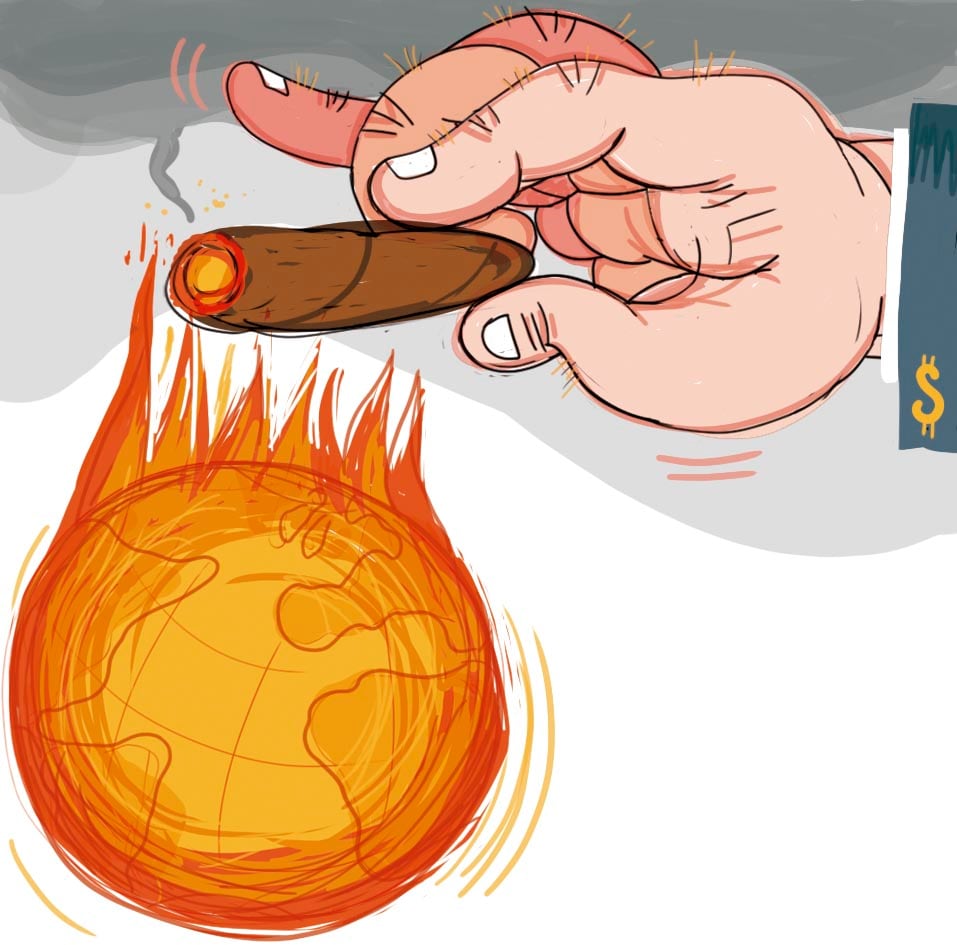
Contiguous US Breaks Its Record For Hottest Month Ever, NOAA Says
An anonymous reader quotes a report from the Associated Press: The contiguous United States sizzled to its hottest month ever last month, according to the National Oceanic and Atmospheric Administration. July averaged 76.89 degrees Fahrenheit (24.94 degrees Celsius) across the Lower 48 states, eclipsing the Dust Bowl's July 1936 by an eighth of a degree. Records go back to 1895. [...] Although it…
The contiguous United States experienced its hottest month ever last July, according to the National Oceanic and Atmospheric Administration (NOAA). The average temperature across the Lower 48 states was 76.89°F (24.94°C), surpassing the previous record set in July 1936 by just 0.08°F (0.04°C). Records have been kept since 1895. While Alaska remained cooler than usual, the majority of the Lower 48 states experienced hotter-than-average conditions, with the highest heat in the Mountain West, Southwest, Northern Plains, and Southeast.
Every state in the Lower 48 was at least 1°F (0.6°C) warmer than the 20th century average, according to Russ Vose, chief of monitoring at NOAA's National Center for Environmental Information. The record heat was largely driven by nighttime lows that shattered the previous record by 0.7°F (0.4°C). Hotter nights are a telltale sign of climate change, as they prevent the body from cooling down and recovering from daytime heat.
Scientist Jeff Masters of Yale Climate Connections emphasized that nighttime temperatures are crucial in determining total heat stress. In 2021 and 1936, there were two years of extreme heat in the U.S., with the latter being the hotter of the two through July. However, 2026 is forecasted to be slightly cooler than 2021, which was fueled by record heat in June.
According to Masters, climate change is likely to make the next few years the coolest we will experience in our lifetimes. To combat this, Masters argued that we must stop burning fossil fuels and invest in adapting to the new climate we have created.
Written by urgent.news from Slashdot's reporting — not their text. Machine-written — may contain errors; check the original before relying on it.