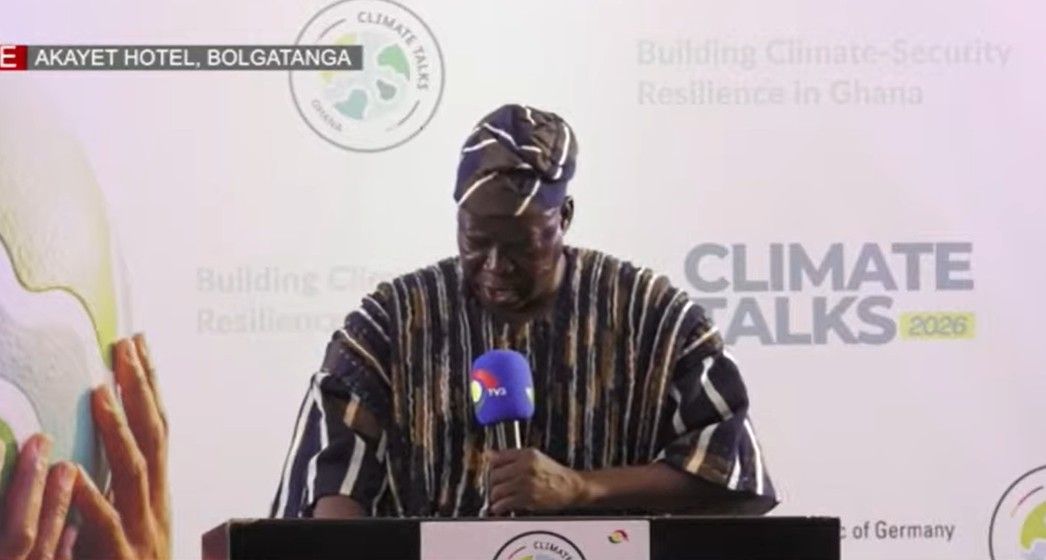
Climate change no longer just environmental issue; now a humanitarian and security concern – Upper East Regional Minister
Upper East Regional Minister, Akamugri Donatus Atanga, has warned that climate change is increasingly becoming a development, humanitarian, migration and security challenge rather than simply an environmental issue.
Every year, five districts in Ghana's Upper East Region encounter a slow but severe crisis during the dry season, not from natural disasters, but from the escalating effects of climate change. Water sources deplete, toilets cease to function, and women spend up to four hours daily in search of water for their families. According to Sebastian Mbabugri Agumah, Project Lead for the SIDA-CLIMB Better WASH Partnership, this situation reflects the impact of climate change in the region.
During a training workshop for 30 WASH journalists, Agumah highlighted that the dry season now extends to nearly six months, causing water scarcity, sanitation issues, and hygiene crises.
The training, organized by the Belim Wusa Development Agency (BEWDA) in collaboration with WaterAid Ghana under the SIDA CLIMB Better WASH Partnership, aims to educate journalists on reporting accurately about climate change's effects on water and sanitation in northern Ghana. The partnership seeks to empower vulnerable communities and hold duty-bearers accountable for climate-resilient WASH investments in five districts: Bawku West, Bongo, Kassena Nankana Municipal, Kassena Nankana West, and Nabdam.
In Bawku West District, residents share a single toilet for the entire community, often overflowing. The Bagre Dam spillage causes annual flooding, affecting many households. Only 15.6% of households have proper sanitation, and 68% have access to water. Rainstorms damage schools, and wildfires damage WASH facilities. In Bongo District, while 82% of residents have access to water, fluoride contamination in 30% of boreholes renders them unusable.
Kassena Nankana Municipality has 55% water access and 35% sanitation coverage, with 30% of boreholes contaminated with fluoride. In Kassena Nankana West, 91% of households lack toilets, resorting to open defecation, and 30% of water sources are contaminated with faecal coliform bacteria.
Nabdam District, with the highest poverty rate in Ghana at 68.6%, faces severe water shortages, with 55% of residents having access to water. About 40% of households live below the poverty line, unable to afford household toilets. Communities like Kparaboug endure severe water shortages, with 60% relying on unprotected water sources during the dry season. The media is urged to report effectively, putting pressure on duty-bearers to act and hold them accountable for climate-resilient WASH investments.
Written by urgent.news from The Chronicle Ghana's reporting — not their text. Machine-written — may contain errors; check the original before relying on it.
This story
This is one outlet's version. Read the fullest account.
- Five Upper East Districts face annual crisis from climate change thechronicle.com.gh