Can Berkshire Hathaway without Warren Buffett remain a ‘north star’ for China’s investors?
For decades, thousands of Chinese investors made pilgrimages each spring to Omaha, in the central US state of Nebraska, treating Warren Buffett’s shareholder meetings for investment firm Berkshire Hathaway less as corporate briefings than as audiences with an oracle. Buffett’s retirement as CEO, effective January 1, ended a 60-year run at the helm of the global conglomerate. Though he remains…
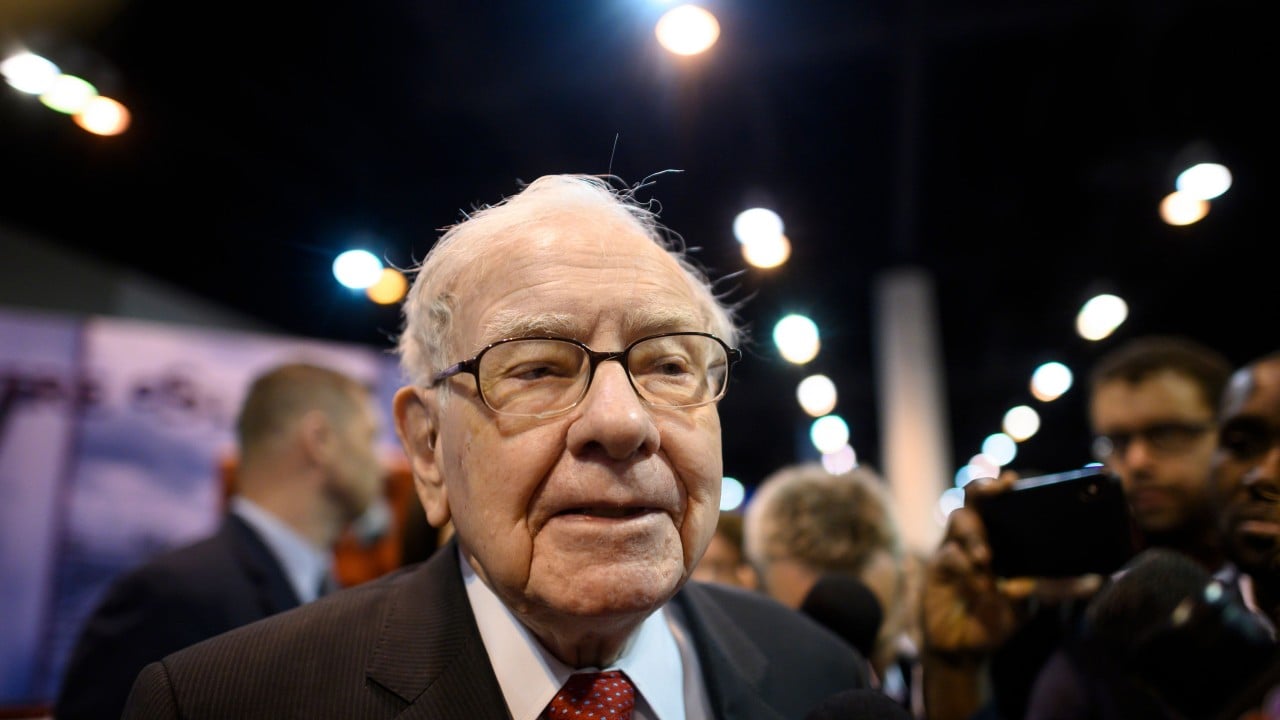
For generations, countless Chinese investors made annual trips to Omaha, Nebraska, to witness Warren Buffett’s shareholder meetings at Berkshire Hathaway. These gatherings were not merely corporate briefings but opportunities to consult with an oracle. When Buffett retired as CEO at the beginning of January, it marked the end of a 60-year tenure at the helm of the conglomerate.
Though he remains chairman, Greg Abel, who had led non-insurance businesses since 2018, took over as CEO. Investors now wonder if Berkshire can maintain its allure without Buffett's leadership.
Yang Delong, chief economist at Qianhai Open Source Fund Management, asserts that Buffett's investment philosophy is universal and remains worthy of attention, regardless of whether he is still active. Abel's approach thus far has mirrored Buffett's long-standing strategy, so Chinese investors are not expected to lose interest. Kevin Chen Kaifeng, chief economist at Horizon Financial, emphasized that Berkshire had become the north star guiding Chinese investors since Buffett's principles reached the country in the 1990s.
Chen noted that while Buffett has reduced his involvement, he remains an active participant, having personally invested Berkshire's approximately $10 billion stake in Alphabet.
The leadership change faced scrutiny when Berkshire released its latest quarterly results. Net earnings attributable to shareholders more than doubled year on year to $25.7 billion, with operating earnings rising by 16 per cent to $12.98 billion. Responding to the shift towards high-growth sectors like artificial intelligence, Ong believes Berkshire is evolving into a private-equity-style holding company.
However, Berkshire shares have only increased by about 3 per cent this year, lagging behind the S&P 500's roughly 13 per cent gain, primarily due to sector allocation rather than any fundamental issues.
Written by urgent.news from South China Morning Post's reporting — not their text. Machine-written — may contain errors; check the original before relying on it.
Also reported by 3 other outlets
- Can Berkshire Hathaway without Warren Buffett remain a ‘north star’ for China’s investors? scmp.com
- Berkshire Hathaway doubles down on the U.S. housing market with a fresh bet on this stock marketwatch.com
- Citi, KKR, Apollo among gainers; Berkshire Hathaway, eToro in losers: week's financials wrap seekingalpha.com