Breast-augmentation method uses your own fat in dissolving scaffolds
A new approach to breast augmentation injects fat from elsewhere in the body into dissolvable scaffolds shaped like bra cups, which may lead to a more natural look and fewer complications
An innovative breast augmentation technique employs a patient's own fat cells, potentially offering a safer and more natural outcome compared to conventional silicone implants. This method has demonstrated success in reconstructing breasts post-silicone implant removal and is now being evaluated for initial breast augmentations.
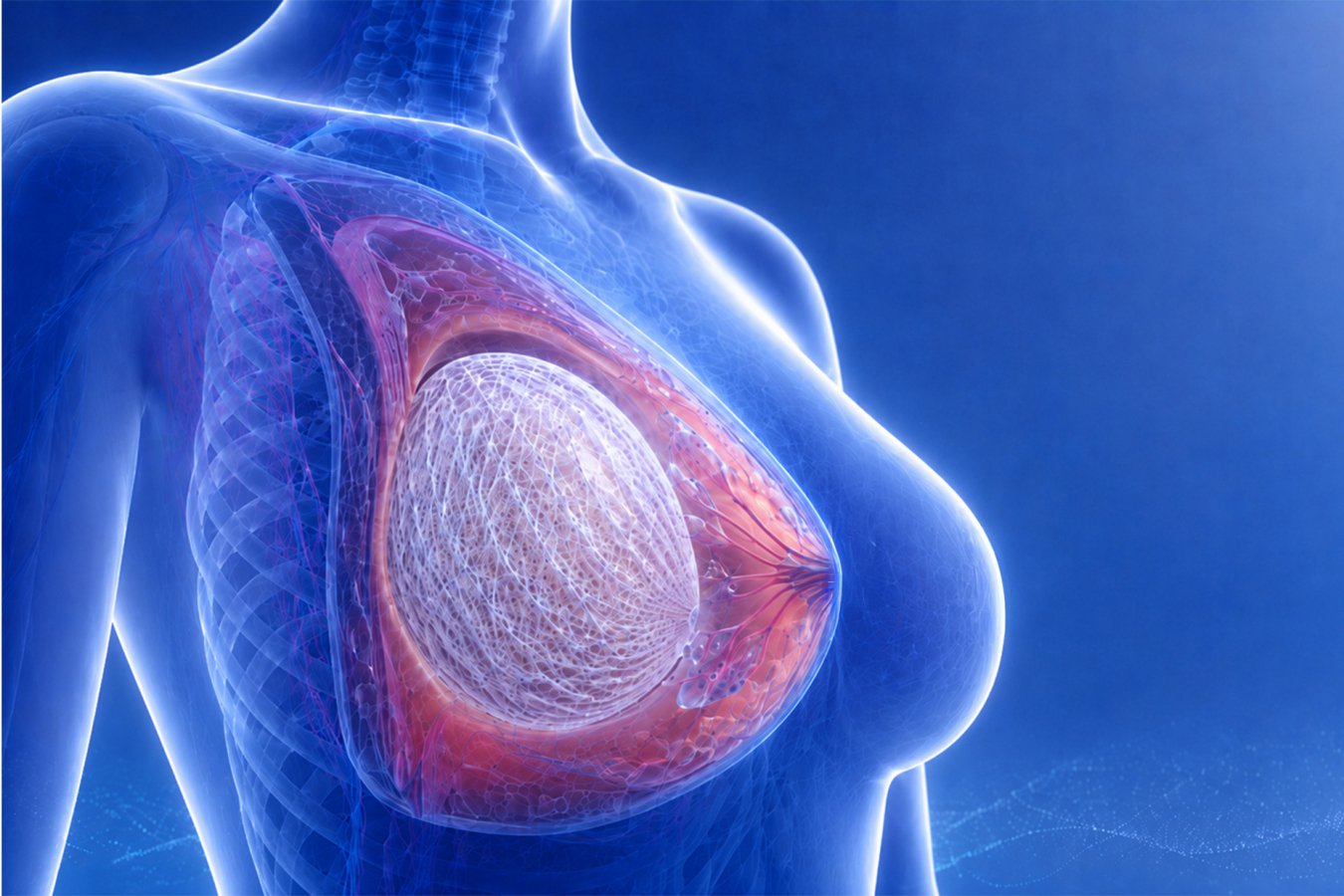
The process begins with liposuction to extract fat from another body area, such as the thighs. The fat is then embedded into porous structures known as scaffolds, which resemble bra cups and are inserted into the breasts. As time progresses, the fat cells proliferate and fill the scaffolds, which gradually break down, leaving only the patient's tissue in its new shape.
Anand Deva, a surgeon at Macquarie University in Sydney, leading a clinical trial of this technique in 53 individuals undergoing first-time breast augmentations, expressed optimism about the results thus far. Deva performed the initial surgical procedure on the trial's first participant. The absorbable scaffolds were created by Mohit Chhaya at Queensland University of Technology in Australia, who began this work in 2010.
Chhaya, who has a personal connection to the project as his grandmother underwent a lumpectomy for breast cancer in the 1990s, developed the scaffolds initially for orthopaedic applications. Chhaya then sought to adapt them for breast reconstructions, particularly for breast cancer patients who lacked adequate reconstruction options.
These scaffolds are crafted from lightweight 3D-printed polycaprolactone, a biodegradable polymer commonly used in absorbable sutures. The design of the scaffolds features a filamentous structure with interwoven lines that serve as pathways for cells to proliferate along. Chhaya explained that fat cells from the introduced tissue and existing tissue within the breast grow into the scaffold, forming a seamless blend of fat, connective tissue, and blood vessels similar to natural breast tissue.
Clinical trials involving 19 participants at the Comprehensive Breast Cancer Institute in Brisbane, who required breast reconstructions after having silicone implants removed due to complications, have shown that it takes about a year for new tissue to fill the scaffolds, followed by one or two additional years for the scaffolds to fully dissolve and be absorbed by the body.
Initially, the breasts feel unusually firm, but they soften and become natural as the scaffold degrades. MRI scans performed on these patients several years after receiving the scaffolds indicate that they appear as normal breast tissue, according to Deva. The scaffolds have also been found to be safe, with no reported infections or complications.
However, Andrew Campbell-Lloyd, a breast surgeon in Adelaide, Australia, expressed skepticism regarding BellaSeno's scaffolds, stating that there is insufficient real information or data available on their effectiveness and safety. Despite this, several groups are actively seeking alternatives to silicone implants due to their potential to rupture, causing pain, discomfort, and other complications, with the need for replacement every 10 to 20 years.
Written by urgent.news from New Scientist's reporting — not their text. Machine-written — may contain errors; check the original before relying on it.