5 Books that uncover why we struggle to make decisions
Explore 5 books that uncover why we struggle to make decisions, understand decision psychology, overcome doubts, and make better choices in life.
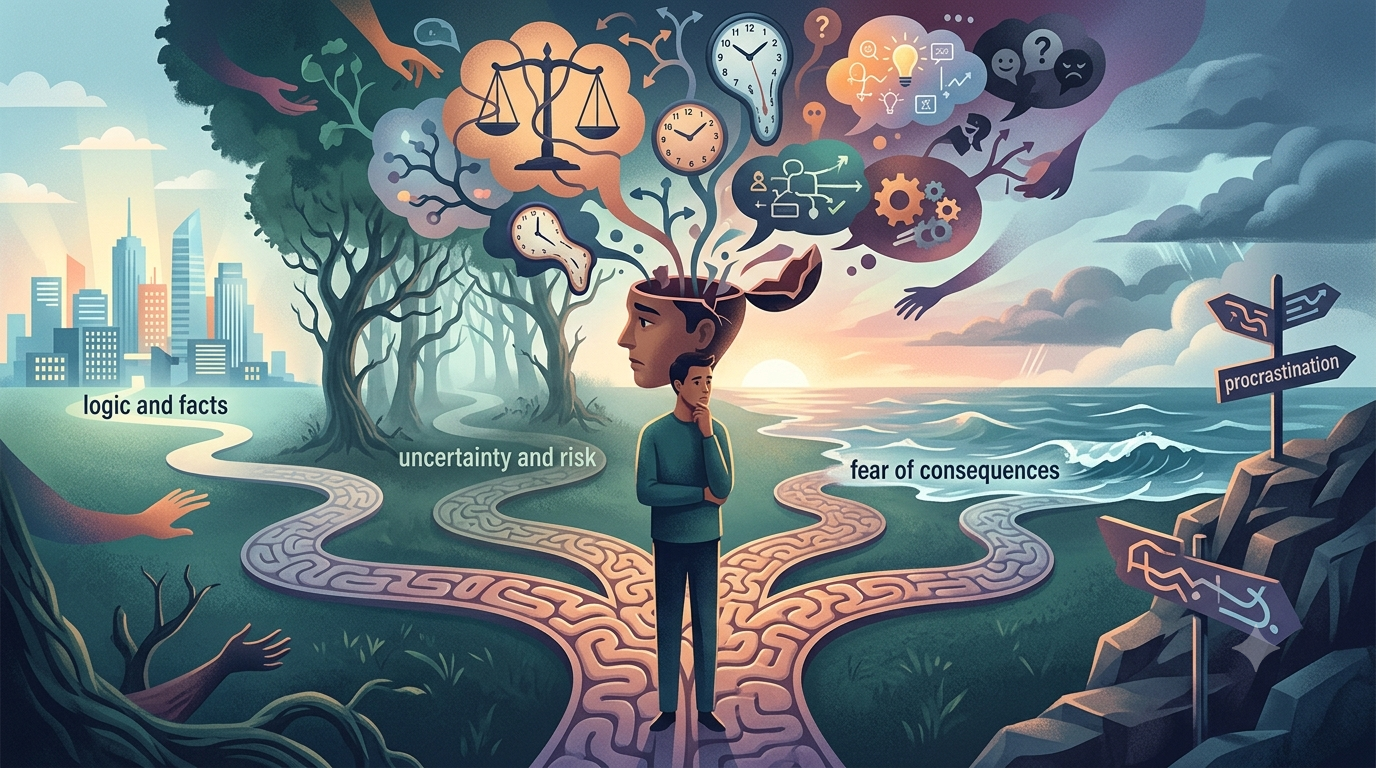
Navigating life's choices often presents a complex challenge, as the act of decision-making is seldom straightforward. The process is laden with uncertainty and emotional weight, leading many to feel entangled in cycles of overanalysis, fear of error, or the relentless pursuit of an elusive ideal. This internal struggle is not a testament to one's intellect or expertise; rather, it is rooted in a set of psychological patterns that include fear of failure, perfectionism, emotional biases, past experiences, and the innate desire to evade regret.
Intricately, our minds erect subtle barriers that render even the most basic choices seem convoluted.
Delving into the science of decision-making, an array of books offers profound insights into the underlying causes of our decision-making difficulties and unveils strategies to transcend these obstacles. Five such illuminating works are:
1. "Thinking, Fast and Slow" by Daniel Kahneman: Kahneman illuminates the two distinct systems that govern human cognition and decision-making. The first system operates swiftly, relying on intuition and emotions, while the second is a more deliberate, logical process. The book elucidates that numerous decisions are influenced by cognitive shortcuts, or biases, which expedite decision-making but can also precipitate errors, misguided judgments, and unwarranted doubt.
By grasping the intricacies of our mental processes, we can become more cognizant of our cognitive biases and strive for more deliberate decision-making.
2. "The Paradox of Choice" by Barry Schwartz: Schwartz posits that an abundance of options often paradoxically complicates rather than simplifies the decision-making process. In a society brimming with choices, individuals frequently assume that more alternatives correlate with heightened contentment. Nevertheless, Schwartz reveals that an excess of options can engender anxiety, bewilderment, and apprehension regarding the correctness of one's choice.
The book posits that by setting boundaries and embracing satisfactory decisions rather than ideal ones, individuals can attain greater tranquility in their decision-making.
3. "Decisive" by Chip Heath and Dan Heath: Heath and Heath scrutinize the reasons behind the common struggle in making significant decisions and propose a decision-making framework to enhance outcomes. The authors identify that decision-making is frequently hampered by narrow-minded thinking, emotional influences, and an overemphasis on short-term outcomes.
They introduce effective strategies to evaluate choices from diverse angles, thereby mitigating uncertainty. The book underscores that improved decisions stem from refining the decision-making process itself, rather than attempting to anticipate every conceivable outcome.
Written by urgent.news from YourStory's reporting — not their text. Machine-written — may contain errors; check the original before relying on it.