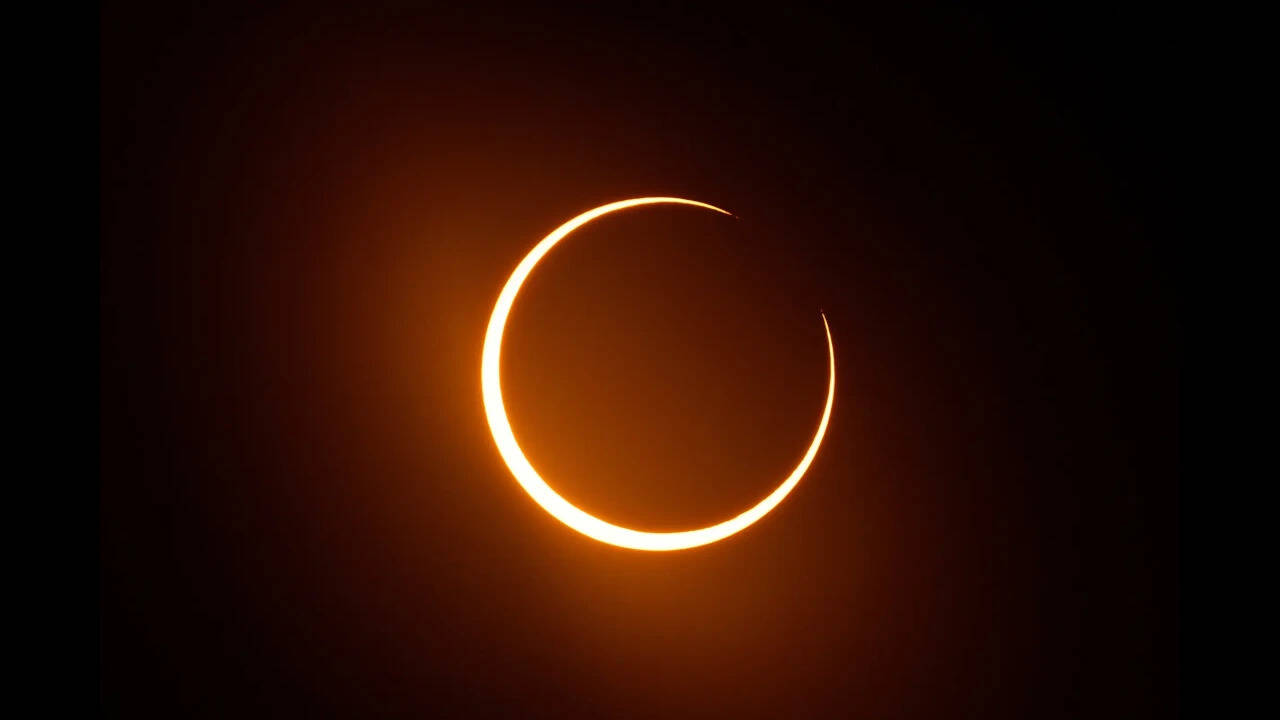
What to know about Wednesday's total solar eclipse
The only total solar eclipse of 2026 will cross the Northern Hemisphere on Wednesday, Aug. 12, with a path of totality across parts of Greenland, Iceland and northern Spain. See when and where it will be visible.
On Wednesday, the Northern Hemisphere witnessed the only total solar eclipse of 2026, casting darkness over a span of its geography. Crowds flocked to view it, with northern Spain standing out as a prime spot in the path of totality. A solar eclipse occurs when the moon obscures the sun, visible roughly every 18 months on Earth, though some regions experience such events hundreds of years apart.
While many places along the path of totality remain uninhabited, including northern Greenland, northern Spain and western Iceland experienced a peak eclipse spectacle. Spain hadn't seen a total solar eclipse since 1905. Although the totality was confined to a narrow swath, a partial solar eclipse was visible across a wider area, reaching about 230 million people, including major European cities like Madrid, London, and Paris.
Additionally, parts of North America, such as Fairbanks, Alaska, Boston, New York City, Toronto, and Philadelphia, were treated to a partial eclipse. The eclipse commenced in extreme northern Russia at 1 p.m. Eastern time, crossed northeast Greenland, western Iceland, the northern Atlantic, northern Spain, and concluded by 2:45 p.m. Eastern time.
For those in North America, the eclipse's peak occurred in Toronto at 1:40 p.m., New York City at 1:54 p.m., and Fairbanks at 8:27 a.m. local time. To safeguard one's eyesight during an eclipse, it's crucial to wear solar eclipse glasses, removing them only during totality. The subsequent total solar eclipse over the U.S. is set for 2044, observable in Montana, North Dakota, and South Dakota.
In 2045, it will traverse many states from coast to coast, starting in Northern California and concluding in Florida.
Written by urgent.news from CBS News's reporting — not their text. Machine-written — may contain errors; check the original before relying on it.