Maori Karmael Holmes Looks Back on 15 Years of BlackStar
The Philadelphia film festival’s founder reflects on its evolution into a hub for experimental, polyphonic storytelling amid a rapidly changing country and world.
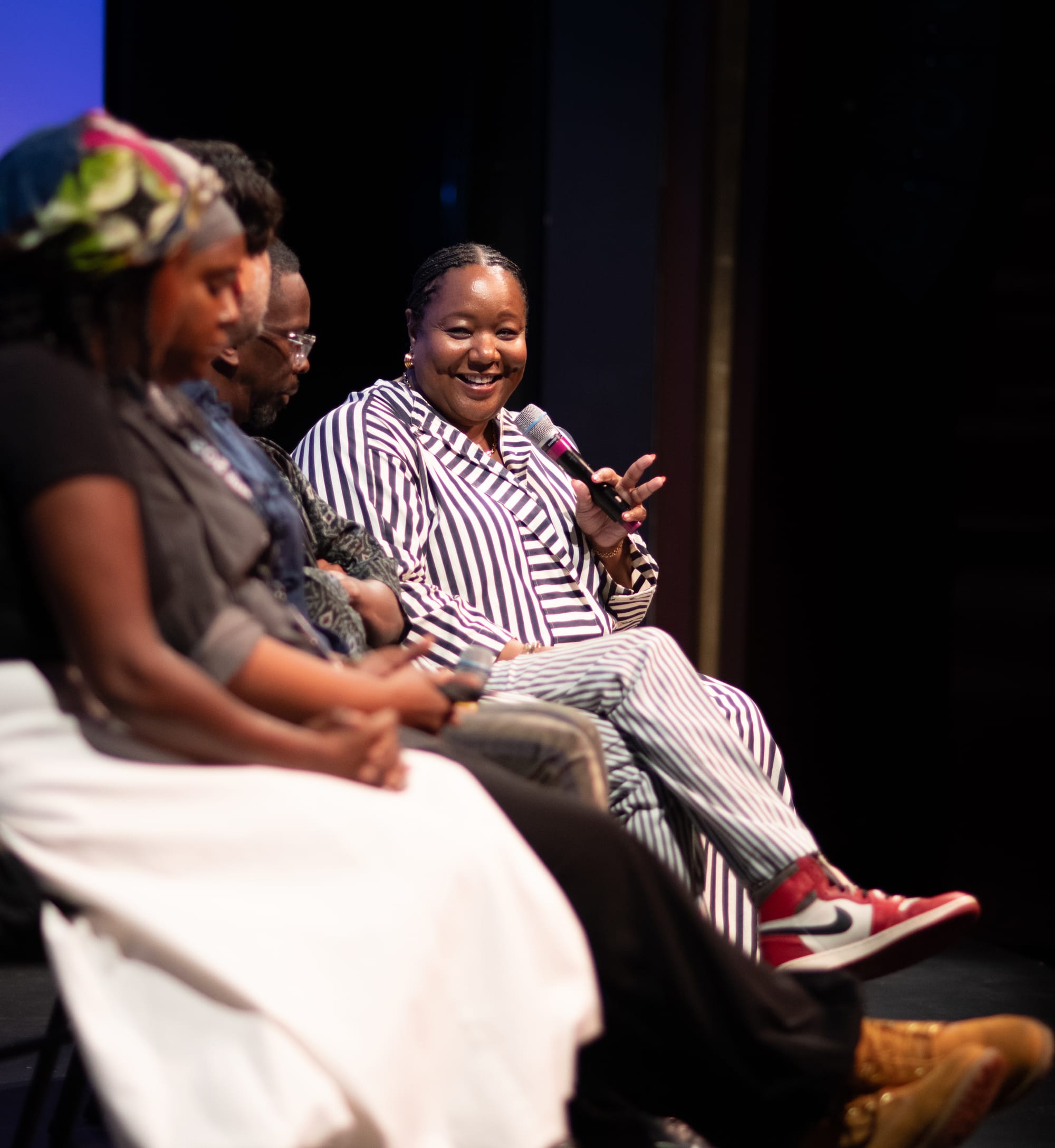
This year, the United States semiquincentennial coincides with the 15th edition of the BlackStar Film Festival. As the nation engages in debates over competing notions of truth, BlackStar has maintained its role as a premier platform for experimental nonfiction and diverse storytelling. This year's festival, held in Philadelphia from August 6 to 9, featured 91 films and highlighted stories from Haiti alongside Haile Gerima's five-part epic on Ethiopian resistance against Italian colonialism.
BlackStar, founded in 2012 by filmmaker and curator Maori Karmael Holmes, began as a film festival centered on the work and storytelling traditions of Black people and the African diaspora. Over time, it has evolved into BlackStar Projects, a nonprofit organization that supports Black, Brown, and Indigenous filmmakers through programming that extends beyond the festival to exhibitions, seminars, a production lab, and a journal of film, art, and visual culture.
Holmes served as the festival's programmer for its first nine years before transitioning to her current position as chief executive and artistic officer. In this role, she has shifted from focusing on individual works to building the institutional infrastructure that supports them. Her own journey from making Scene Not Heard: Women in Philadelphia Hip Hop (2006) to establishing and leading BlackStar mirrors the festival's growth from a platform for films into a larger ecosystem for artists and audiences.
In an interview with Hyperallergic, Holmes discussed the documentary Scene Not Heard, which shed light on emcee Bahamadia and the establishment Black Lily, marking a turning point in her career. She reflected on how the film, along with the documentary's creation and its subsequent roadshow, led her to found BlackStar and eventually become the festival's programmer.
Holmes emphasized the importance of BlackStar as a platform for various layers of storytelling, offering a space for experimental, narrative, and music work. She noted that it welcomes personal histories and diverse perspectives to contribute to a shared understanding of complex histories.
This year's festival, particularly films like Louis Massiah's Tenants of Lenapehocking in the Age of Magnets and Martine Granby's "Same Water," underscored the complexity of subjective storytelling and its role in shaping our understanding of history. Holmes stressed that all storytelling is subjective and that truth requires multiple perspectives.
As the 250th anniversary of American independence approached, the festival sought to explore the anniversary's impact on Haiti, seeing it as a significant moment of independence in the hemisphere. Holmes highlighted the importance of questioning narratives and ensuring that all voices are heard in the broader conversation about truth and history.
Written by urgent.news from Hyperallergic's reporting — not their text. Machine-written — may contain errors; check the original before relying on it.